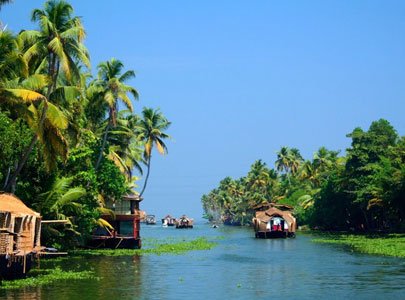
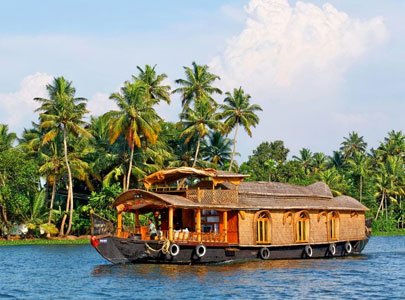
 Kerala Backwaters Escape
Destination
Few towns in India have been sacred for as long as Kanchipuram. About two hours southwest of Chennai, this temple town was the capital of the Pallava kings from roughly the 4th to the 9th centuries, and it later flourished under the Cholas and the Vijayanagara rulers. Over the centuries, each dynasty added shrines, halls, and towers, which is how the town earned its nickname, the "City of a Thousand Temples." It is also counted among the seven holiest cities for Hindus in India.
Kanchipuram is equally famous for something you can take home: Kanchipuram silk. Thousands of families here still weave heavy mulberry silk sarees on handlooms, with borders woven in contrasting colors and real gold-dipped silver thread. For many Indian brides, a "Kanjeevaram" saree is the most treasured piece in the wardrobe, and walking past the looms in the weavers' lanes is a big part of any visit.
Unlike the beach towns along the coast, Kanchipuram is a working pilgrimage town, crowded, devout, and not built around tourists. Hotels are simple, and the experience is all about the temples and the people who worship in them. For that reason, most travelers see Kanchipuram tourism highlights on a day trip from Chennai or Mahabalipuram, ideally with a guide who can explain the rituals, the legends, and the remarkable early stone carving.
Kailasanathar Temple, Ekambareswarar Temple, Varadharaja Perumal Temple, Kamakshi Amman Temple, Vaikunta Perumal Temple, silk weaving centers
November – February
Cooler weather for walking between temples
1 Days
A full day trip from Chennai or Mahabalipuram covers the main temples
Tamil, some English
Bring a guide; English is limited outside hotels and big silk shops
Kanchipuram is mostly vegetarian, centered on its temples. The local specialty is Kanchipuram idli, a spiced version of the classic steamed rice cake, flavored with black pepper, cumin, ginger, and ghee, traditionally steamed in leaf-lined containers and offered at the Varadharaja Perumal Temple. Try it at a local restaurant with coconut chutney and sambar. For lunch, a simple South Indian meal on a banana leaf is filling and inexpensive, with rice, sambar, rasam, kootu (vegetable and lentil stew), poriyal (dry vegetables), and buttermilk. Temple prasadam, like sweet pongal and puliyodarai (tamarind rice), is often sold at counters inside temples. End with strong filter coffee. Restaurants are basic, so many travelers on a day trip eat at a clean vegetarian restaurant in town or have lunch on the way back to Chennai or Mahabalipuram.
Silk shopping deserves its own guide here, because it's easy to overpay or buy imitations. Genuine Kanchipuram silk sarees are heavy, with the body and border often woven separately and then interlocked so tightly that the border won't come apart even if the saree tears. Real zari (the metallic thread) is silver dipped in gold; cheaper sarees use synthetic or "tested" zari. Prices vary enormously, from around a hundred US dollars for a simple saree to several thousand for a heavy wedding saree with pure zari.
Read More +Like what you see? Let's plan it for you.
Private car, driver and hotels arranged around your dates. Reply within 24 hours.
Kanchipuram
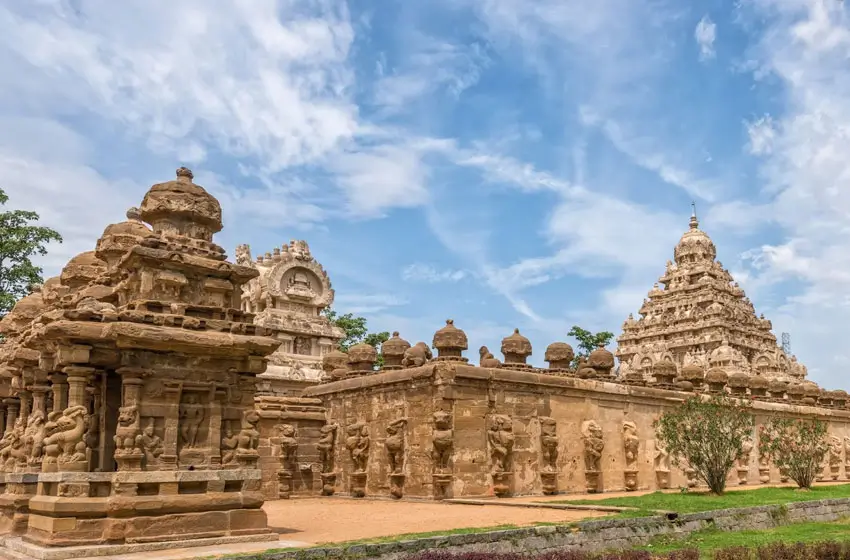
If you only have time for one temple in Kanchipuram, make it the Kailasanathar Temple. Built in the early 8th century by the Pallava king Narasimhavarman II (Rajasimha), it is the oldest structural temple in town and one of the earliest in South India. Unlike the later temples with soaring painted gateways, it is low, compact, and made of sandstone, with a pyramid-shaped tower over the main Shiva shrine. The real treat is the courtyard wall, lined with dozens of small shrine cells, each filled with carvings of Shiva, Parvati, and other deities, along with rearing lion figures at the base of the pillars. Look carefully and you'll find faint traces of the original painted plaster. It's on the western edge of town, quiet and peaceful, and since it is protected by the Archaeological Survey of India, it feels more like an open-air museum than a busy shrine. A narrow passage around the inner sanctum is used by devotees as a symbolic rebirth ritual.
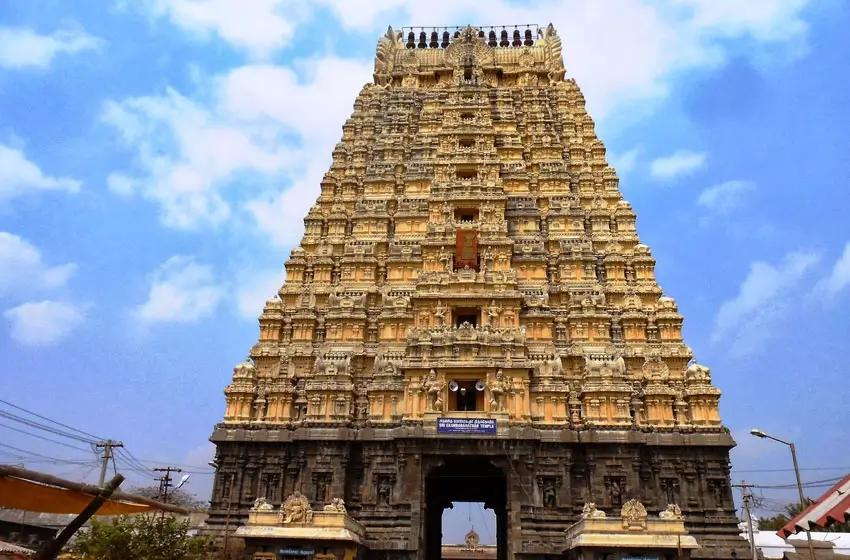
The Ekambareswarar Temple is the largest temple in Kanchipuram and one of the Pancha Bhoota Sthalams, the five great Shiva temples each linked to one of the five elements. Here Shiva is worshipped as earth, in the form of a lingam believed to be made of sand. The temple's southern gopuram, added by the Vijayanagara king Krishnadevaraya in the 16th century, is one of the tallest in South India. Inside, long pillared corridors lead past shrines and a tank to a famous mango tree in the inner courtyard. According to legend, Parvati performed penance beneath it to win Shiva as her husband, and the temple's name comes from "Eka Amra," meaning one mango tree. The ancient tree has been replaced by a younger one grown from it, while a section of the old trunk is preserved. Non-Hindus can visit most of the complex.
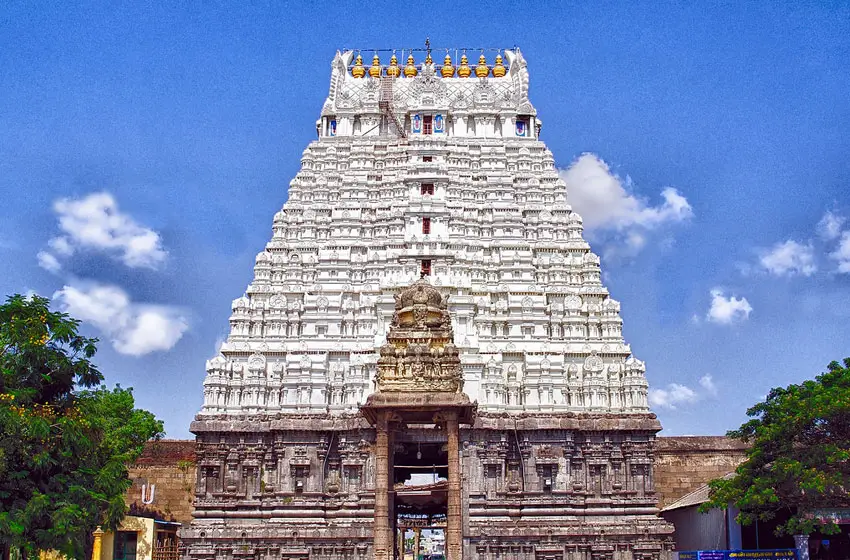
On the eastern side of town, the Varadharaja Perumal Temple is the most important Vishnu temple in Kanchipuram and one of the 108 Divya Desams, holy sites of the Vaishnava tradition. The complex covers a huge area with several courtyards, and its highlight is the hundred-pillared hall, a Vijayanagara-period mandapa whose granite pillars are carved with warriors on horseback, mythical beasts, and scenes from the epics. In the corners hang large stone chains carved from single blocks of rock, a show of the sculptors' skill. The temple's original wooden image of the deity, the Athi Varadar, is kept submerged in the temple tank and brought out for public worship only once every forty years; the last time was in 2019, when millions of pilgrims came.
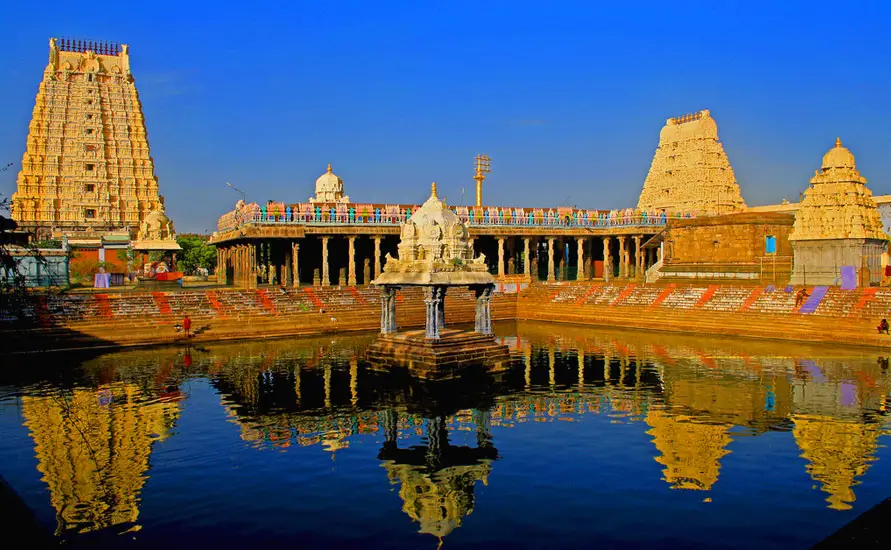
The Kamakshi Amman Temple in the center of town is dedicated to the goddess Kamakshi, a form of Parvati, and is one of the major goddess shrines in India. Locals believe Kamakshi is the guardian of the whole town, which is why, traditionally, many of the town's other temples do not have a separate goddess shrine of their own. The temple has a golden tower over the sanctum and a large tank in the outer courtyard. Visitors of all faiths can walk through the outer areas, but entry to the inner sanctum is generally restricted to Hindus. Evening worship, with lamps and drums, is especially lively.
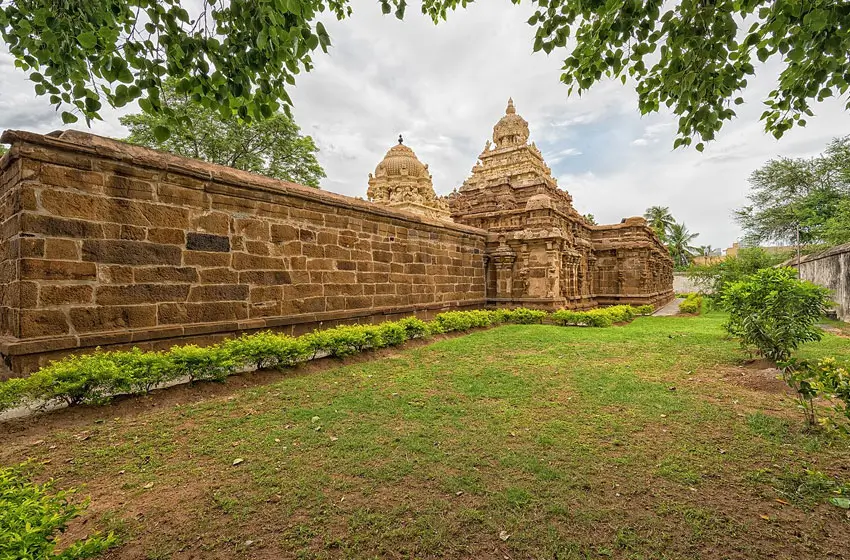
Built in the 8th century by the Pallava king Nandivarman II, the Vaikunta Perumal Temple is a smaller Vishnu temple with an unusual design: the main shrine has three levels stacked one above the other, each with an image of Vishnu in a different pose (standing, seated, and reclining). Around the inner corridor, a long series of carved panels shows events from Pallava history, including battles, coronations, and royal ceremonies, so the walls work almost like a stone history book of the dynasty. It's often overlooked by visitors, which makes it a calm and rewarding stop.
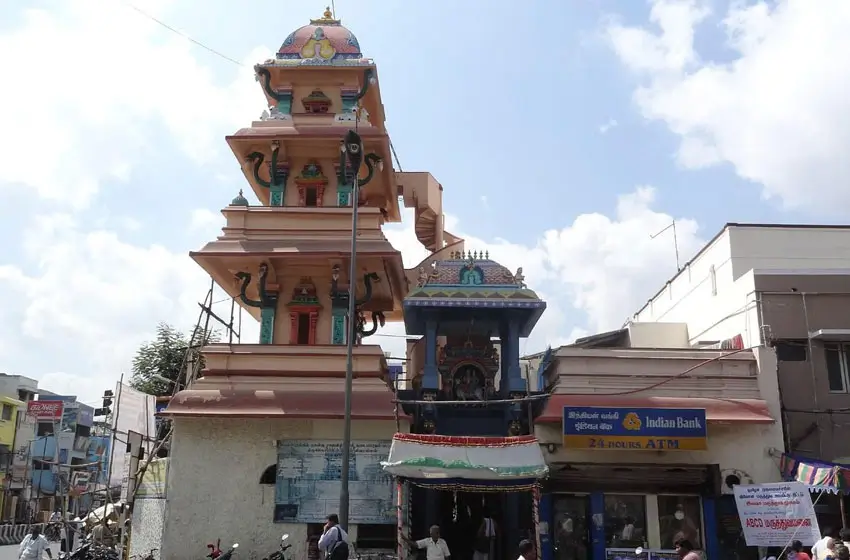
The Kanchi Kamakoti Peetham is a major Hindu monastery (math) associated with the philosopher Adi Shankaracharya. It's an active religious institution rather than a sightseeing spot, and many Hindu pilgrims come here to receive blessings from the current head, known as the Shankaracharya. Visitors who are interested in living Hindu tradition can visit respectfully with a guide; dress modestly and follow the lead of local devotees.
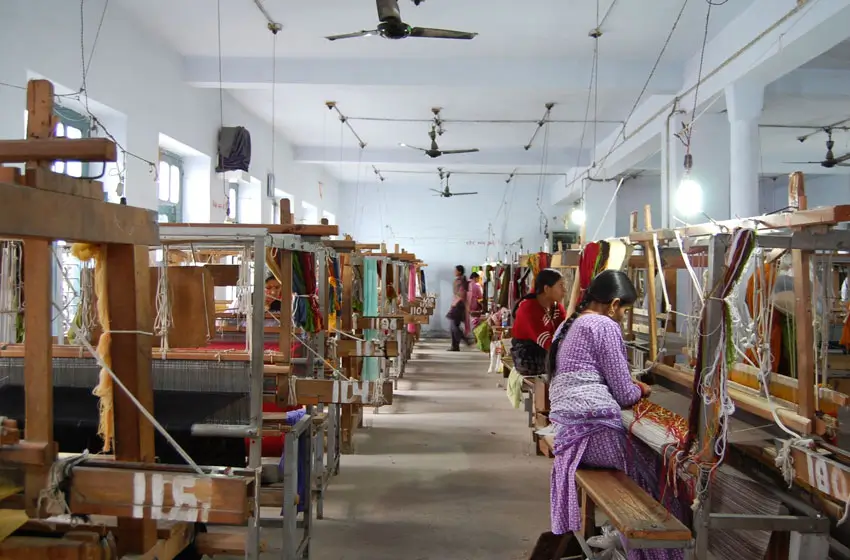
No visit is complete without seeing how Kanchipuram silk is made. In the weavers' neighborhoods, you can step into homes and small workshops where pit looms and frame looms clack away as weavers work the patterns by hand, often using punched-card systems to guide complex motifs. A single heavy saree can take anywhere from several days to several weeks to finish, depending on the design. Your guide can arrange a visit to a family workshop where you can watch the dyeing, warping, and weaving. Kanchipuram silk has a Geographical Indication (GI) tag, which protects the name for genuine sarees woven in the region.
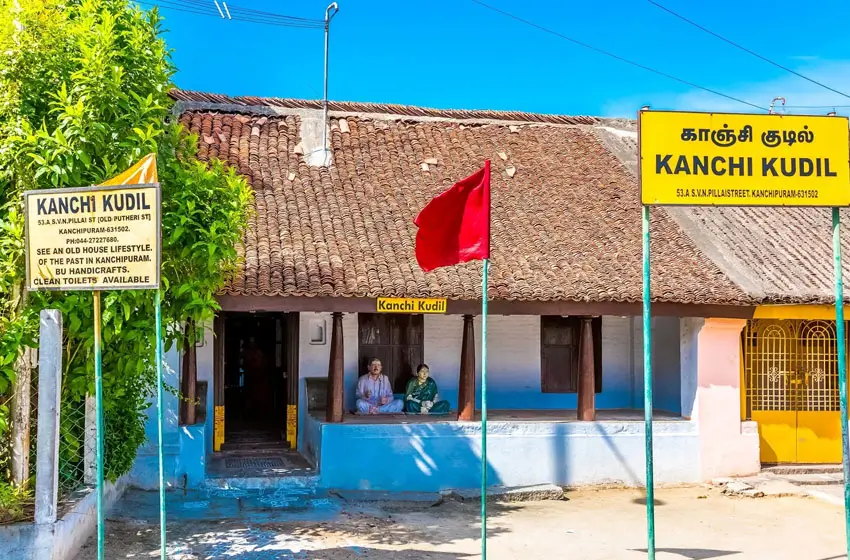
Kanchi Kudil is a traditional family home converted into a small heritage museum, showing what a Tamil household looked like a century ago. You'll see the open central courtyard, the kitchen, old household tools, and family items. It's a short visit, but it gives useful context after a morning in temples and silk shops.
Like what you see? Let's plan it for you.
Private car, driver and hotels arranged around your dates. Reply within 24 hours.
Getting there
Kanchipuram is about 45 miles (75 km) southwest of Chennai and about 40 miles (65 km) from Mahabalipuram.
Chennai International Airport, about 1.5–2 hours by car, is the nearest airport
Kanchipuram Railway Station has limited local trains; Chengalpattu and Arakkonam junctions offer better connections, and Chennai Central is the main long-distance hub
Good highways from Chennai (about 2 hours), Mahabalipuram (about 1.5 hours), and Vellore, with private cars and frequent state buses
Tours that include Kanchipuram
Explore more
Kerala Backwaters Escape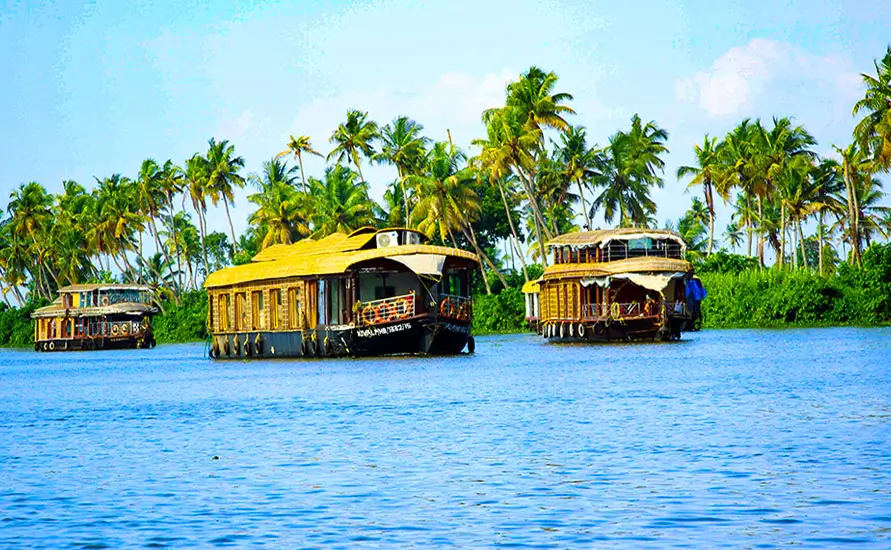 Kerala Backwaters Escape
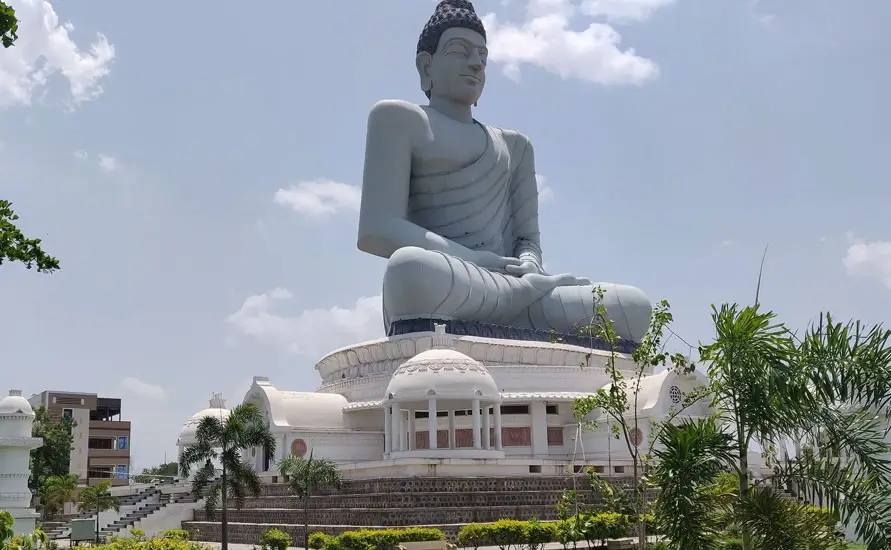 Kerala Backwaters Escape
N.S. Rathore & Mrs. Omlata Rathore · Managing Director
We still read every enquiry ourselves. Tell us the places you liked and our planners will send a day-by-day route with drive times and a clear price.
No ready-made packages and no pressure to book. A planner from our Kochi office replies within 24 hours with a route written for your group.
Fill this in and your planner will send a first draft itinerary.