
 Kerala Backwaters Escape
Golden Triangle Tour With South India
Delhi - Sikandra - Agra - Fatehpur Sikri - Jaipur - Trivandrum - Cochin - Kumarakom - Alleppey - Kovalam - Trivandrum
At a glance
Historic capitals, Mughal architecture and Rajasthan's royal landmarks form the first half of this 13 Nights 14 Days Golden Triangle Tour with Untamed Southern India, before the route turns towards Kerala's tropical south. Delhi introduces different eras of Indian history, Agra brings the architectural legacy of the Mughals, and Jaipur adds forts, palaces and traditional markets. Stops at Sikandra and Fatehpur Sikri make the northern section more substantial than a simple three-city circuit.
The transition to southern India begins at Trivandrum before the journey continues to Cochin. Here, the old streets of Fort Kochi and Mattancherry reveal Kerala's centuries-old relationship with maritime trade. From the coast, the itinerary moves into the wetlands around Kumarakom and then towards Alleppey, where canals, village life and the wider backwater system provide a completely different travel experience from the monuments of North India.
The final days are spent near the Arabian Sea at Kovalam before returning to Trivandrum. By combining important architectural sites with Kerala's coast, waterways and wetland landscapes, the itinerary offers a strong contrast between northern and southern India. Private transportation on the scheduled road sectors keeps the journey flexible and allows adequate time for the principal sightseeing stops.
Arrive at Delhi International Airport, where our representative will meet you after completion of the required arrival formalities. Transfer by private vehicle to your hotel and complete check-in. Delhi provides an appropriate opening to the tour because several centuries of history remain visible across its different districts, from older settlements and Mughal quarters to the planned avenues of the modern capital.
No demanding sightseeing is scheduled immediately after arrival. Travellers reaching Delhi early can take a short orientation drive if desired, while those arriving after a long international journey can spend the afternoon resting. Keeping the programme flexible ensures that the major monuments scheduled for the following day can be visited comfortably rather than being compressed into the arrival hours.
Spend the evening at leisure and prepare for the northern section of the journey. Delhi, Sikandra, Agra, Fatehpur Sikri and Jaipur will introduce the architectural and historical character of North India before the itinerary makes its major transition towards Kerala. Overnight stay in Delhi.
After breakfast, begin in Old Delhi with a visit to Jama Masjid, one of the city's prominent Mughal-era religious landmarks. Continue through or around the historic commercial surroundings of Chandni Chowk, where busy lanes and long-established markets present a very different side of the capital from New Delhi. Proceed to Raj Ghat, the memorial dedicated to Mahatma Gandhi.
The second half of the sightseeing moves towards New Delhi. Drive past India Gate and the ceremonial avenue of Kartavya Path, with views towards the government district around Rashtrapati Bhavan and Parliament House, subject to traffic and security restrictions. The wide avenues and formal urban planning create a noticeable contrast with the densely built streets explored earlier in the day.
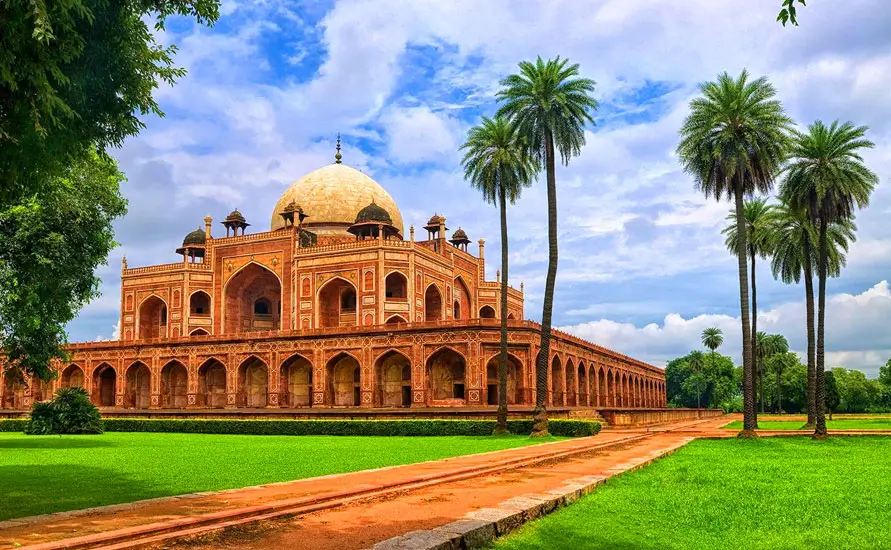
Continue to Humayun's Tomb, an important Mughal garden-tomb complex, followed by the historic Qutub Minar complex. These monuments illustrate different periods of Delhi's architectural development and provide a strong historical introduction before the tour proceeds to Agra. Return to the hotel after completing the sightseeing programme. Overnight stay in Delhi.
After breakfast, check out and begin the private road journey towards Agra. The route leaves Delhi's metropolitan surroundings and travels across the plains of northern India. Suitable refreshment and comfort stops can be made along the way, keeping the transfer relaxed before reaching the historic region associated with some of the most important monuments of the Mughal period.
Before reaching central Agra, stop at Sikandra, where the Tomb of Akbar the Great stands within a large garden complex. The monument differs considerably from the Taj Mahal in both architectural character and decoration, making it a worthwhile introduction to Agra's wider Mughal heritage. Spend time observing the gateways, geometric layout and principal mausoleum before continuing.
Proceed into Agra and transfer to the hotel for check-in. Later, depending on the available time, visit Mehtab Bagh across the Yamuna River or enjoy some leisure time. The main sightseeing, including the Taj Mahal and Agra Fort, is reserved for the following day so these major monuments can be covered without rushing. Overnight stay in Agra.
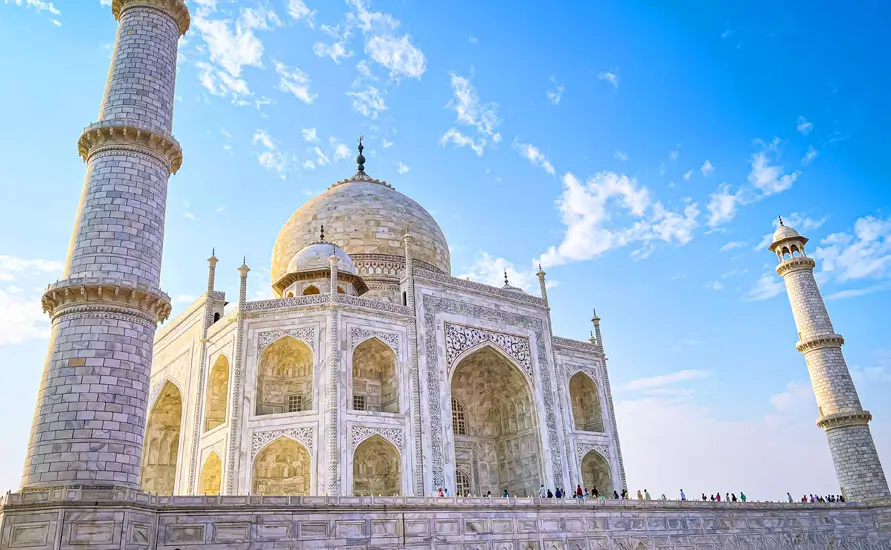
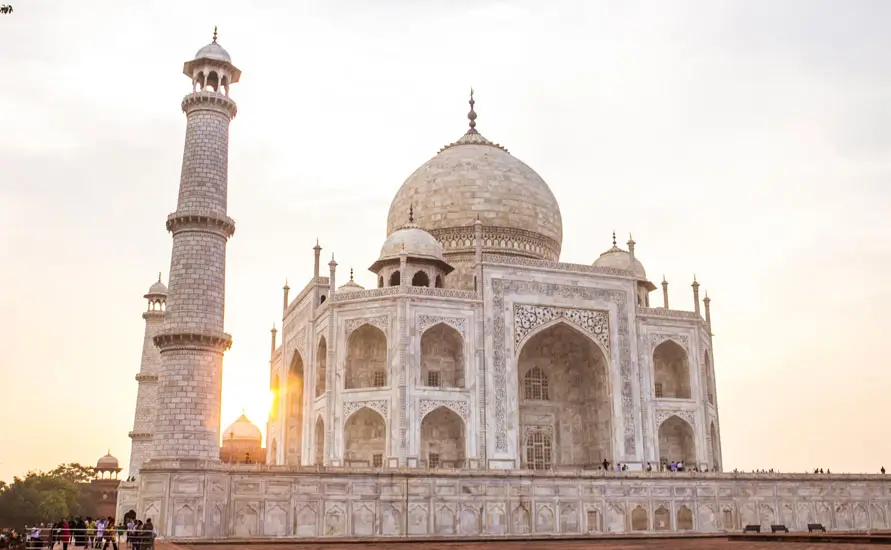
Begin the day with a visit to the world-renowned Taj Mahal, according to its applicable opening schedule. Commissioned by Mughal emperor Shah Jahan in memory of Mumtaz Mahal, the monument is celebrated for its white marble construction, balanced proportions, intricate decorative work and formal garden setting. Allow sufficient time for security procedures and for viewing the complex from its principal approaches.
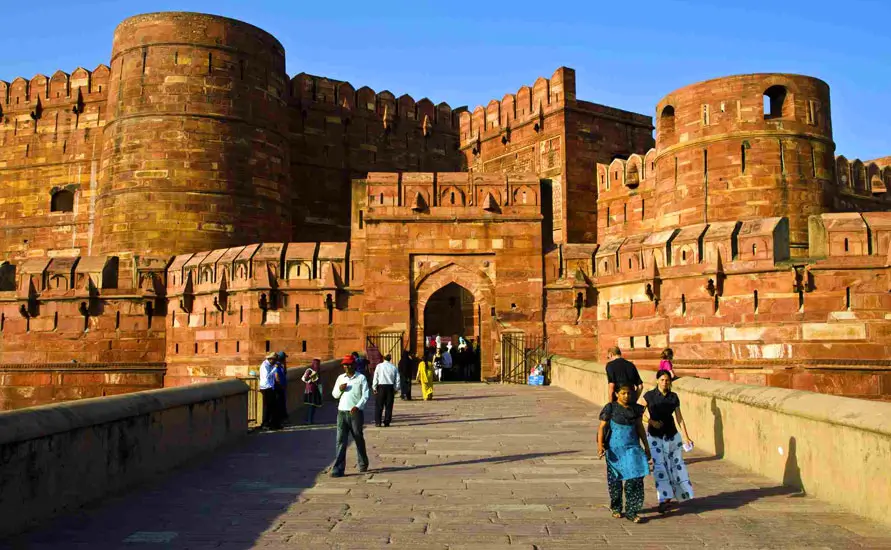
Continue to Agra Fort, the vast fortified complex that served as an important imperial residence and administrative centre. Explore its accessible courtyards, gateways, halls and palace sections, where red sandstone architecture is combined with later marble additions. Seeing the fort alongside the Taj Mahal provides a broader understanding of Agra's role during the Mughal period.
Later, travellers interested in traditional craftsmanship may visit an appropriate workshop demonstrating marble inlay work, a craft closely associated with Agra. Shopping is entirely optional. Depending on the final schedule, the remainder of the afternoon can be used for additional local exploration or leisure at the hotel. Overnight stay in Agra.
After breakfast, check out and leave Agra for Fatehpur Sikri, the former Mughal imperial city associated with Emperor Akbar. The extensive complex provides a very different experience from Agra's individual monuments because its surviving palaces, halls, courtyards and ceremonial spaces can be explored as part of a larger planned settlement.
Visit important areas such as Diwan-i-Aam, Diwan-i-Khas, Panch Mahal and the monumental Buland Darwaza, subject to current access. The architecture combines imposing public spaces with more intimate palace sections, while detailed stonework appears throughout the complex. Adequate walking time should be allowed to appreciate the site properly.
Continue by road towards Jaipur, entering Rajasthan as the landscape gradually becomes drier. On arrival, transfer to the hotel and complete check-in. The evening is kept free after the sightseeing and road journey, giving you time to rest before the next day's extensive exploration of Jaipur's forts and palaces. Overnight stay in Jaipur.
After breakfast, drive towards Amber Fort, the impressive hilltop complex located outside Jaipur's historic centre. Walk through its monumental gateways and courtyards before exploring the accessible palace sections. One of the most admired interiors is the Sheesh Mahal, where decorative mirror work forms an intricate part of the royal architecture. The elevated setting also provides views across the surrounding hills.
Return towards the city, stopping for a view of Jal Mahal, situated within Man Sagar Lake. Continue to City Palace, whose courtyards and museum collections reflect Jaipur's royal heritage. Nearby, visit Jantar Mantar, where large-scale astronomical instruments demonstrate the scientific interests of Maharaja Sawai Jai Singh II.
See the iconic façade of Hawa Mahal before spending some time around Jaipur's traditional bazaars. The old city is known for textiles, block-printed fabrics, jewellery and handicrafts, although shopping remains optional. After completing the principal sightseeing, return to the hotel and enjoy the evening at leisure. Overnight stay in Jaipur.
After breakfast, check out from the hotel and transfer to the airport for the scheduled journey from Jaipur towards Trivandrum (Thiruvananthapuram) according to the confirmed flight arrangements. This is the major geographical transition of the tour, moving from Rajasthan in northern India to Kerala near the southern end of the subcontinent. Flight routing and any connection will depend on the final tickets.
On arrival at Trivandrum International Airport, meet the representative or driver and transfer to the hotel. The tropical vegetation, coastal humidity and architectural character of southern Kerala immediately create a contrast with Jaipur. Check in and take some time to rest after the long-distance journey.
If flight timing allows, take an introductory drive through parts of Trivandrum, passing significant city areas and landmarks according to available time. A detailed sightseeing programme is not forced into the day because the flight schedule remains the priority. Spend the evening at leisure before beginning the Kerala road journey the following morning. Overnight stay in Trivandrum.
After breakfast, leave Trivandrum and begin the road journey north towards Cochin (Kochi). The route travels through Kerala's densely settled coastal belt, where towns, villages, coconut palms, waterways and commercial centres appear throughout the drive. This is a substantial transfer, so suitable rest and refreshment stops can be made along the way.
Arrive in Cochin and proceed to the hotel for check-in. If time permits after the journey, head towards Fort Kochi for an introductory visit. See St. Francis Church, an important historic landmark in the old quarter, and spend time around the waterfront near the traditional Chinese Fishing Nets. Their large cantilevered structures remain one of the most recognisable sights associated with Kochi.
Walk through suitable sections of the old streets around Fort Kochi before returning to the hotel. Depending on arrival time, the remaining Cochin attractions—including Mattancherry Palace and Jew Town—can be covered during the subsequent programme rather than rushed into the evening. Overnight stay in Cochin.
After breakfast, continue the exploration of Cochin's historic quarters, beginning with Mattancherry Palace (Dutch Palace), subject to its opening schedule. The palace is particularly known for its historic interiors and mural paintings, while the surrounding Mattancherry area reflects Kochi's longstanding relationship with overseas commerce. Rather than viewing the palace in isolation, spend some time understanding the old trading neighbourhood that developed around it.
Continue into Jew Town, where narrow streets, old commercial buildings and spice shops preserve much of the character associated with Kochi's former trading communities. Visit the Paradesi Synagogue when open and accessible. The surrounding lanes are interesting for walking, with heritage buildings, antique shops and the aroma of spices providing a strong connection to the area's commercial past.
Later, return towards Fort Kochi and spend additional time around St. Francis Church, the waterfront and the Chinese Fishing Nets if these could not be covered comfortably on the previous evening. Walk through the older streets before returning to the hotel. The second day in Cochin allows the city's principal heritage attractions to be seen at a sensible pace before the journey moves towards Kerala's backwater region. Overnight stay in Cochin.
After breakfast, check out and leave Cochin for Kumarakom, travelling south into Kerala's central backwater region. The drive gradually moves away from the busy urban surroundings of Kochi and enters a greener landscape of villages, coconut palms, agricultural areas and waterways. As Kumarakom approaches, the vast Vembanad Lake begins to define the character of the destination.
Arrive at your hotel or lakeside resort and complete check-in. Later, spend time around Vembanad Lake, one of the principal natural features of this part of Kerala. Unlike the historic sightseeing of Delhi, Agra, Jaipur and Cochin, Kumarakom is best appreciated through its water, wetland vegetation, birdlife and slower local rhythm. Boats crossing the lake and communities living beside the waterways add to the character of the surroundings.
Depending on seasonal conditions, opening arrangements and the programme confirmed for the tour, visit the Kumarakom Bird Sanctuary or enjoy an appropriate birding experience in the surrounding wetland environment. Bird species and numbers vary by season, so sightings cannot be guaranteed. Return to the resort later in the day and enjoy a quiet evening beside the lake. Overnight stay in Kumarakom.
Wake up beside Vembanad Lake and enjoy breakfast before leaving Kumarakom for Alleppey (Alappuzha). Although the two destinations belong to the same broad backwater region, the experience changes as the journey moves towards Alleppey's extensive canal network. The relatively manageable transfer leaves enough time for the waterways rather than making this another long road-travel day.
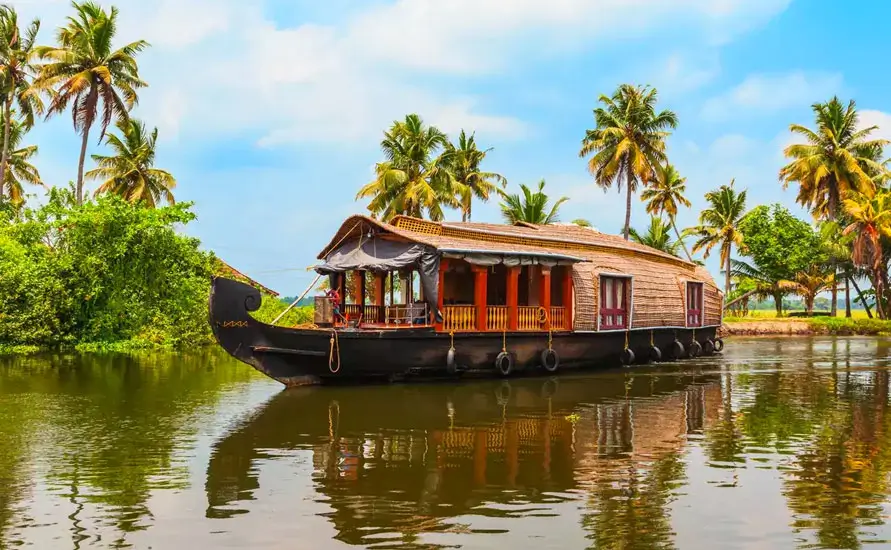
If a houseboat stay is included in the confirmed package, board your traditional Kerala houseboat at the scheduled time. Begin cruising through the Alleppey backwaters, passing narrow canals, coconut groves, waterside houses, paddy fields and small village jetties. Local boats and ferries remain part of daily life in many areas, allowing the cruise to reveal a living landscape rather than a purpose-built tourist attraction.
Continue cruising during the afternoon while meals are served according to the confirmed houseboat plan. Spend time on deck watching the scenery change as the boat travels through broader waterways and smaller channels included in its permitted route. In the evening, the houseboat will anchor at an authorised location in accordance with local operating regulations. Overnight stay in Alleppey or aboard the houseboat according to the confirmed booking.
After breakfast, complete the morning backwater programme and disembark from the houseboat at the scheduled time if applicable. Meet your driver and begin the journey south towards Kovalam. The route follows Kerala's populated coastal region, passing towns, villages and tropical countryside before reaching the state's well-known beach destination.
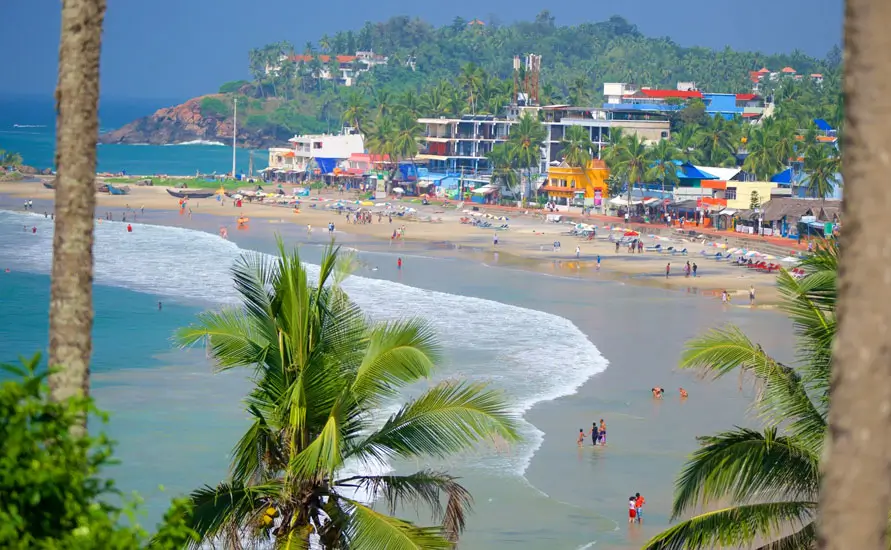
On arrival, transfer to the hotel or resort and complete check-in. After the waterways of Kumarakom and Alleppey, Kovalam introduces another side of Kerala through its Arabian Sea coastline. Spend the afternoon around Kovalam Beach, with time to walk along an accessible section of the shore, relax at the resort or simply enjoy the coastal surroundings after the road journey.
Towards evening, visit the area around Lighthouse Beach, one of Kovalam's best-known stretches of coastline. The distinctive lighthouse provides a familiar landmark above the shore, while cafés and local establishments occupy the surrounding area. Any swimming or water activity should be undertaken only when sea conditions are safe and local guidance permits it. Overnight stay in Kovalam.
After breakfast, enjoy a full day in Kovalam, providing a slower final chapter after the monument-heavy Golden Triangle and the road journeys through Kerala. Begin around Lighthouse Beach, where the shoreline, rocky sections and views of the Arabian Sea form the principal attraction. The day is intentionally less structured, allowing travellers to enjoy the coast according to their own pace.
Time can also be spent around Hawa Beach and the neighbouring coastal areas, depending on weather and local conditions. Rather than adding distant sightseeing merely to fill the schedule, the day allows genuine leisure after visiting Delhi, Agra, Fatehpur Sikri, Jaipur, Cochin, Kumarakom and Alleppey. Guests may relax at the resort, walk along the beach or choose optional local activities independently.
As evening approaches, return to the coastline for the sunset atmosphere over the Arabian Sea. Kovalam's second night ensures that the beach section is not reduced to a brief overnight stop between Alleppey and Trivandrum. Return to the hotel after your leisure time and prepare for the final day's journey to Kerala's capital. Overnight stay in Kovalam.
After breakfast, check out from the hotel and drive towards Trivandrum (Thiruvananthapuram). When the departure schedule allows, spend time seeing some of the capital's principal landmarks before proceeding to the airport or railway station. The exact sightseeing sequence will depend on the time available before your onward journey.
Visit the exterior surroundings of the renowned Sree Padmanabhaswamy Temple, with entry to the temple itself subject to its religious rules and applicable restrictions. Depending on opening hours and available time, the programme can also include the Napier Museum and the nearby Sri Chitra Art Gallery, two important cultural attractions within the city's museum and garden precinct.
After completing the available sightseeing, transfer to Trivandrum International Airport or railway station for your onward journey. The fourteen-day route concludes after connecting Delhi's historic monuments, Sikandra, the Taj Mahal, Fatehpur Sikri, Jaipur's royal landmarks, Cochin's trading heritage, Vembanad Lake, the Alleppey backwaters, Kovalam Beach and Trivandrum. Tour services conclude with the scheduled departure transfer.
Your Journey
N.S. Rathore & Mrs. Omlata Rathore · Managing Director
We still read every enquiry ourselves. Tell us the places you liked and our planners will send a day-by-day route with drive times and a clear price.
No ready-made packages and no pressure to book. A planner from our Kochi office replies within 24 hours with a route written for your group.
Fill this in and your planner will send a first draft itinerary.
Explore more
Kerala Backwaters Escape Kerala Backwaters Escape
 Kerala Backwaters Escape
 Kerala Backwaters Escape
 Kerala Backwaters Escape
 Kerala Backwaters Escape
 Kerala Backwaters Escape