
 Kerala Backwaters Escape
Golden Triangle Tour With South India
Delhi - Agra - Jaipur - Chennai - Trivandrum - Cochin - Periyar - Madurai - Kanchipuram - Mahabalipuram - Chennai
At a glance
India's architectural heritage and southern landscapes unfold across several distinct regions on this 16 Nights 17 Days Golden Triangle Tour with Kerala. The journey opens in Delhi before moving to Agra and Jaipur, covering the Mughal monuments and royal landmarks that define the Golden Triangle. It then turns south to Chennai, beginning a second chapter shaped by Dravidian architecture, Kerala's coastal character, the forested highlands around Periyar and the temple heritage of Madurai.
Trivandrum and Cochin introduce two very different sides of Kerala. The state capital provides a glimpse of southern Kerala's cultural identity, while Cochin reflects centuries of maritime trade through Fort Kochi and Mattancherry. The route then climbs inland towards Periyar, where spice-growing landscapes and the protected forest environment around Periyar Lake replace the coastal scenery.
The later stages move east into Tamil Nadu for Madurai before continuing through Kanchipuram and Mahabalipuram. Monumental temple architecture, ancient stone carving and the Coromandel Coast provide a strong conclusion before the tour returns to Chennai. Over seventeen days, travellers experience major historical cities alongside changing landscapes, religious traditions and regional architecture across North and South India.
Arrive at Delhi International Airport, where our representative will meet you after the required arrival formalities. Transfer by private vehicle to the hotel and complete check-in. Delhi makes a natural starting point for this journey because its historic quarters, monuments and modern administrative districts introduce several periods of Indian history within a single city.
The remainder of the day is deliberately kept comfortable after the international journey. Guests arriving early may take a short orientation drive through suitable parts of the capital, while travellers reaching Delhi later can proceed directly to the hotel and rest. The principal monuments are reserved for the following day so that they can be explored without rushing.
Spend the evening at leisure and prepare for the route ahead. The first section will cover Delhi, Agra and Jaipur before the journey moves south to Chennai, Kerala and Tamil Nadu. This gradual change in regions gives the itinerary a broader character than a conventional Golden Triangle holiday. Overnight stay in Delhi.
After breakfast, begin with Old Delhi and visit Jama Masjid, one of the city's major Mughal-era religious landmarks. Continue through the historic surroundings of Chandni Chowk, where narrow market streets and long-established businesses provide an energetic introduction to the older capital. Proceed to Raj Ghat, the memorial dedicated to Mahatma Gandhi.
Continue into New Delhi and drive past India Gate, Kartavya Path and the government district around Rashtrapati Bhavan and Parliament House, subject to current security and traffic arrangements. The broad avenues and formal layout of this part of Delhi contrast sharply with the dense streets and markets experienced earlier in the morning.
Later, visit Humayun's Tomb, an important Mughal garden-tomb complex, followed by the Qutub Minar complex. The towering minaret and surrounding historic structures represent another period of Delhi's architectural development. After completing the sightseeing programme, return to the hotel and spend the evening at leisure. Overnight stay in Delhi.
After breakfast, check out and begin the private road journey towards Agra. Leaving Delhi's metropolitan region, travel across the northern plains towards one of India's most important Mughal cities. Suitable rest and refreshment stops can be made during the journey before arriving at the hotel and completing check-in.
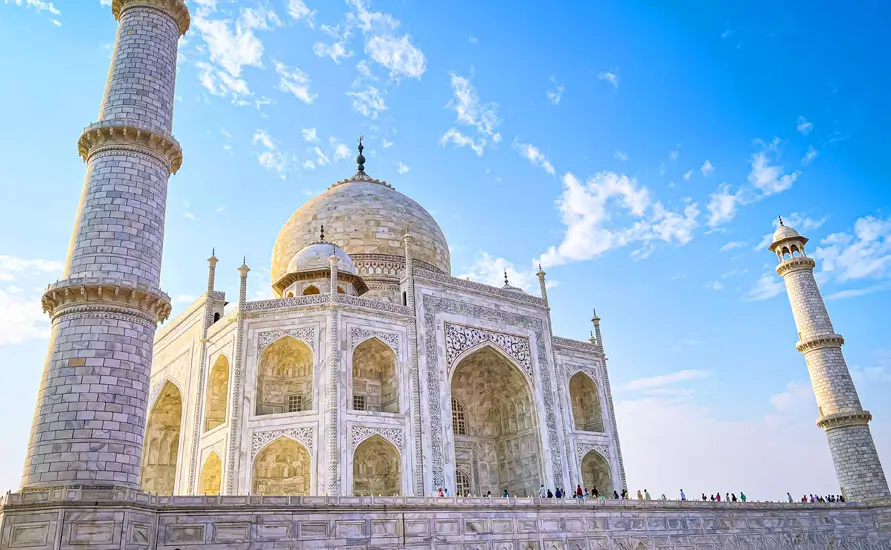
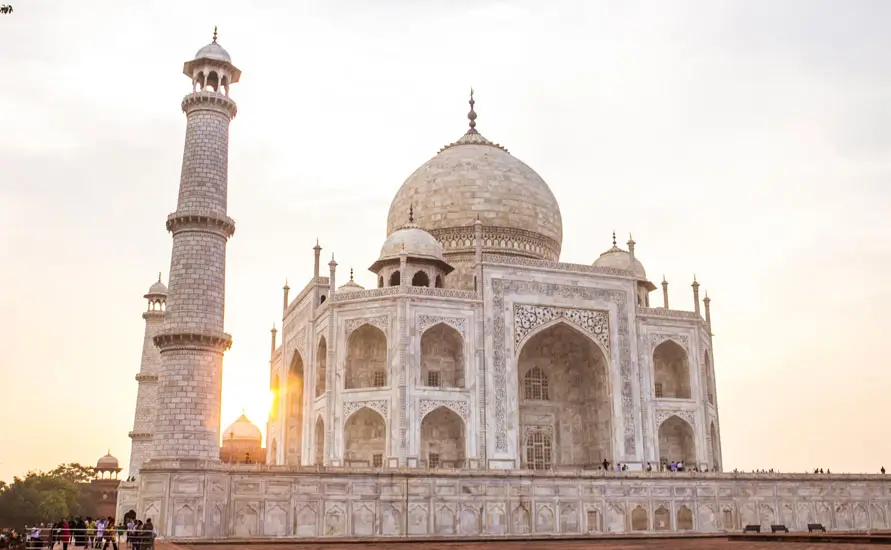
Later, visit the magnificent Taj Mahal, subject to its official opening schedule. Commissioned by Emperor Shah Jahan in memory of Mumtaz Mahal, the monument is admired for its white marble architecture, symmetry, detailed stone inlay and formal garden setting. Sufficient time should be allowed for security procedures and for seeing the complex from its principal viewpoints.
If daylight and timing permit, continue to Mehtab Bagh, situated across the Yamuna River from the Taj Mahal, or spend some time seeing Agra's traditional marble inlay craftsmanship. Any shopping remains entirely optional. Return to the hotel after sightseeing and enjoy the evening at leisure. Overnight stay in Agra.
Begin after breakfast with a visit to Agra Fort, the enormous red sandstone complex overlooking the Yamuna River. Enter through its fortified gateways and explore the accessible courtyards, halls and palace sections. The combination of red sandstone and later marble architecture provides a broader understanding of Agra's Mughal heritage beyond the Taj Mahal.
After completing the fort visit, check out and begin the road journey towards Jaipur. The drive gradually leaves the landscapes around Agra and moves towards Rajasthan. Suitable breaks can be taken along the way, while the changing countryside provides the first indication of the geographical transition from Uttar Pradesh into Rajasthan.
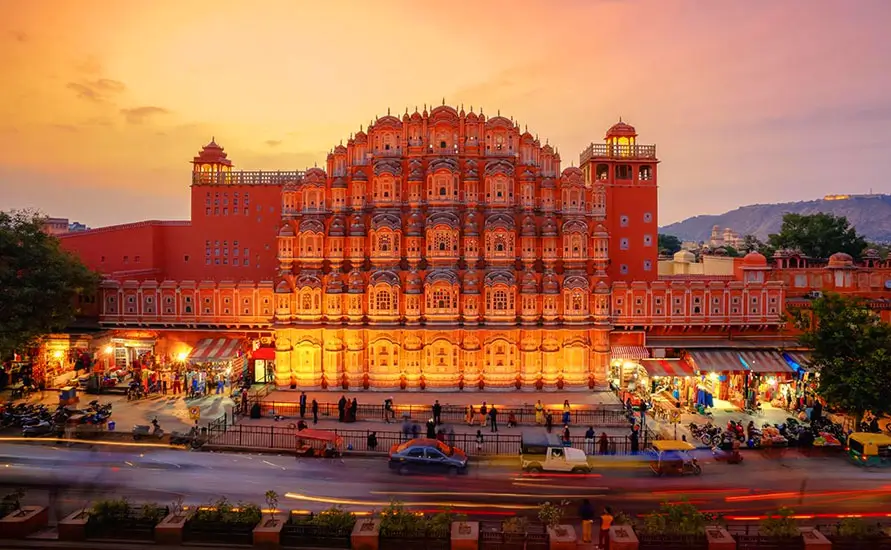
Arrive in Jaipur and transfer to the hotel. If sufficient time remains, take an introductory drive through the old city and see the distinctive façade of Hawa Mahal from the street. Otherwise, relax at the hotel after the journey. Jaipur's principal fort and palace attractions are reserved for the following day. Overnight stay in Jaipur.
After breakfast, drive towards Amber Fort, the imposing hilltop fort and palace complex outside Jaipur. Walk through its monumental gateways and courtyards before exploring the accessible royal sections. See the beautifully decorated Sheesh Mahal, where intricate mirror work forms one of the most memorable interiors within the complex.
Return towards Jaipur and stop for a view of Jal Mahal, standing within Man Sagar Lake. Continue to City Palace, where courtyards, gateways and museum spaces reflect Jaipur's royal heritage. Nearby, visit Jantar Mantar, whose monumental astronomical instruments were constructed for the observation and calculation of celestial movements.
Complete the sightseeing with Hawa Mahal, whose elaborate multi-windowed façade remains one of Jaipur's defining landmarks. Time can also be spent in the old city's traditional bazaars, known for textiles, jewellery, block printing and handicrafts. Shopping is entirely optional. Return to the hotel after sightseeing. Overnight stay in Jaipur.
After breakfast, check out and transfer to Jaipur Airport for the scheduled journey to Chennai according to the confirmed flight arrangements. This sector creates the itinerary's first major geographical shift, moving from Rajasthan in northern India to Tamil Nadu on the southeastern coast. Flight timings and any required connection will determine the exact programme for the day.
On arrival at Chennai Airport, meet the representative or driver and transfer to the hotel. After check-in, take some time to rest. Chennai introduces a markedly different cultural and architectural environment, with Tamil religious traditions, colonial-era landmarks and the Bay of Bengal coastline replacing Rajasthan's forts and palace cities.
If arrival time permits, take an introductory drive along Marina Beach, one of Chennai's best-known coastal landmarks. A fuller city programme is planned for the following day, so no major attraction needs to be rushed after the flight. Return to the hotel and enjoy the evening at leisure. Overnight stay in Chennai.
After breakfast, begin Chennai sightseeing with Kapaleeshwarar Temple in Mylapore. The active Hindu temple is recognised by its colourful gopuram and provides an introduction to the Dravidian temple architecture that will become increasingly important later in the itinerary. Visitors should follow applicable rules concerning dress, footwear, photography and access to specific areas.
Continue to San Thome Basilica, an important Christian landmark near the coast, before exploring other historic areas according to the confirmed programme. Chennai's architectural character reflects multiple influences, and travelling between its older neighbourhoods, religious sites and civic districts provides a broader picture of the city's development.
Later, spend time along Marina Beach and the Bay of Bengal waterfront. Depending on the final sightseeing arrangement, additional stops may include the Government Museum or Fort St. George, subject to opening schedules. Return to the hotel after the day's sightseeing and prepare for the onward journey towards southern Kerala. Overnight stay in Chennai.
After breakfast, check out and proceed according to the confirmed travel arrangements for the journey from Chennai to Trivandrum (Thiruvananthapuram). This transfer brings the tour from Tamil Nadu's east coast to Kerala near the southwestern end of the Indian peninsula. The precise timing of the day will depend on the confirmed flight or other transportation schedule.
On arrival in Trivandrum, meet the representative or driver and transfer to the hotel. If sufficient time remains, visit the surroundings of the renowned Sree Padmanabhaswamy Temple, one of the city's most important landmarks. Entry to the inner temple is governed by specific religious rules and restrictions, so visits will follow all applicable regulations.
Depending on arrival time and opening schedules, the programme can also include the Napier Museum and the nearby Sri Chitra Art Gallery. These cultural attractions provide another perspective on Kerala before the route continues towards Cochin. Return to the hotel after sightseeing or spend the evening at leisure. Overnight stay in Trivandrum.
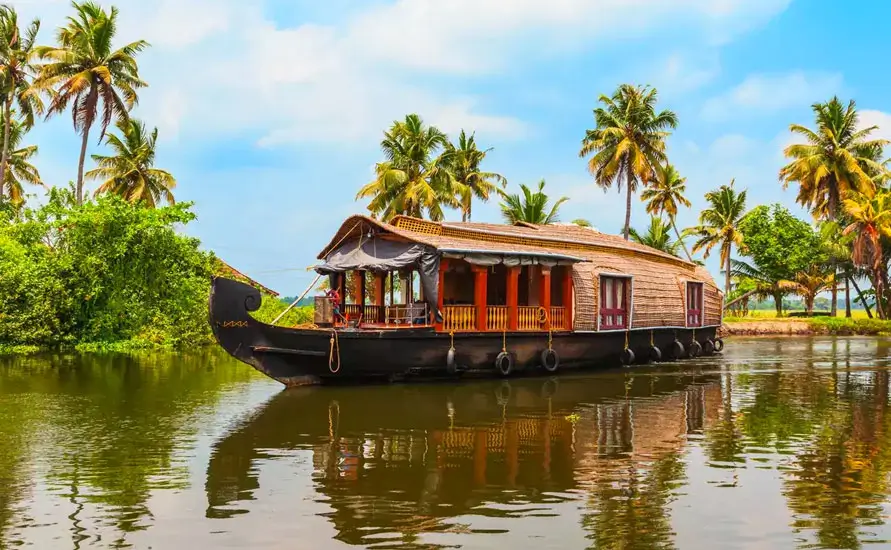
After breakfast, check out from the hotel and begin the road journey towards Cochin (Kochi). The route travels north through Kerala's densely settled coastal belt, passing towns, villages, coconut groves and stretches of tropical countryside. This is a substantial transfer, so suitable stops can be made for refreshments and rest during the journey.
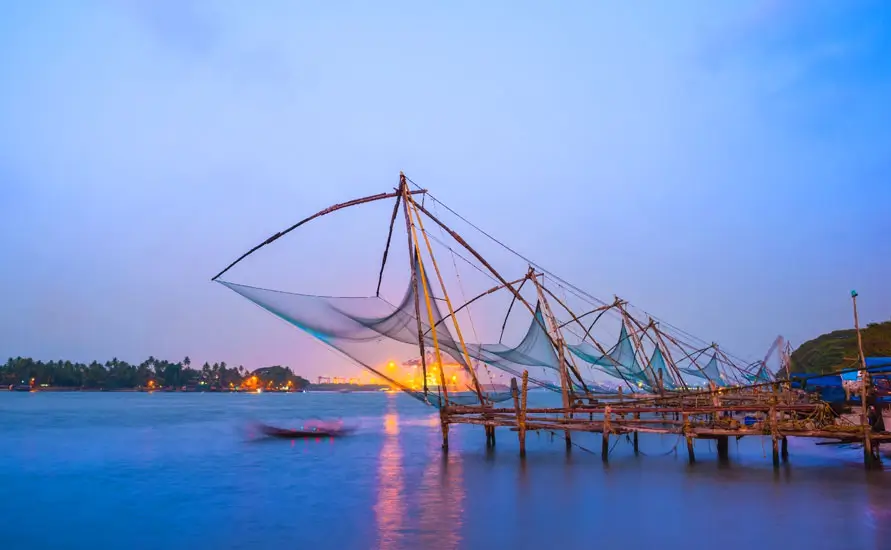
On arrival in Cochin, transfer to the hotel and complete check-in. If sufficient daylight remains, head towards Fort Kochi for an introductory walk through the old quarter. Spend time along the waterfront and see the traditional Chinese Fishing Nets, whose large cantilevered structures have become one of the city's most recognisable sights.
Continue through the heritage streets around Fort Kochi and see St. Francis Church, subject to available visiting hours. The remaining major attractions of Cochin are reserved for the following day, allowing the city's historic areas to be explored without rushing after the long drive from Trivandrum. Return to the hotel for the evening. Overnight stay in Cochin.
After breakfast, begin a detailed exploration of Cochin's historic quarters. Visit St. Francis Church and spend time around the Chinese Fishing Nets if these could not be covered comfortably on the previous evening. The old streets of Fort Kochi contain heritage buildings and reminders of the city's long connection with maritime trade on the Malabar Coast.
Continue towards Mattancherry Palace (Dutch Palace), subject to its opening schedule. The palace is known for its historic interiors and mural paintings. From here, walk through Jew Town, where old commercial buildings, spice shops and narrow streets preserve the character of a trading district shaped by communities that were historically connected with Kochi's port.
Visit the Paradesi Synagogue when open and accessible, and spend additional time exploring the surrounding heritage lanes. Travellers interested in spices, antiques or handicrafts may browse local shops, though purchases remain entirely optional. After completing the main Cochin sightseeing, return to the hotel and enjoy the evening at leisure. Overnight stay in Cochin.
After breakfast, check out and leave Cochin for Periyar (Thekkady). The journey gradually moves away from Kerala's coastal lowlands and climbs into the Western Ghats. As the elevation increases, the scenery changes from densely populated tropical countryside to plantation areas and forested hills, making the drive itself an important part of the day's experience.
On arrival in Thekkady, check into the hotel or resort. Later, visit a spice plantation, where plants such as cardamom, pepper, cinnamon and cloves may be seen depending on the plantation and season. The visit provides useful context for Kerala's long association with the spice trade and shows how several familiar spices are cultivated in the state's highland environment.
Spend the later part of the day around the surroundings of Periyar Tiger Reserve and Periyar Lake. Any boating, nature walk or forest activity must be arranged through authorised operators and remains subject to permits, availability and forest department regulations. Wildlife sightings are entirely dependent on natural conditions and cannot be guaranteed. Overnight stay in Periyar/Thekkady.
Begin the day amid the forested and spice-growing surroundings of Periyar. Depending on the confirmed arrangements, take an authorised boat ride on Periyar Lake, one of the best-known activities in the area. The reservoir is surrounded by protected forest, and the cruise provides an opportunity to observe the landscape from the water. Wildlife may sometimes be seen along the distant shoreline, but sightings are never assured.
Later, additional time can be spent exploring the highland surroundings of Thekkady. Guests interested in local agriculture may visit another spice-growing area or browse shops selling cardamom, pepper and other regional products. Any purchases are optional. Those interested in nature-based activities can choose only from programmes officially permitted and available on the day.
The remainder of the afternoon is kept relatively relaxed before the journey into Tamil Nadu. Enjoy the cooler mountain environment, spend time at the resort or walk around suitable local areas. This additional time at Periyar allows the destination to be experienced beyond a single overnight transit stop. Return to the hotel for the evening. Overnight stay in Periyar/Thekkady.
After breakfast, check out and begin the journey from Periyar to Madurai. The route crosses from Kerala into Tamil Nadu, descending from the Western Ghats towards the warmer plains. Plantation-covered slopes gradually give way to agricultural landscapes, towns and the drier environment of the Tamil interior.
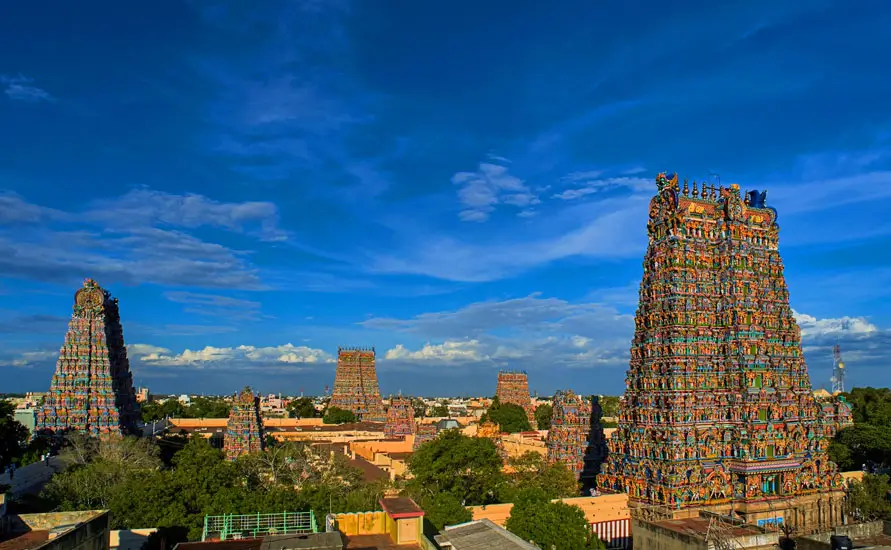
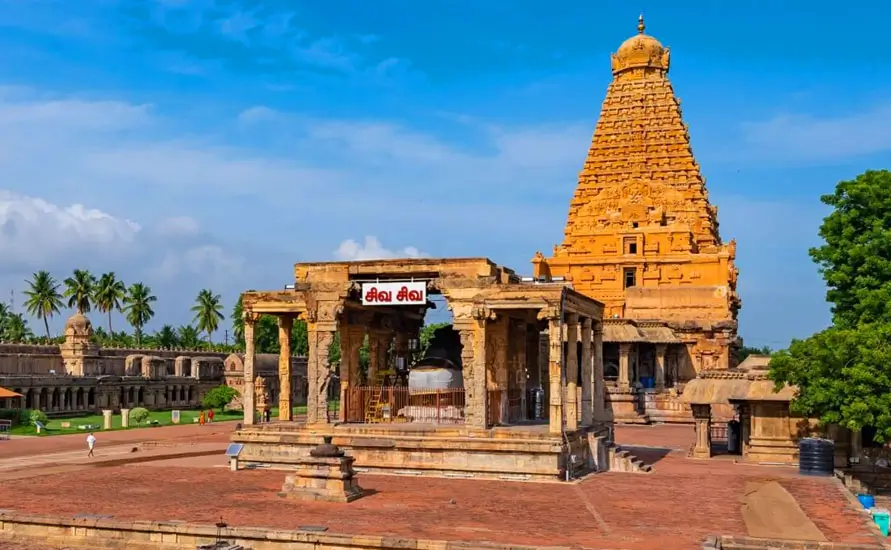
Arrive in Madurai and transfer to the hotel. Later, visit the magnificent Meenakshi Amman Temple, the city's defining landmark. Its enormous and elaborately decorated gopurams dominate the historic centre, while the larger temple complex contains courtyards, pillared spaces and active shrines. Visitors must follow applicable religious rules concerning dress, footwear, photography and access.
Continue to Thirumalai Nayakkar Palace, subject to opening hours. The surviving palace sections are notable for their monumental arches, columns and spacious courtyard. After completing the day's sightseeing, return to the hotel. The evening can be spent at leisure or around the busy streets of central Madurai. Overnight stay in Madurai.
After breakfast, continue exploring Madurai, allowing more time for the city's heritage rather than treating it solely as an overnight stop. If desired and permitted, revisit the surroundings of Meenakshi Amman Temple during the morning, when the old-city streets and temple precinct have a different atmosphere from the previous evening.
Continue to Gandhi Memorial Museum, subject to its opening schedule, for an introduction to material associated with Mahatma Gandhi and India's independence movement. Depending on the confirmed programme, also visit Vandiyur Mariamman Teppakulam, the large temple tank associated with the city's religious traditions and annual festivities.
Later, spend some time around Madurai's traditional commercial streets. The city is known for flowers, textiles and a lively local market culture, offering a different experience from the formal monuments visited earlier in the journey. Return to the hotel after sightseeing and prepare for the onward journey towards Kanchipuram. Overnight stay in Madurai.
After breakfast, check out and proceed towards Kanchipuram according to the confirmed transportation arrangements. This is a substantial travel sector across Tamil Nadu, so suitable rest and refreshment stops will be made along the way. The journey moves north through the state towards a city historically renowned for both temple architecture and silk weaving.
On arrival in Kanchipuram, transfer to the hotel or confirmed accommodation. Depending on arrival time and temple opening schedules, begin with Kailasanathar Temple, one of the city's important historic temple complexes. Its stone architecture and sculptural details provide a different visual character from the colourful, active temple environment experienced in Madurai.
If time permits, continue to Ekambareswarar Temple, one of Kanchipuram's major religious landmarks, recognised by its imposing gateway tower and extensive temple precinct. Any remaining temple visits can be completed the following morning if necessary. Visitors should observe all local rules governing dress, footwear and photography. Overnight stay in Kanchipuram.
After breakfast, complete any scheduled Kanchipuram sightseeing with important sites such as Ekambareswarar Temple or Kamakshi Amman Temple, subject to opening hours and applicable entry regulations. Kanchipuram is also widely associated with traditional silk weaving, and travellers interested in textiles may see the local weaving tradition at an appropriate establishment, with shopping entirely optional.
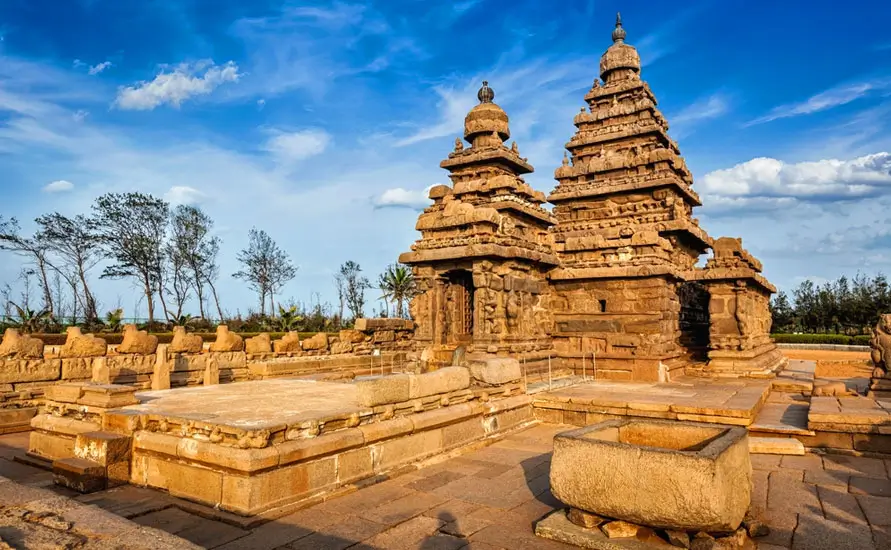
Continue towards Mahabalipuram (Mamallapuram) on the Coromandel Coast. Begin with the UNESCO-listed Shore Temple, dramatically positioned close to the Bay of Bengal. Continue to the monolithic Pancha Rathas, where individual rock-cut structures demonstrate different architectural forms carved from stone.
Later, see the vast sculpted relief known as Arjuna's Penance, along with the naturally balanced boulder popularly called Krishna's Butter Ball. These monuments provide a strong contrast to Kanchipuram's active temple complexes and Madurai's towering gopurams. After completing the sightseeing, check into the hotel and enjoy the evening near the coast. Overnight stay in Mahabalipuram.
After breakfast, enjoy some final time in Mahabalipuram before checking out from the hotel. If any major heritage attraction could not be covered on the previous day, the morning can be used for the Shore Temple, Pancha Rathas, Arjuna's Penance or other scheduled monuments, depending on the onward departure timing.
Leave Mahabalipuram and drive towards Chennai, following the coastal route towards Tamil Nadu's capital. If the departure schedule provides sufficient time, a brief stop in Chennai can be considered around Marina Beach, Kapaleeshwarar Temple or San Thome Basilica, particularly if one of these attractions could not be covered earlier in the tour.
Continue to Chennai International Airport or railway station for the onward journey. The seventeen-day itinerary concludes after connecting Delhi's major monuments, the Taj Mahal, Jaipur's royal heritage, Chennai, Trivandrum, historic Cochin, Periyar Lake, Meenakshi Amman Temple, Kanchipuram's temples and Mahabalipuram's UNESCO-listed stone monuments.
Your Journey
N.S. Rathore & Mrs. Omlata Rathore · Managing Director
We still read every enquiry ourselves. Tell us the places you liked and our planners will send a day-by-day route with drive times and a clear price.
No ready-made packages and no pressure to book. A planner from our Kochi office replies within 24 hours with a route written for your group.
Fill this in and your planner will send a first draft itinerary.
Explore more
Kerala Backwaters Escape Kerala Backwaters Escape
 Kerala Backwaters Escape
 Kerala Backwaters Escape
 Kerala Backwaters Escape
 Kerala Backwaters Escape
 Kerala Backwaters Escape