 Kerala Backwaters Escape
Destination
Picture a long line of red laterite cliffs dropping straight down to the Arabian Sea, with cafés, guesthouses, and yoga decks perched along the top edge. That's Varkala, a small temple town on the Kerala coast about 50 km (31 miles) north of Thiruvananthapuram. It's the only place in Kerala where cliffs rise right next to the sea like this, and the formation is protected as a national geological monument by the Geological Survey of India.
Varkala has two personalities that sit side by side. Down on Papanasam Beach and in the old town, it's one of the holiest places in Kerala for Hindus, who come to the 2,000-year-old Janardhana Swamy Temple and perform rituals for their ancestors on the sand. Up on the cliff, it's a laid-back traveler hangout, with yoga schools, bookshops, juice bars, and small boutiques facing the sunset. The two worlds coexist comfortably, and seeing both is part of what makes a visit interesting.
For international travelers, a stay in Varkala is about slowing down. Days usually start with a morning yoga class, move on to a swim and a long lunch with a sea view, and end with the sun going down over the water from a cliff-top table. It's smaller and more relaxed than Kovalam, and a good place to spend a few easy days at the end of a Kerala tour package after the backwaters and hills.
Varkala Cliff, Papanasam Beach, Janardhana Swamy Temple, Sivagiri Mutt, Kappil Beach, Anjengo Fort
November – March
Calm sea, sunny days, and dry cliff paths
3 Days
Add more for a yoga course or Ayurveda
English, Malayalam
English spoken widely on the cliff, in hotels and yoga schools
Varkala has become one of the most popular places in South India for yoga holidays, and that's a big part of why many foreign travelers come.
Quality varies a lot, so read recent reviews and look at teacher credentials before committing to a longer course.
Read More +Like what you see? Let's plan it for you.
Private car, driver and hotels arranged around your dates. Reply within 24 hours.
Varkala
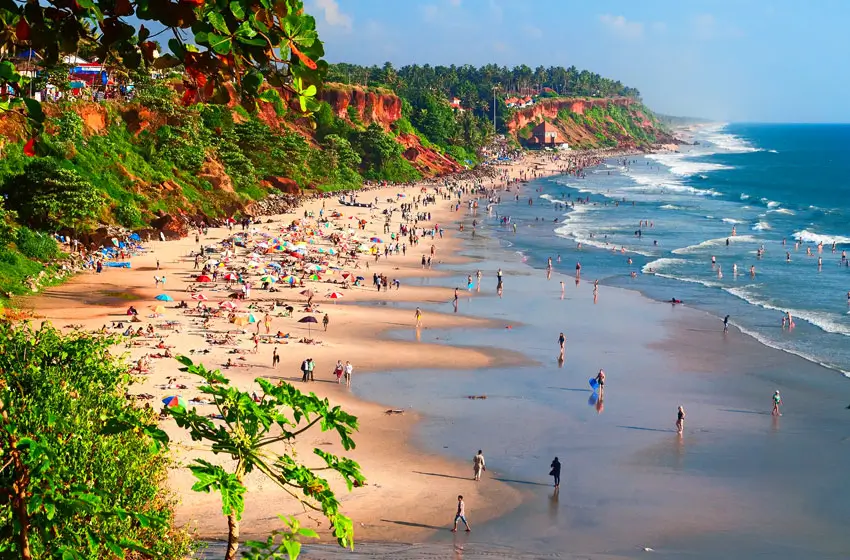
The Varkala Cliff is the heart of the town for visitors. A paved and partly unpaved footpath runs along the top of the North Cliff for about 2 km, lined on one side with restaurants, guesthouses, Ayurveda centers, and shops, and on the other side with a long drop to the beach below. The cliffs are made of soft red and ochre laterite and clay, and in some spots small freshwater springs trickle out of the rock face. Walking the cliff path is an activity in itself, especially in the late afternoon when everyone heads out to find a table for sunset. Be careful near the edge, as there are few railings and parts of the cliff are eroding.
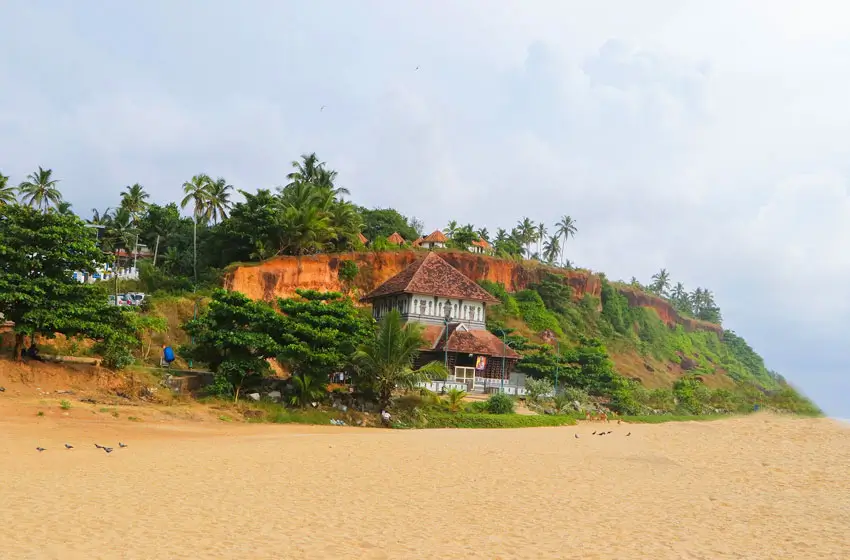
Below the main cliff is Papanasam Beach, also called Varkala Beach. The name means "destroyer of sins," and Hindus believe that a dip in the water here washes away wrongdoing. Families come to perform Vavu Bali, rituals for departed ancestors, at the southern end of the beach, with priests sitting under umbrellas on the sand. The northern part is where travelers swim and sunbathe, and lifeguards are on duty during the day. Please be respectful around the ritual area: keep clothing modest and avoid taking photos of people performing ceremonies.
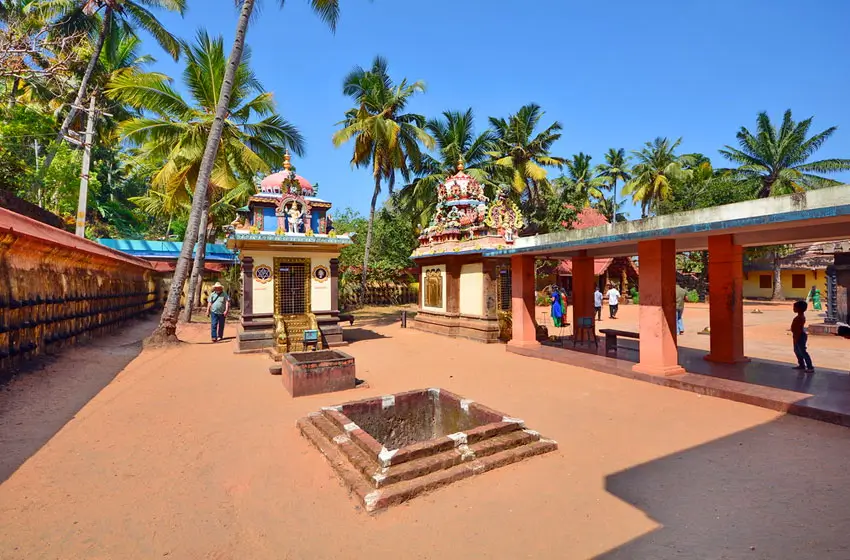
The Janardhana Swamy Temple, a short walk inland from Papanasam Beach, is an ancient temple dedicated to Lord Vishnu and one of the main pilgrimage sites in Kerala. It's believed to be around 2,000 years old, although the present structure has been rebuilt over the centuries. The temple is built in the traditional Kerala style, with sloping tiled roofs and wooden carvings, and has a large old bell said to have been given by a Dutch ship captain. Non-Hindus are generally not allowed into the inner temple, but you can walk around the outer area and the long flight of steps leading up to it. Men are expected to remove shirts if entering the inner areas, and traditional dress applies.
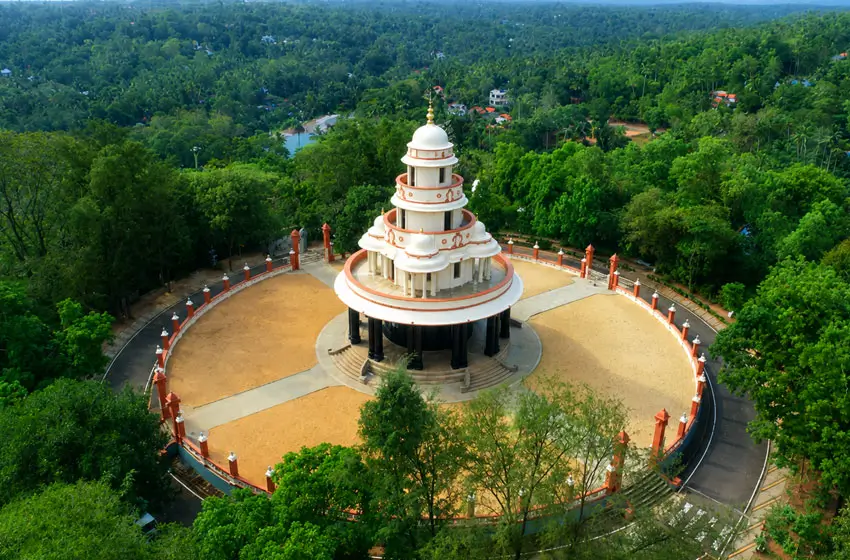
Sivagiri Mutt, on a hill about 3 km from the cliff, is the headquarters of the movement founded by Sree Narayana Guru, the social reformer and philosopher who campaigned against caste discrimination in Kerala in the late 19th and early 20th centuries. His samadhi (memorial shrine) is here, and it's an important pilgrimage site, especially at the end of December, when the Sivagiri Pilgrimage brings huge crowds. It's a peaceful place with a calm, spiritual feel, and worth a visit to understand one of the most influential figures in modern Kerala history. Visitors are welcome; dress modestly and remove shoes where indicated.
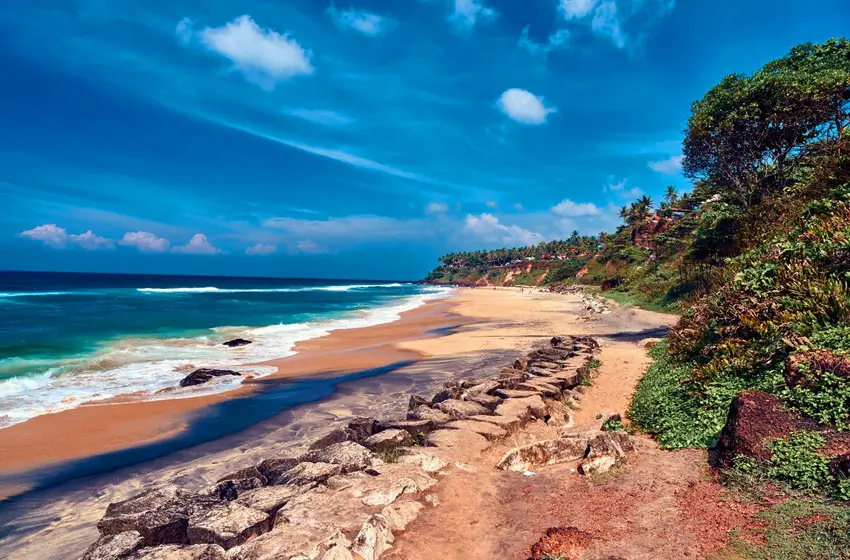
At the northern end of the cliff, steps lead down to Black Beach, named for the dark minerals in its sand. It's smaller and generally quieter than Papanasam, and good for a swim on calm days. Continue north and you'll reach Odayam Beach, a long, open stretch with fishing boats and far fewer people. The walk along the shoreline between the beaches is pleasant at low tide.
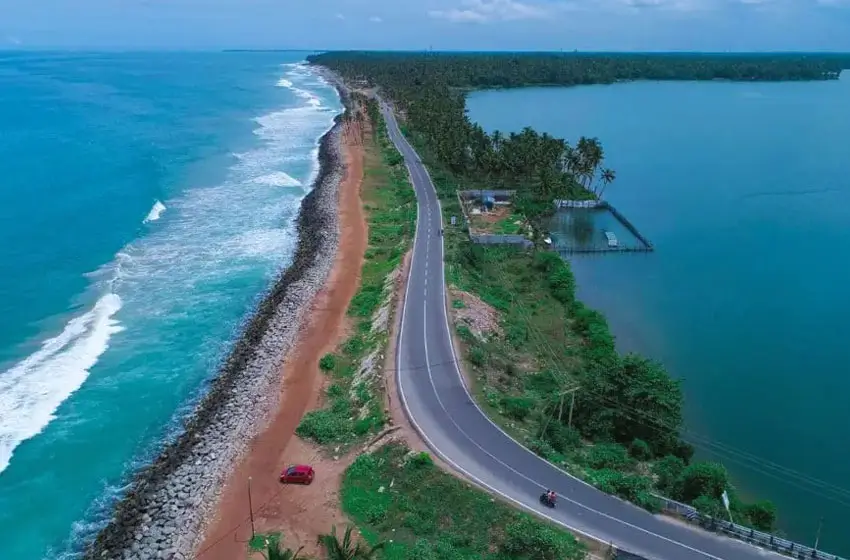
About 8 km (5 miles) north of Varkala, Kappil is where a backwater lake runs right up alongside the sea, separated only by a narrow strip of sand. You can watch the sun set over the ocean while standing beside calm, palm-lined backwaters. Small boats offer short rides on the lake, and it's a nice, quiet spot away from the cliff crowds. The sea at Kappil is often rough, so it's better for walking than swimming.
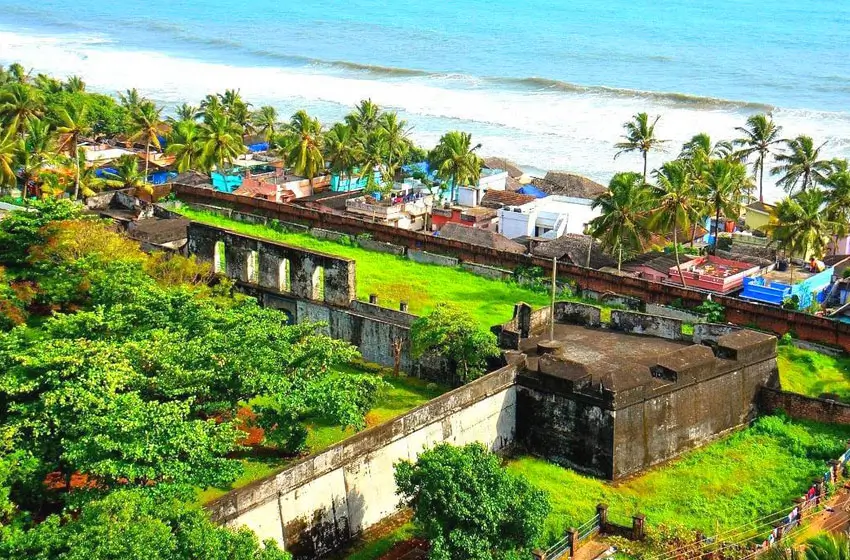
Anjengo Fort (Anchuthengu), about 30 minutes south of Varkala, was built by the British East India Company in the 1690s and was one of their earliest trading settlements on the Malabar Coast. The surviving walls, a lighthouse, and an old cemetery with graves of English traders and their families are maintained by the Archaeological Survey of India. The nearby lighthouse has good views of the coast, and the fishing village around the fort shows Kerala coastal life as it is today.
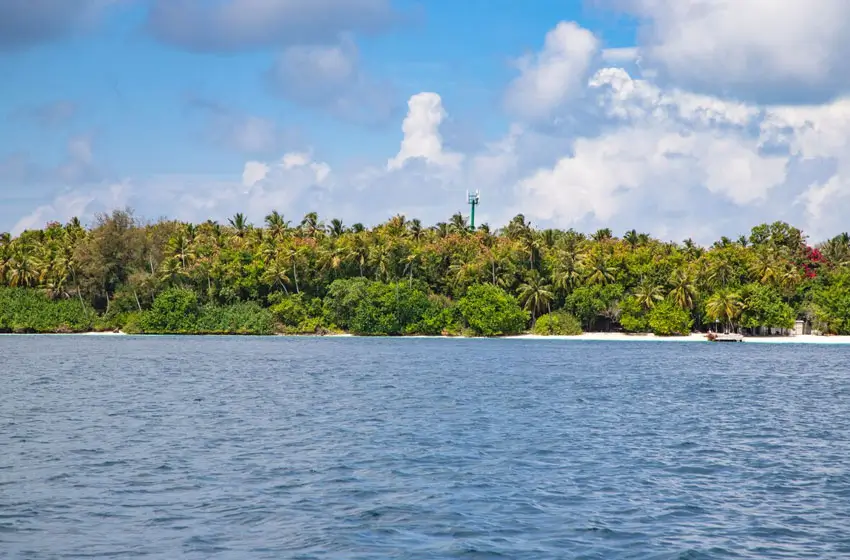
Ponnumthuruthu, or the Golden Island, is a small island in the Anchuthengu backwaters, about 20 minutes from Varkala. It's reached by a short country boat ride through quiet water lined with coconut palms, and on the island there's an old Shiva-Parvati temple. The boat trip is the highlight, giving you a short taste of the backwaters without traveling to Alleppey.
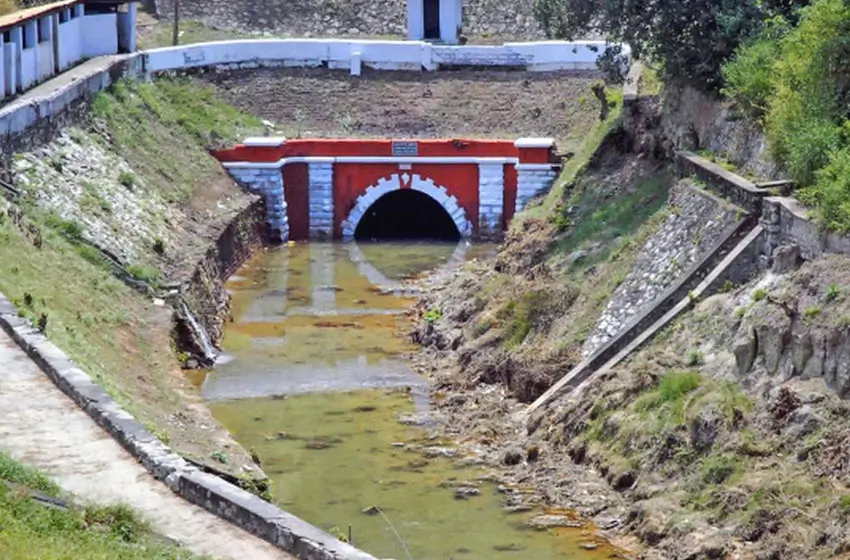
North of the town, the Varkala Tunnel is a historic canal tunnel completed in the 1880s by the rulers of Travancore. It runs about 924 meters (just over half a mile) through a hill as part of the old waterway that once linked Thiruvananthapuram and Kollam for cargo boats. It's of interest mainly to history buffs, and it's best seen from the canal banks.
Like what you see? Let's plan it for you.
Private car, driver and hotels arranged around your dates. Reply within 24 hours.
Getting there
Varkala is on the main coastal rail line, which makes it one of the easier beach towns in Kerala to reach.
Trivandrum International Airport (about 1–1.5 hours by road), with flights from the Middle East and major Indian cities
Varkala Sivagiri Railway Station (about 3 km from the cliff), with direct trains from Trivandrum, Kollam, Kochi, and Chennai
Good roads from Trivandrum, Kollam, Kovalam, and Alleppey along the coast
Tours that include Varkala
Explore more
Kerala Backwaters EscapeN.S. Rathore & Mrs. Omlata Rathore · Managing Director
We still read every enquiry ourselves. Tell us the places you liked and our planners will send a day-by-day route with drive times and a clear price.
No ready-made packages and no pressure to book. A planner from our Kochi office replies within 24 hours with a route written for your group.
Fill this in and your planner will send a first draft itinerary.