Destination
Kabini is the name most wildlife lovers in India use for the southern edge of Nagarhole National Park, where the Kabini River was dammed in the 1970s to form a long, slow-moving reservoir. The water separates Nagarhole in Karnataka from Bandipur to the south, and together with Wayanad in Kerala and Mudumalai in Tamil Nadu, these forests form one of the largest protected wildlife areas in Asia. For travelers who want to see wild elephants, tigers, and leopards in South India, there's no better place to start.
Nagarhole, also called Rajiv Gandhi National Park, covers around 250 square miles (about 640 sq km) of teak and rosewood forest, bamboo thickets, and grassy swamps. The name comes from the Kannada words for "snake river," after a winding stream that runs through the park. Before it became a protected area, these forests were the private hunting grounds of the Maharajas of Mysore, and the old hunting lodge on the riverbank is now one of the best-known safari lodges in the country.
What makes Kabini special is the backwater. When the reservoir level drops in the dry months, the receding water leaves behind wide stretches of fresh grass along the shore. Herds of Asian elephants, sometimes more than a hundred animals in an evening, come down to graze and drink, followed by gaur, deer, and the big cats that hunt them. Kabini is also where a melanistic leopard, the black panther, has been regularly photographed in recent years, which has made it famous among wildlife photographers around the world. A Kabini private tour pairs easily with Mysore, Coorg, or Wayanad.
Jeep safari in Nagarhole, boat safari on the Kabini backwaters, elephant herds, tigers and leopards, birdwatching
October – May
Dry forest and the best animal sightings from March
2 Days
2 nights gives you 3 to 4 safaris
Kannada, English.
English spoken by lodge naturalists and staff
Getting the most out of your Kabini safari depends on planning, because space in the forest is strictly limited and controlled by the Karnataka Forest Department.
Food in Kabini is served mainly at the lodges, as there are almost no restaurants nearby. Most properties work on a full-board basis, with buffets or set menus that mix South Indian, North Indian, and Western dishes. Look out for Karnataka favorites such as ragi mudde, bisi bele bath, and local chicken curry, plus Coorg-style pork at some lodges. Breakfast is usually served after the morning safari, with tea, coffee, and biscuits before you set out. Let your lodge know about any dietary needs in advance, since supplies come from towns some distance away.
Read More +Like what you see? Let's plan it for you.
Private car, driver and hotels arranged around your dates. Reply within 24 hours.
Kabini and Nagarhole National Park
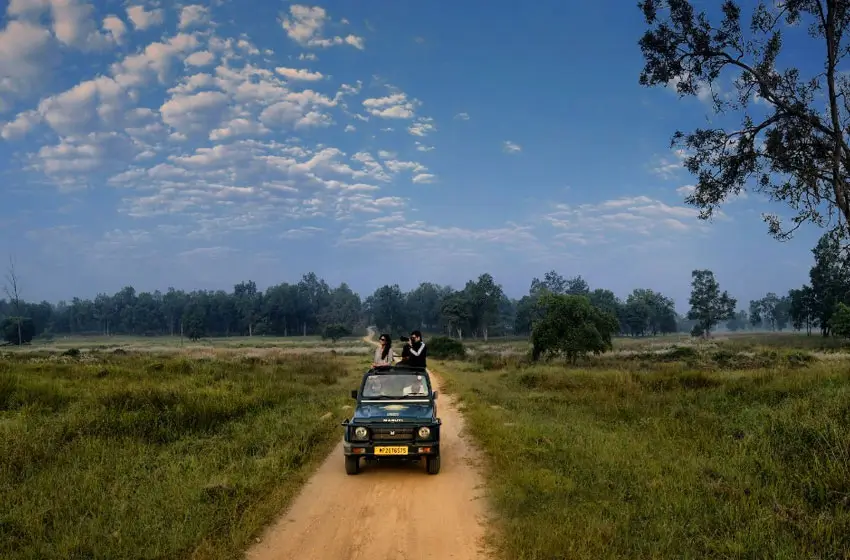
The main event of any trip is the Kabini jeep safari, which runs into the Nagarhole forest in the early morning and the late afternoon. Open vehicles follow the forest tracks with a naturalist and a forest department driver, stopping whenever there's an alarm call from langurs or spotted deer, a set of fresh tiger pugmarks on the track, or a herd of elephants crossing ahead. Each drive lasts around three hours. Sightings are never guaranteed, but in a typical two-night stay most visitors see elephants, gaur, sambar, wild boar, and many birds, and a good number also see a tiger or leopard. The morning drive is cooler and better for birds; the afternoon drive often brings the best light and animals moving toward water.
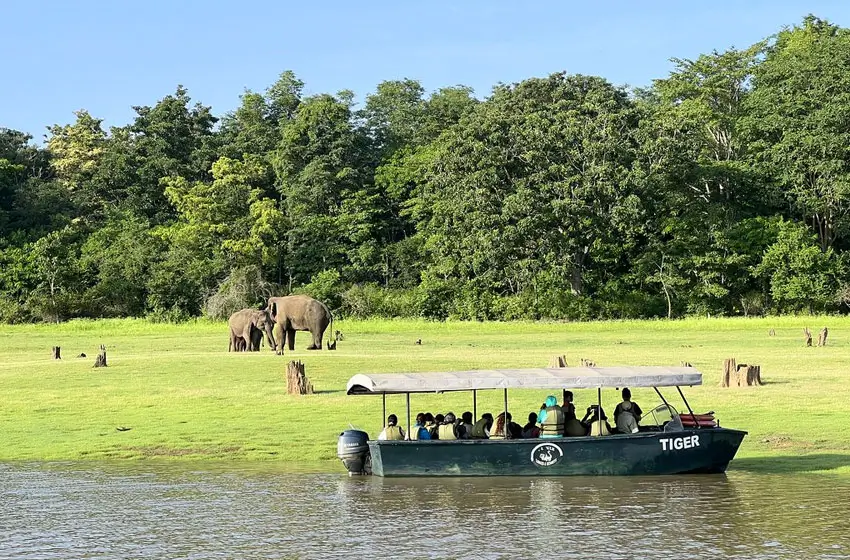
A boat safari on the Kabini reservoir shows the park from a completely different angle. Moving slowly along the shoreline, you can watch elephants bathing and feeding in the grass, crocodiles basking on the mud banks, and large groups of waterbirds, including cormorants, darters, ospreys, and the occasional fishing eagle. Boat rides are usually offered in the late afternoon, and in the dry months they can be as rewarding as a jeep drive. On calm evenings, with the sun setting over the dead tree stumps standing in the water, this is often the most photographed scene in Kabini.
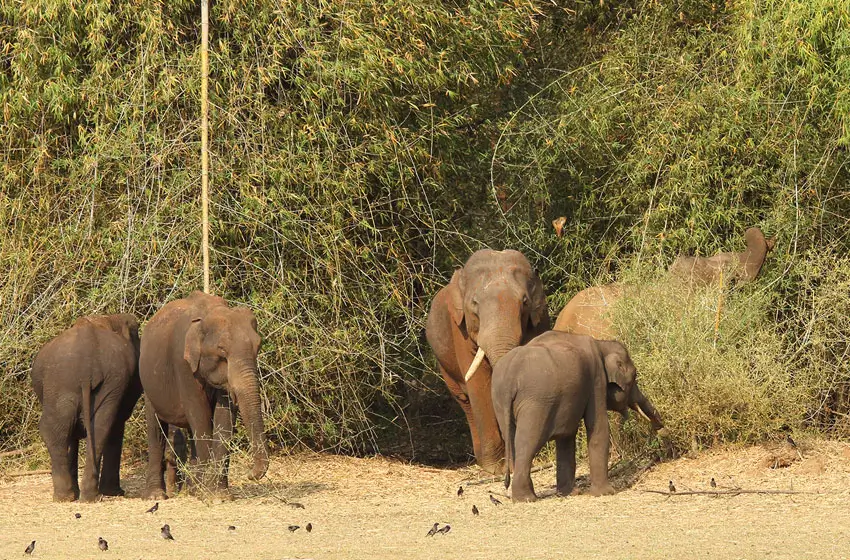
Between roughly March and June, when the forest interior dries out, the Kabini shoreline hosts one of the largest seasonal gatherings of Asian elephants in the world. Family herds with tiny calves come out of the forest in the afternoon and spread across the grassy flats, sometimes joined by large tuskers. Watching them play in the water, dust themselves, and calmly push young ones along is something many guests rank above even a tiger sighting. Your naturalist will keep a safe distance and explain the family structure of the herds.
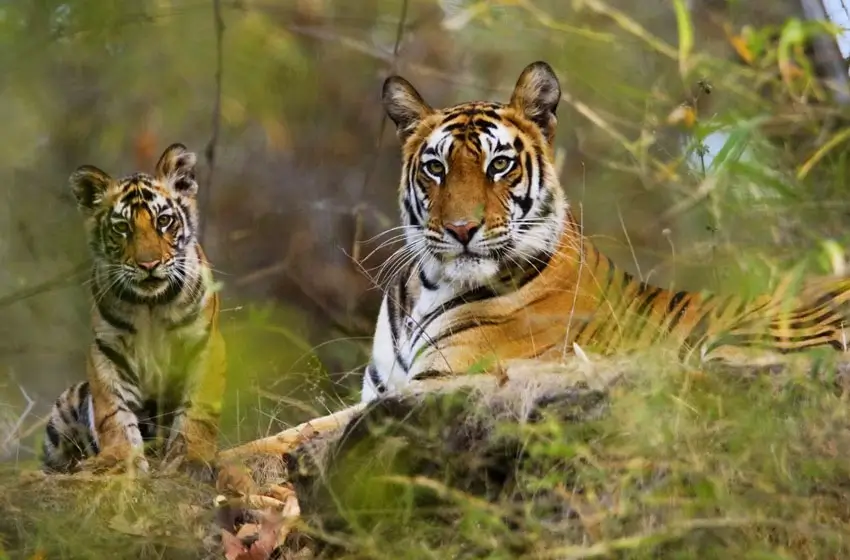
Nagarhole is part of the Nilgiri Biosphere Reserve, which holds one of the largest populations of wild Bengal tigers in India. In the Kabini area, tigers are seen more often in the dry season, when they come to waterholes and the backwater edge. Leopards are also common and often seen resting on tree branches or crossing tracks at dusk. The famous black panther of Kabini is a leopard with a dark coat, and while sightings are rare and unpredictable, they're the reason many photographers return year after year. Smaller predators you might see include dholes (Indian wild dogs), which hunt in packs and are relatively easy to spot here compared to most parks.
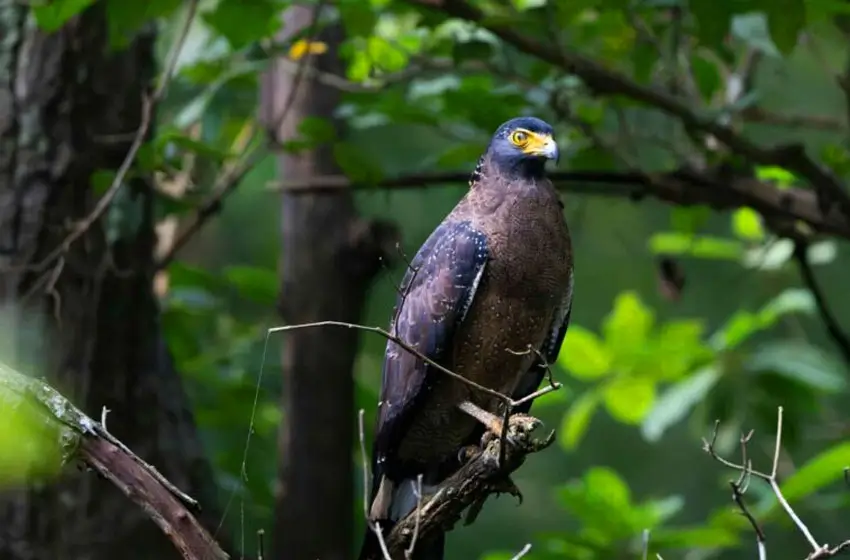
With over 250 species recorded, Nagarhole is a fine place for birdwatching. Look for Malabar pied hornbills, crested serpent eagles, changeable hawk-eagles, and the colorful Indian pitta in the forest, and herons, storks, kingfishers, and river terns along the water. Winter brings migratory birds, and early morning walks around the lodges (inside the fenced or permitted areas) can be just as good as a drive. Bring binoculars; your naturalist can help with identification.
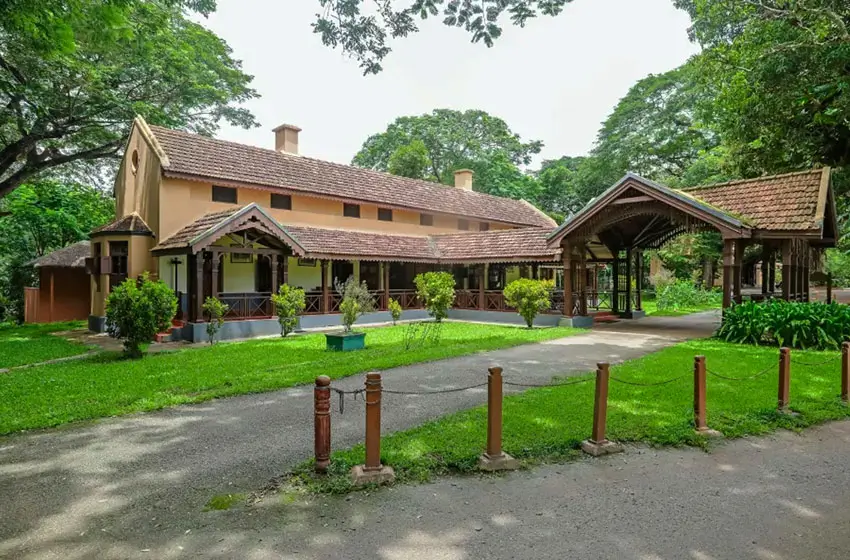
The Kabini River Lodge, run by the Karnataka government's Jungle Lodges & Resorts, was once the hunting lodge of the Maharajas of Mysore and later a favorite of British viceroys. Its old colonial bungalow, river frontage, and long history make it more than just a place to sleep. Even if you're staying elsewhere, it's worth knowing about, as it was one of the first places in India to offer wildlife tourism and helped make Kabini famous.
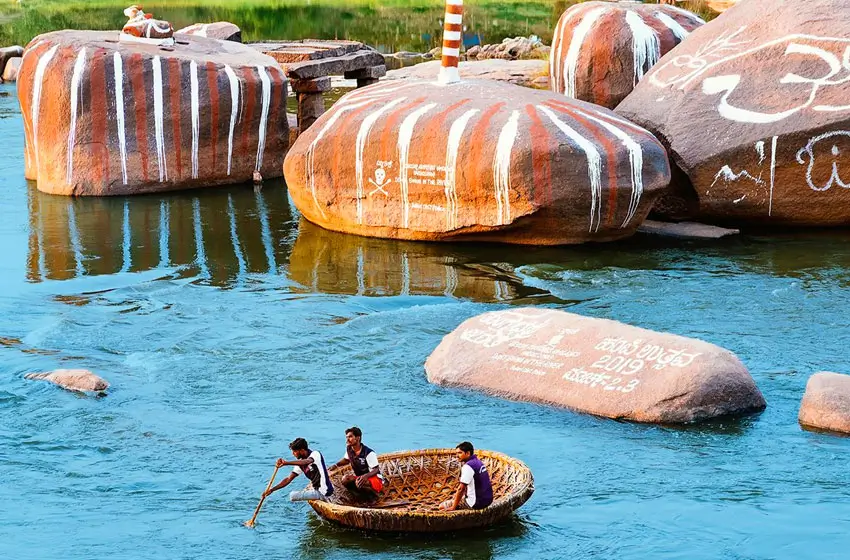
The area around Kabini is home to tribal communities such as the Jenu Kurubas, traditionally honey gatherers, and the Betta Kurubas, who once worked with elephants. Some lodges arrange respectful village visits where you can learn about their forest knowledge and crafts. Many lodges also offer short coracle rides, in round, woven boats, on safe stretches of the river near the property. It's a relaxing way to fill the hours between safaris.
Like what you see? Let's plan it for you.
Private car, driver and hotels arranged around your dates. Reply within 24 hours.
Getting there
Kabini lies in the Mysore district of Karnataka, near the border with Kerala, and is reached by road.
Bangalore International Airport is the main gateway (about 5.5 to 6 hours by road); Mysore Airport has limited domestic flights
Mysore Junction, the nearest major railway station, about 2 hours by road
Good roads from Mysore (about 2 hours), Bangalore (about 5 hours), Coorg (about 3 hours), and Wayanad (about 2 hours)
Tours that include Kabini and Nagarhole National Park
Explore more
N.S. Rathore & Mrs. Omlata Rathore · Managing Director
We still read every enquiry ourselves. Tell us the places you liked and our planners will send a day-by-day route with drive times and a clear price.
No ready-made packages and no pressure to book. A planner from our Kochi office replies within 24 hours with a route written for your group.
Fill this in and your planner will send a first draft itinerary.