 Kerala Backwaters Escape
Destination
Goa is India's smallest state, a strip of coastline about 65 miles (105 km) long on the Arabian Sea, between Maharashtra and Karnataka. Most people know it for beaches, but what makes Goa different from anywhere else in India is its history. The Portuguese arrived in 1510 and stayed for 451 years, until India took over the territory in 1961. The result is a place where whitewashed Baroque churches stand next to Hindu temples, villages have Portuguese-style mansions with deep verandas, and the food mixes Indian spices with vinegar, pork, and bread baked fresh every morning.
The pace here is slower than in the rest of India. Shops close for a long lunch, locals talk about susegad, a relaxed Goan attitude to life, and the countryside is full of rice paddies, coconut groves, and backwaters. For foreign travelers coming from the temples and crowds of Tamil Nadu or Karnataka, Goa tourism offers a genuine rest: good seafood, a beach chair, and an evening drink as the sun goes down over the sea.
Goa is also more varied than its reputation suggests. North Goa is lively, with beach clubs, markets, and nightlife. South Goa is calmer, with long, clean beaches and upscale resorts. Inland you find the Old Goa churches, a UNESCO World Heritage Site, the colonial streets of Panjim, spice farms, and the Western Ghats forest. Choosing the right part of Goa for your style of travel is the most important decision you will make, and we explain the differences below.
Basilica of Bom Jesus, Fontainhas (Panjim), Palolem Beach, Anjuna Flea Market, Chapora Fort, Dudhsagar Falls
November – February.
Dry, sunny weather and calm sea
4 Days
Add 2 days for a beach rest at the end of a South India tour
Konkani, Marathi, English, Hindi
English widely spoken in tourist areas
This is the question almost every traveler asks, and the answer depends on what you want from your stay.
North Goa is the busier half. Beaches like Baga, Calangute, and Candolim are lined with beach shacks, water sports, bars, and hotels, and they can be crowded, especially from Christmas to New Year. Farther north, Anjuna, Vagator, Morjim, Ashwem, and Mandrem are more relaxed but still social, with beach clubs, yoga retreats, boutique hotels, and the markets. North Goa also gives easy access to Panjim, Old Goa, and Goa's best-known restaurants. Choose North Goa if you want nightlife, a wide choice of places to eat, shopping, and a lively scene.
Read More +Like what you see? Let's plan it for you.
Private car, driver and hotels arranged around your dates. Reply within 24 hours.
Goa
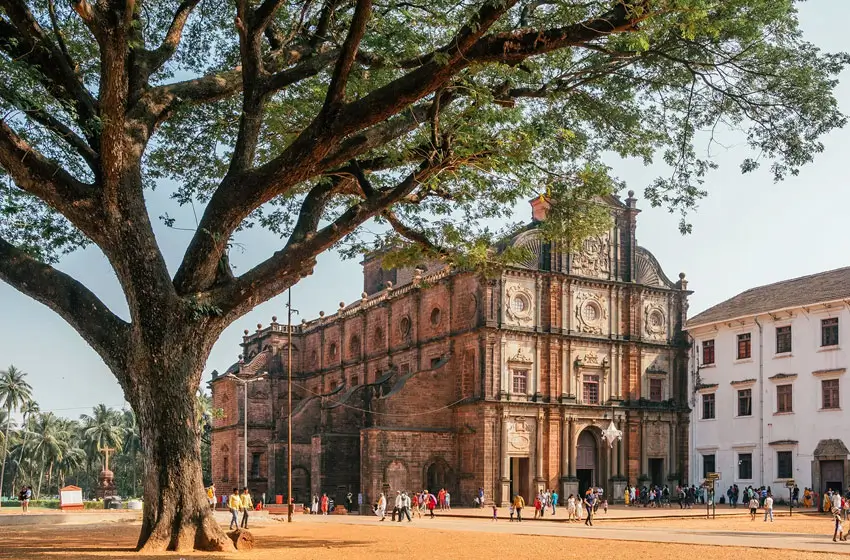
The Basilica of Bom Jesus is the most important church in Goa and the centerpiece of the Churches and Convents of Goa UNESCO World Heritage Site. Completed in 1605, it holds the body of St. Francis Xavier, the Jesuit missionary who died in 1552, in a silver casket above an elaborate marble tomb that was a gift from the Grand Duke of Tuscany. The church's front is unusual for Goa because the laterite stone was left bare rather than whitewashed. Inside, the gilded altars are some of the finest Baroque work in Asia. Every ten years or so the saint's remains are put on public view in an exposition that draws huge crowds; the most recent ran from late 2024 into early 2025. Dress modestly, as this is an active place of worship.
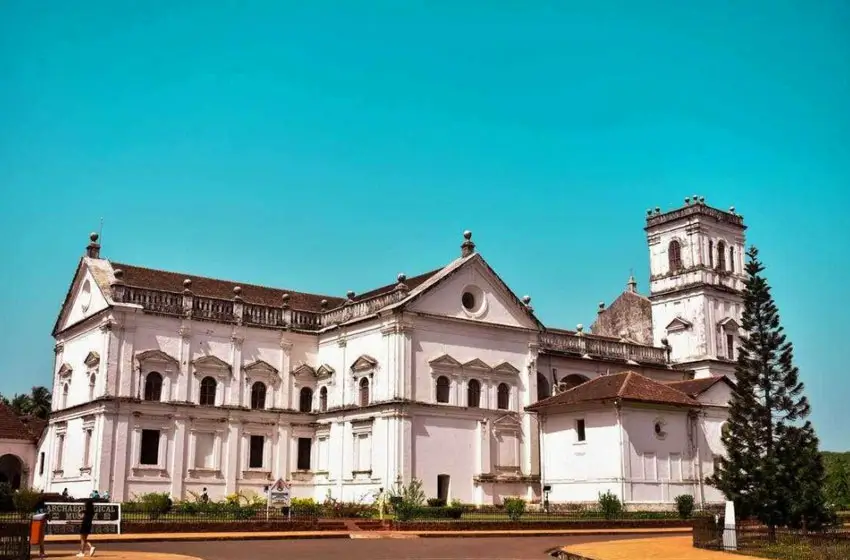
Across the road from Bom Jesus stands the Se Cathedral, one of the largest churches in Asia, built over most of the 1500s and 1600s and dedicated to St. Catherine. Its tower holds the "Golden Bell," famous for its rich tone. Old Goa was once one of the largest and wealthiest cities in Asia, before disease and silting of the river led to its abandonment in the 1700s. Today, only churches and convents remain among lawns and trees. Also worth seeing are the Church of St. Francis of Assisi with its painted interior, the small Archaeological Museum beside it, and the ruins of the Church of St. Augustine, whose tall broken bell tower still stands. Plan at least half a day, and go in the morning before it gets hot.
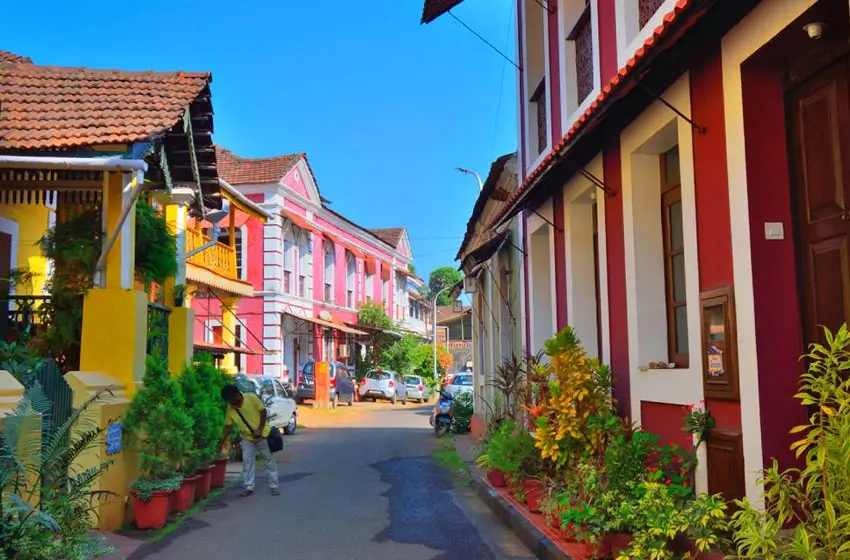
Fontainhas is the old Latin Quarter of Panjim (Panaji), Goa's small and easygoing capital. The narrow lanes are lined with houses painted yellow, blue, green, and ochre, with red tile roofs, wooden balconies, and blue-and-white Portuguese tiles (azulejos) showing house names. A walk here, with stops at small galleries, bakeries, and cafés, is one of the best ways to see Goa's Portuguese side. Nearby, the white Church of Our Lady of the Immaculate Conception, with its zigzag staircase, is the most photographed building in the city. Evening walks along the Mandovi River promenade are also popular.
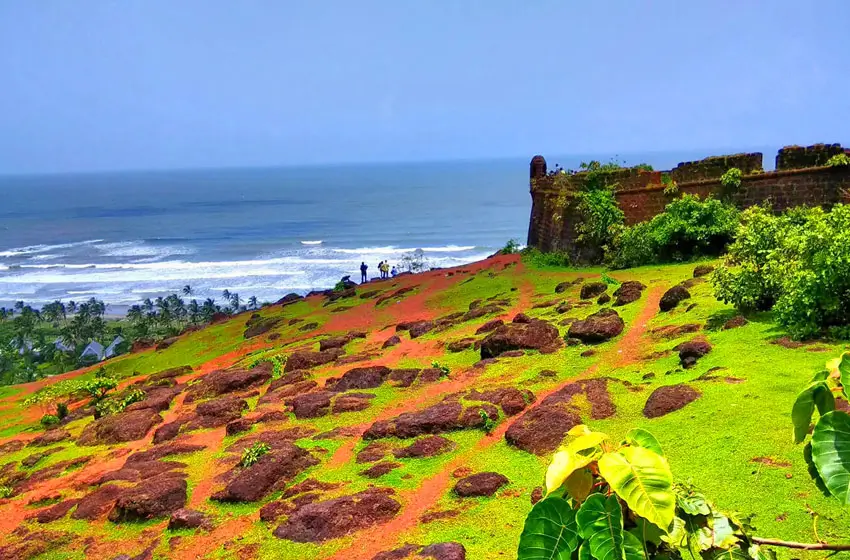
Above Vagator Beach in North Goa, the ruined walls of Chapora Fort give wide views over the Chapora River mouth and the beaches below. The Portuguese built the current fort in 1717 on the site of an earlier one, and it changed hands several times with the Marathas. Not much is left inside apart from the walls, but the climb is short, and the views at sunset are the main draw. Vagator itself has dramatic red cliffs and small coves.
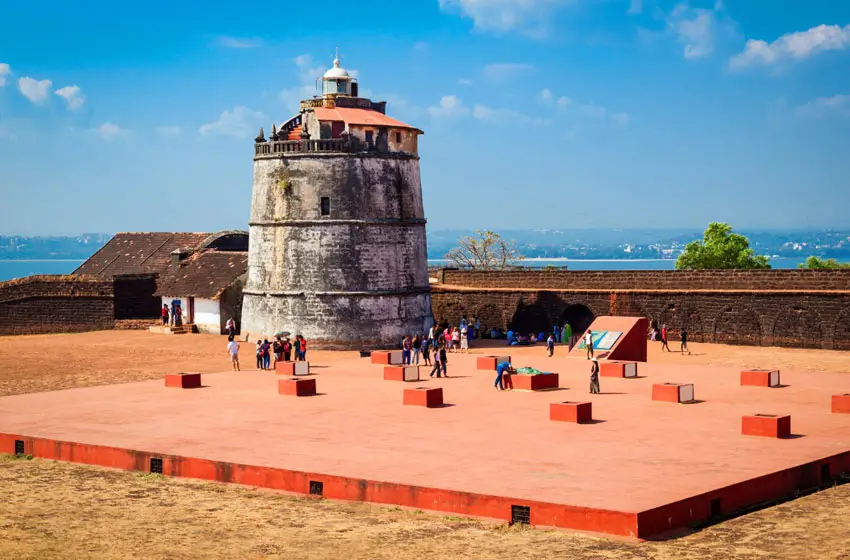
At the southern tip of the Candolim and Sinquerim beach strip, Fort Aguada was built by the Portuguese in 1612 to guard against Dutch and Maratha attacks. Its name comes from the freshwater spring inside, where passing ships filled up with water. The fort has a 19th-century lighthouse, among the oldest of its kind in Asia, and views across the mouth of the Mandovi River. The lower part of the fort, which was a jail for many years, has been restored as a museum focused on Goa's freedom struggle.
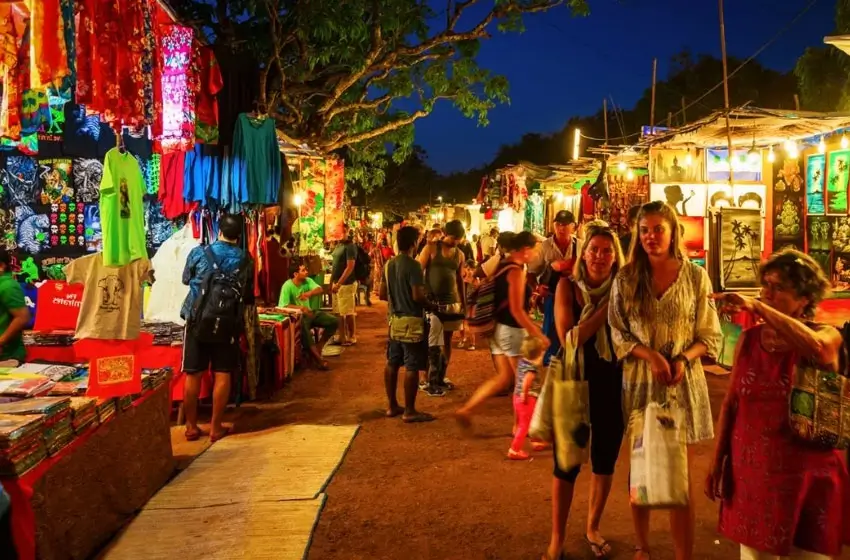
The Anjuna Flea Market started in the hippie days of the late 1960s and 1970s, and it still runs on Wednesdays during the season, from about November to April. Hundreds of stalls sell clothes, jewelry, spices, handicrafts from across India, and Tibetan and Kashmiri goods, with live music and cafés around the edges. In the evenings, the Saturday Night Market at Arpora has a similar mix with food stalls and bands. Bargaining is expected at both. Keep an eye on your bag in the crowds.
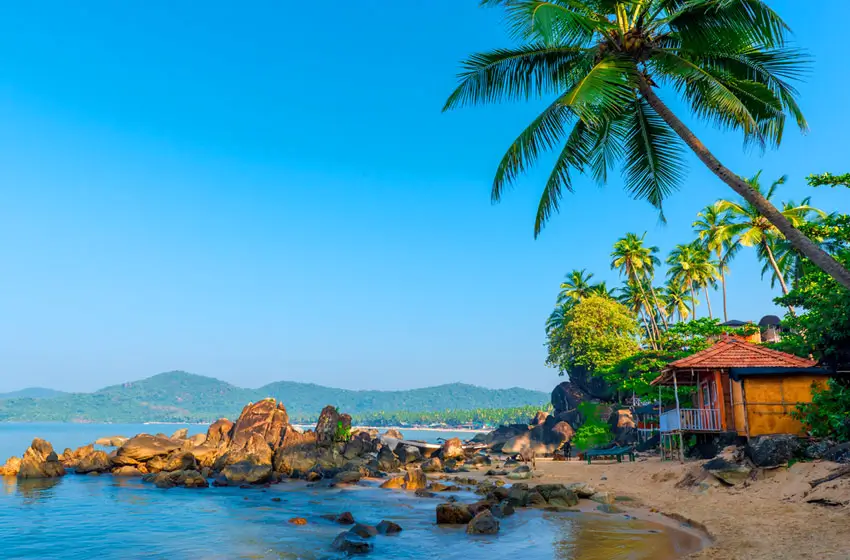
In the far south of Goa, Palolem Beach is a crescent-shaped bay backed by coconut palms, with calm water that is good for swimming for most of the season. Wooden beach huts and small restaurants line the sand, and fishing boats take visitors out to look for dolphins in the morning. Palolem gets busy in peak season but stays easygoing. For something quieter still, walk south to Patnem or take a short drive to Agonda and Galgibaga, a nesting beach for olive ridley turtles.
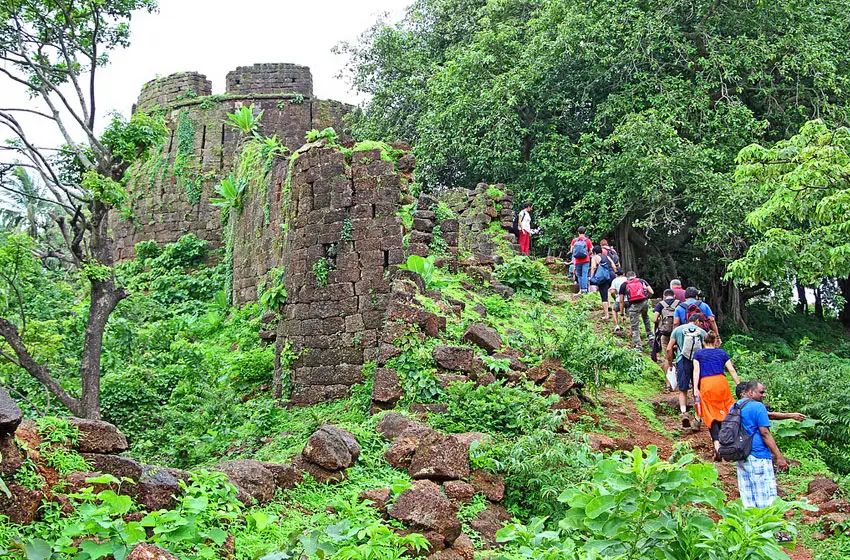
On a headland in South Goa, Cabo de Rama is a large, mostly ruined fort with a small chapel still in use and some of the best cliff views in Goa. Local legend links it to Lord Rama from the Ramayana. It sees few visitors, and a path leads down to a small rocky beach below. Combine it with a visit to Agonda or Palolem in the same day.
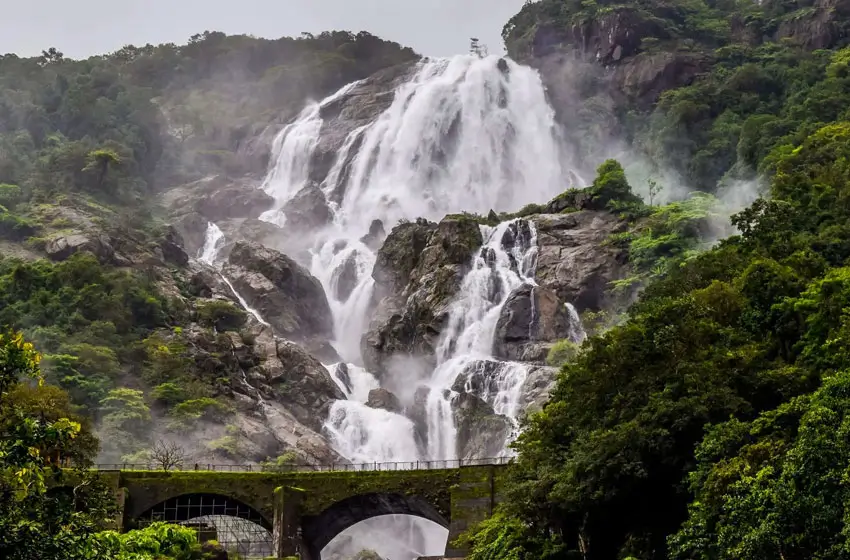
On the border with Karnataka, in Bhagwan Mahavir Wildlife Sanctuary, Dudhsagar Falls drops about 1,017 feet (310 m) in four tiers. The name means "sea of milk," and after the monsoon the white water really does look like spilled milk against the green forest. The famous image is the railway bridge crossing the falls partway down. Visits are by forest department–approved jeeps from Collem, and the trips run only after the monsoon, usually from around October to May, depending on conditions. Combine it with a spice farm visit near Ponda for a full day.
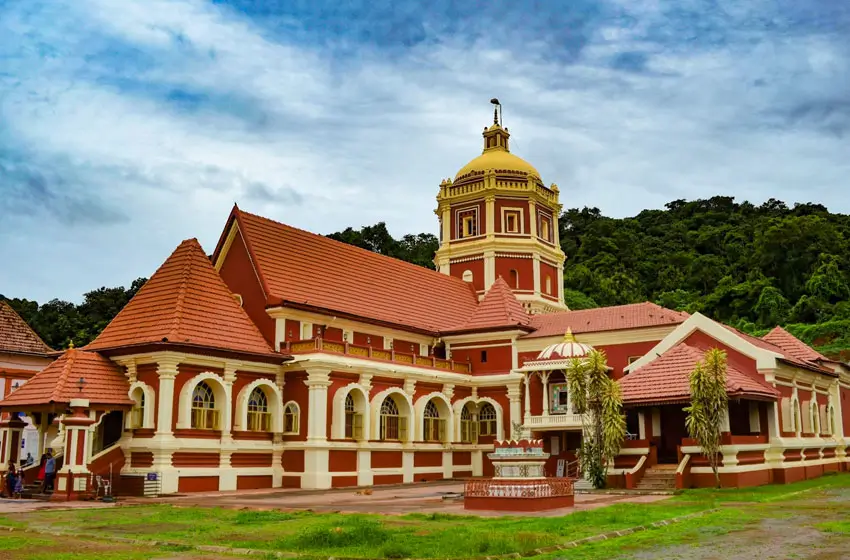
The Ponda area, in central Goa, has some of the state's most important Hindu temples. Many were moved here from the coast in the 1500s and 1600s to escape Portuguese religious persecution. The Shri Mangueshi Temple is dedicated to Shiva and has a seven-story lamp tower (deepastambha) unique to Goan temple design. The Shri Shanta Durga Temple combines Indian and European elements, with a roof and chandeliers that look surprisingly colonial. Both welcome respectful visitors. Remove shoes and cover shoulders and knees.
Like what you see? Let's plan it for you.
Private car, driver and hotels arranged around your dates. Reply within 24 hours.
Getting there
Goa is well connected by air, rail, and road to the rest of India.
Dabolim Airport (south-central Goa) and Manohar International Airport at Mopa (North Goa), with flights from all major Indian cities and some international routes, including the Middle East
Madgaon (Margao) and Thivim stations on the Konkan Railway, with trains from Mumbai, Mangalore, and Kerala, and Vasco da Gama station with trains toward Hubli and Bangalore
About 7 to 8 hours from Hampi, 10 to 11 hours from Mumbai, and 3 hours from Gokarna along the coast
Tours that include Goa
Explore more
Kerala Backwaters EscapeN.S. Rathore & Mrs. Omlata Rathore · Managing Director
We still read every enquiry ourselves. Tell us the places you liked and our planners will send a day-by-day route with drive times and a clear price.
No ready-made packages and no pressure to book. A planner from our Kochi office replies within 24 hours with a route written for your group.
Fill this in and your planner will send a first draft itinerary.