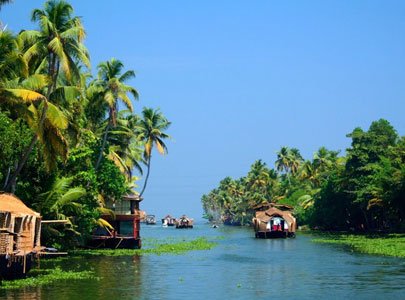
 Kerala Backwaters Escape
Destination
Misty hills, coffee bushes under tall shade trees, and the smell of pepper drying in the sun: that's the first impression most visitors have of Coorg. Known locally as Kodagu, it's a small hill district in the south-west corner of Karnataka, on the slopes of the Western Ghats. The main town, Madikeri, sits at about 3,500 feet (around 1,070 m), high enough to keep the air cool for much of the year.
Coorg is the heart of India's coffee country. Karnataka grows most of the country's coffee, and Kodagu is its leading coffee district, with both arabica and robusta grown under a canopy of rosewood, silver oak, and jackfruit trees. Many of the estates have been run by the same families for generations, and a lot of them now welcome guests in plantation homestays and bungalows. Staying on a working estate, walking through the coffee in the morning, and drinking coffee grown a few yards from your room is the main reason people come to Coorg.
The district is also home to the Kodavas, a proud community with their own language, martial traditions, dress, and food. Coorg has produced many of India's top army officers, including Field Marshal K. M. Cariappa, and you'll notice a strong sense of local identity. For travelers on a Karnataka private tour, Coorg fits neatly between Mysore and Kabini or the Kerala hills, and it gives you a slower, greener break between busier cities.
Coffee plantations, Abbey Falls, Raja's Seat, Namdroling Monastery, Dubare Elephant Camp, Talacauvery
October – March
Cool, dry weather and green hills
2 Days
Add 1 night to fully relax at a plantation stay
Kodava, Kannada, English
English spoken at homestays and resorts
Kodava food is quite different from the vegetarian cooking found in most of Karnataka. The best-known dish is pandi curry, pork cooked in a dark, tangy sauce made with kachampuli, a thick vinegar made from a local fruit. It's usually eaten with kadambuttu, soft steamed rice balls, or akki roti, thin rice-flour flatbread. Other dishes to try include nool puttu (rice noodles), bamboo shoot curry during the monsoon, chicken curry with Coorg spices, and wild mushroom dishes in season. Vegetarians will also eat well, with fresh vegetables, local greens, and jackfruit dishes.
Of course, try the Coorg coffee, usually filter coffee made with milk and sugar, though most estates will happily serve it black. Local honey, homemade wines from fruits like ginger and passion fruit, and homemade chocolates are popular treats you'll see in every Madikeri shop.
Read More +Like what you see? Let's plan it for you.
Private car, driver and hotels arranged around your dates. Reply within 24 hours.
Coorg
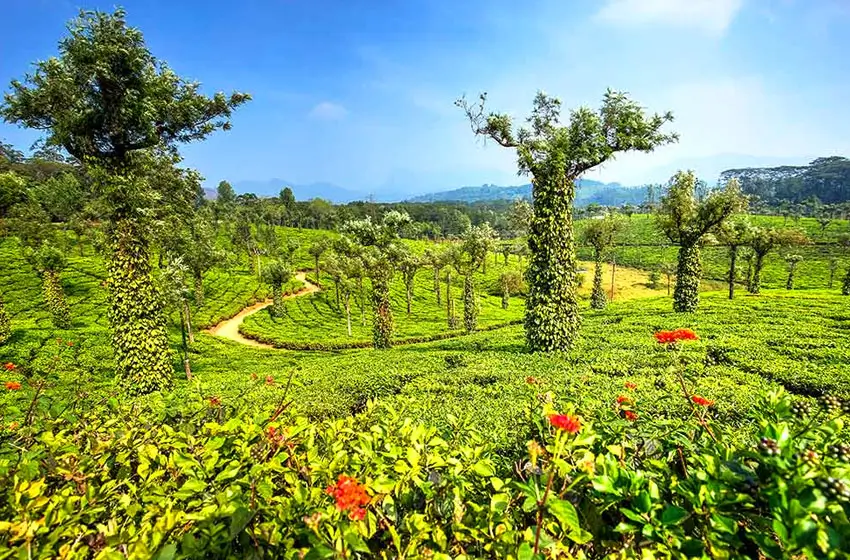
No visit to Coorg is complete without a walk through a coffee plantation. Most estates offer a guided tour that takes you along shaded paths between coffee bushes, black pepper vines climbing the trees, cardamom plants, and orange trees. You'll learn how coffee is grown, picked, pulped, dried, and roasted, and you'll usually end with a tasting on the veranda. The picking season runs roughly from December to February, when you can watch workers hand-harvest the red cherries and see the beans drying in large yards. In March and April, a short burst of rain brings the coffee into flower, and for a few days the hills are covered in white blossoms that smell a bit like jasmine. If you're staying at a plantation homestay, the estate walk is often included.
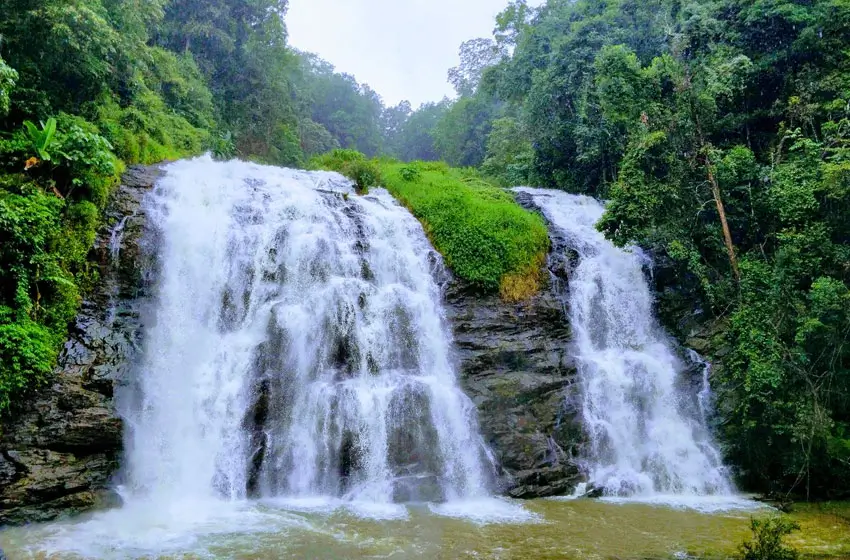
Abbey Falls (also spelled Abbi Falls) is the best-known waterfall in Coorg, about 5 miles (8 km) from Madikeri. A short downhill path of steps leads through coffee and spice plantations to a hanging bridge facing the falls, where the Kaveri's tributary drops about 70 feet over dark rocks. The falls are at their most powerful just after the monsoon, from August to November, and much thinner by late spring. Swimming is not allowed, and the steps back up can be slippery, so wear shoes with good grip.
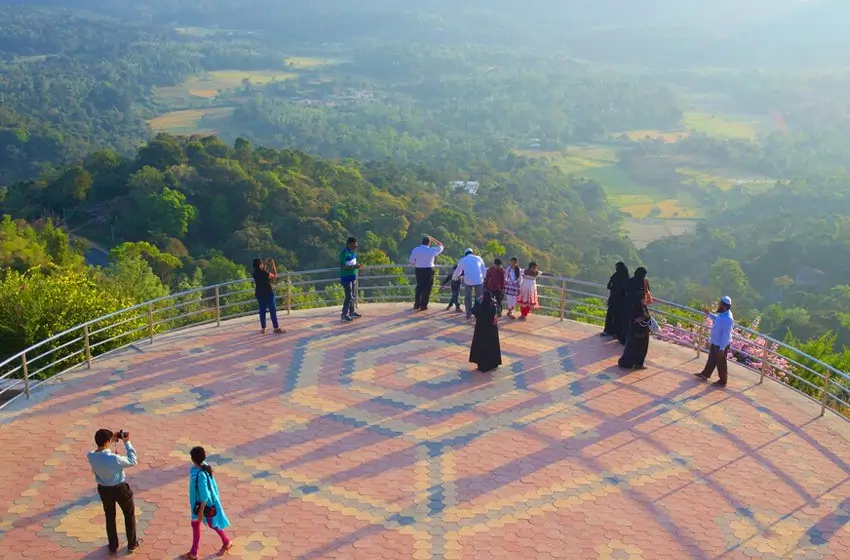
Raja's Seat is a small garden on the edge of Madikeri with a stone pavilion where the old kings of Coorg are said to have watched the sunset. The view stretches over layers of green valleys and hills, often with mist settling in the low ground. Come in the late afternoon for the sunset, and stay for the musical fountain show in the evening, which is popular with Indian families. It's an easy, low-effort stop that most visitors fit in on their first evening.
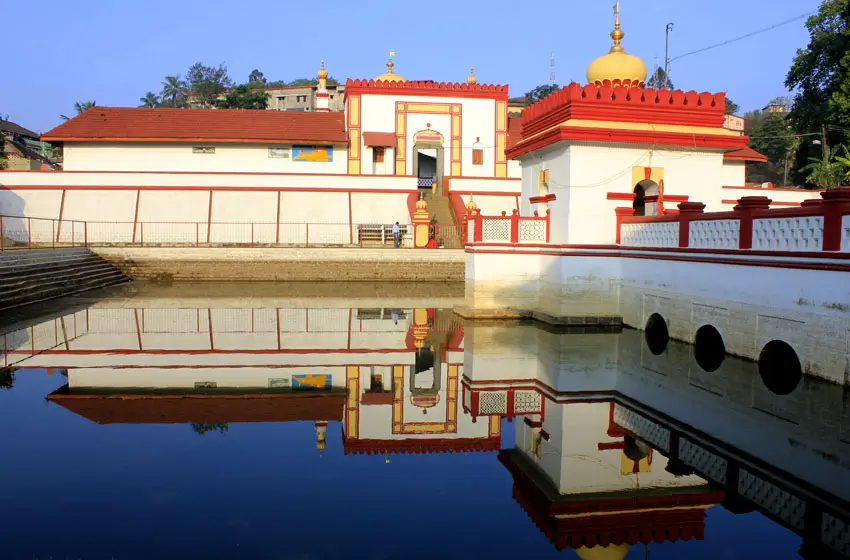
The Madikeri Fort was first built in mud by the local Haleri kings in the 17th century and later rebuilt in stone by Tipu Sultan. Inside are the old palace, now used as government offices, a small museum, and a colonial church, along with two life-size stone elephants at the gate. A short walk away, the Omkareshwara Temple from 1820 is unusual for its mix of styles: it has domes and minarets that look Islamic, with a Gothic touch, and a temple tank in front. Both can be covered in about an hour.
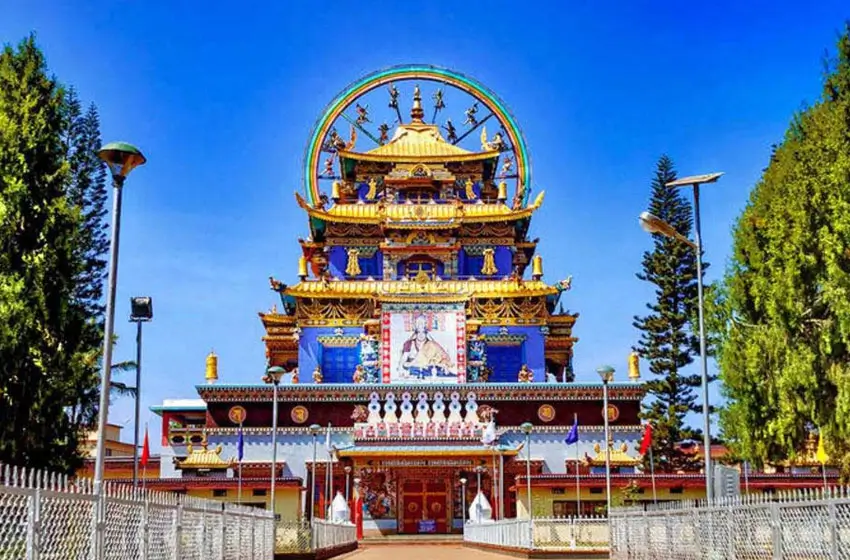
About 50 miles (80 km) east of Madikeri, near Kushalnagar, Bylakuppe is one of the largest Tibetan settlements outside Tibet, established in the early 1960s for refugees who followed the Dalai Lama to India. Its center is the Namdroling Monastery, home to thousands of monks. The main hall, often called the Golden Temple, holds three gold-covered statues around 60 feet tall, of the Buddha, Padmasambhava, and Amitayus. Try to visit in the afternoon when monks gather for prayers with drums and long horns. Momos and thukpa at the small cafés outside the gate make a nice lunch. Dress modestly and walk clockwise around the shrines.
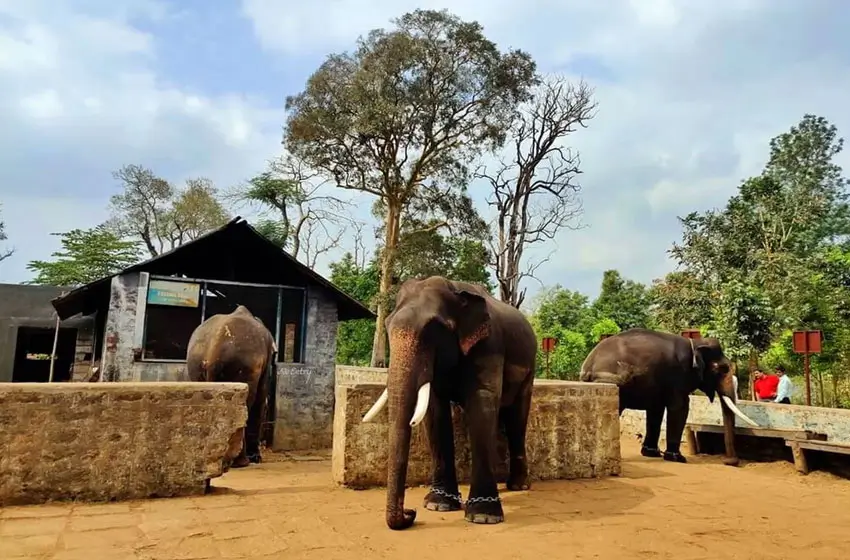
On the banks of the Kaveri River, the Dubare Elephant Camp is a forest department camp where trained elephants are cared for. In the morning, you can watch the mahouts bathe and feed the elephants in the river and learn about their training and daily care. You reach the camp by a short boat ride across the river, which depends on water levels. Get there early, as the bathing session happens in the first part of the morning. The river nearby is also used for white-water rafting during and just after the monsoon, when the rapids are strong enough.
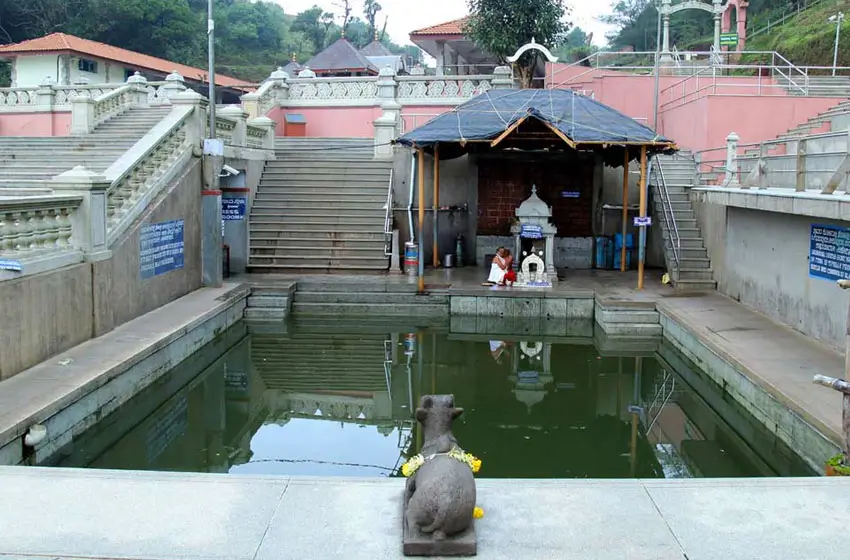
High in the Brahmagiri Hills, Talacauvery is the source of the Kaveri River, one of the most sacred rivers in South India. A small pond and shrine mark the spot where the river is believed to rise, and a long flight of steps leads up to a viewpoint over the Western Ghats. Every year in mid-October, thousands of pilgrims gather here for Tula Sankramana, when water is said to rise from the spring at a set moment. On the way up, stop at Bhagamandala, a temple town at the meeting point of the Kaveri, the Kannike, and a mythical underground river. The Bhagandeshwara Temple there has Kerala-style sloping roofs and copper tiles.
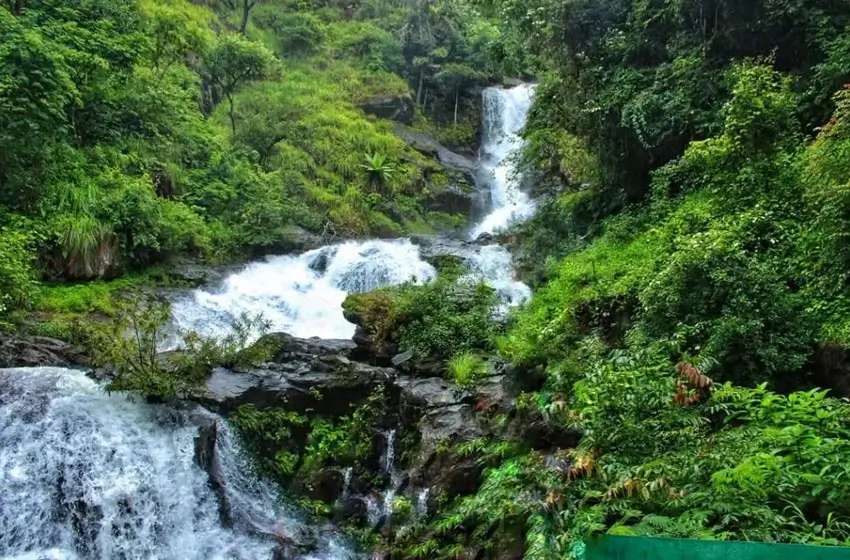
In the far south of Coorg, near the border with Kerala and the edge of Nagarhole National Park, Iruppu Falls drops in two stages through thick forest. A walk of about 15 minutes leads from the Rameshwara Temple at the base to the falls, and the area is considered holy, especially during the festival of Shivaratri. It's a good stop if you're traveling between Coorg and Kabini or Wayanad.
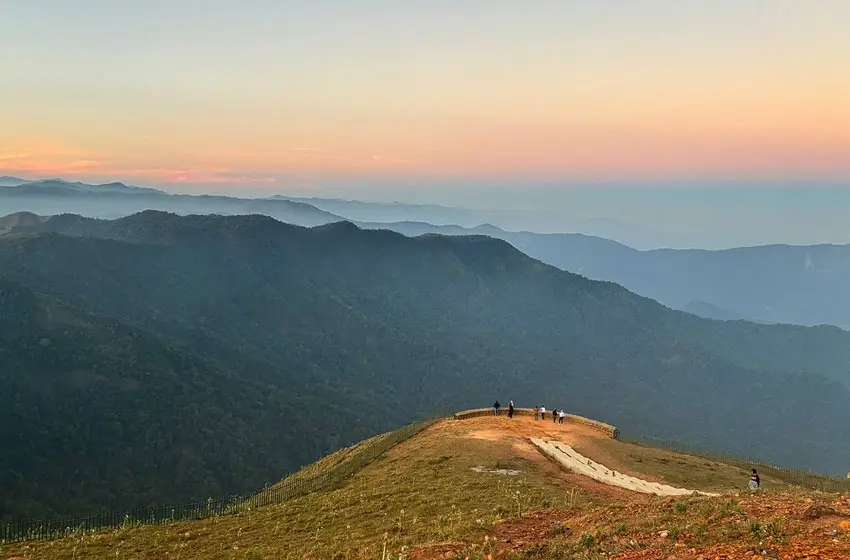
For a bit of adventure, take a jeep ride to Mandalpatti, a grassy hilltop about 15 miles (25 km) from Madikeri. The last stretch is a rough, bumpy track that ordinary cars can't handle, so you'll switch to a local four-wheel-drive jeep. The reward is a wide view of rolling grassland and forested ridges, often with clouds passing below you. Go early in the morning for the clearest views.
Like what you see? Let's plan it for you.
Private car, driver and hotels arranged around your dates. Reply within 24 hours.
Getting there
Coorg has no airport or railway station of its own, so most visitors arrive by road from Bangalore, Mysore, or Mangalore.
Mangalore International Airport (about 3.5 hours), Kannur International Airport in Kerala (about 3 hours), or Bangalore International Airport (about 6 hours)
Mysore Junction is the nearest major station, about 3 hours by road from Madikeri
Good highways from Bangalore (about 5.5 to 6 hours) and Mysore (about 3 hours), with private car transfers to Kabini and Wayanad
Tours that include Coorg
Explore more
Kerala Backwaters Escape Kerala Backwaters Escape
 Kerala Backwaters Escape
 Kerala Backwaters Escape
N.S. Rathore & Mrs. Omlata Rathore · Managing Director
We still read every enquiry ourselves. Tell us the places you liked and our planners will send a day-by-day route with drive times and a clear price.
No ready-made packages and no pressure to book. A planner from our Kochi office replies within 24 hours with a route written for your group.
Fill this in and your planner will send a first draft itinerary.