 Kerala Backwaters Escape
Destination
Chettinad is not a single town but a cluster of around 70 villages spread across the dry plains of Sivaganga and Pudukkottai districts in Tamil Nadu, with Karaikudi as its main market town. It was the homeland of the Nattukottai Chettiars, a community of bankers and traders who made enormous fortunes in the 19th and early 20th centuries lending money and doing business across Burma, Ceylon, Malaya, Singapore, and French Indochina. They sent their wealth home and spent it on houses.
The result is one of the most surprising sights in India. In sleepy villages with dusty lanes and goats in the road, you'll find thousands of grand Chettinad mansions, some with dozens of rooms and several courtyards. Builders used Burmese teak, Italian marble, Belgian mirrors, English cast iron, Japanese tiles, and a polished lime plaster made with egg whites that still shines today. Many of these houses now stand empty and locked, their owners living in Chennai or overseas, which gives the area a quiet, faded grandeur.
Chettinad tourism suits travelers who like slow travel, architecture, and food. There are no blockbuster monuments here. Instead you spend your days wandering through mansions, visiting tile and handloom workshops, seeing old temples and village tanks, and eating some of the most famous cooking in India. A stay in a restored heritage mansion hotel is the highlight, and it fits neatly between Trichy, Madurai, and Rameswaram on a southern Tamil Nadu tour.
Kanadukathan Palace, Athangudi Palace, Athangudi tile workshops, Karaikudi antique market, Pillaiyarpatti Temple
October – March
Mild weather for village walks
2 Days
Two nights in a heritage mansion is ideal
Tamil, English.
Heritage hotel staff and guides speak English
Most mansions are private homes, so it helps to know how visiting works:
Chettinad cuisine is the region's other great attraction, and it's famous across India for its bold flavors. Cooks here grind fresh spice blends using black pepper, dried red chilies, fennel, cumin, coriander seeds, star anise, and kalpasi (black stone flower), a lichen that gives a smoky, earthy taste. The Chettiars' overseas trade brought ingredients and ideas from Southeast Asia, and their cooking uses many dried and preserved foods suited to a hot, dry climate.
Read More +Like what you see? Let's plan it for you.
Private car, driver and hotels arranged around your dates. Reply within 24 hours.
Chettinad
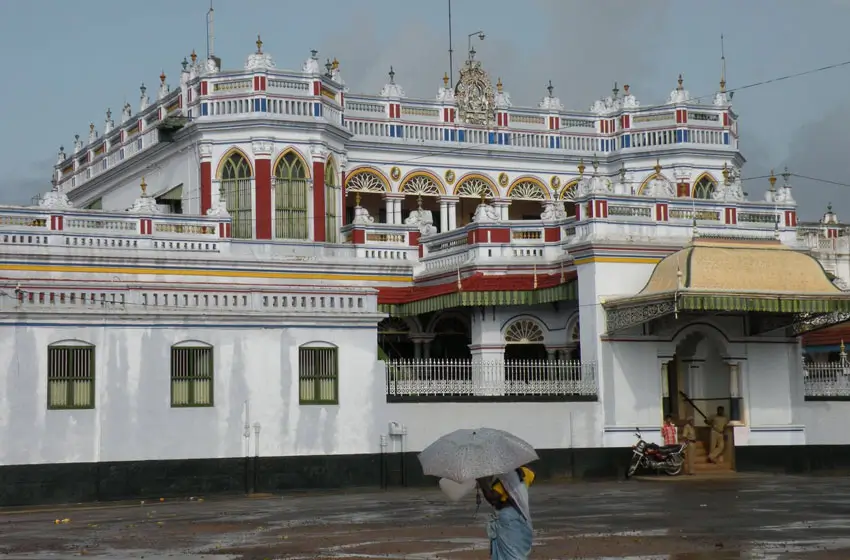
The Chettinad Palace in Kanadukathan is the best-known mansion in the region. It was built in the early 20th century by Raja Sir Annamalai Chettiar, a banker and philanthropist who founded Annamalai University and was one of the founders of the Indian Bank. From the outside it's a long, imposing building on a raised platform; inside are a series of courtyards and halls with teak pillars, carved doors, and colorful ceilings. The family still owns the palace, and access for visitors can be limited, so ask your guide what is possible on the day. Even from the street, it shows the scale of Chettiar ambition. Kanadukathan itself is one of the best-preserved Chettinad villages, and a walk along its streets lined with grand facades is a fine introduction to the area.
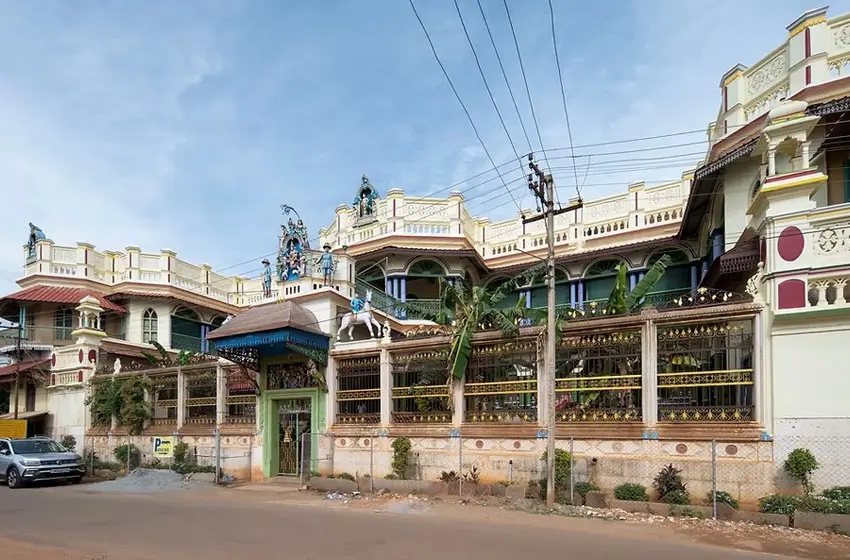
The Athangudi Palace, also known as Lakshmi House, in the village of Athangudi, is one of the most richly decorated Chettinad homes open to visitors. Its main hall has painted ceilings, Belgian glass, wooden carvings, and a row of portraits and paintings, including images of gods and of British royalty, a typical Chettiar mix. The floors are laid with the colorful handmade tiles for which Athangudi is famous. A small entry fee goes toward upkeep. It's a good place to understand how a Chettiar household was organized, with a public front area for business and receiving guests, and private courtyards behind for the family.
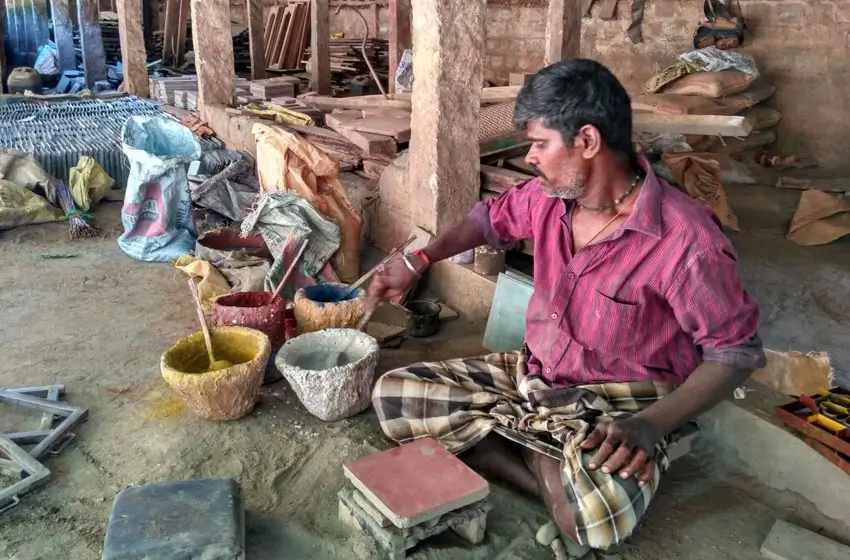
The village of Athangudi gives its name to Athangudi tiles, handmade cement tiles in bright patterns that cover floors across Chettinad and are now sold all over India. At small family workshops, you can watch artisans pour colored cement into metal frames on a glass sheet, back it with a layer of sand and cement, and leave the tiles to cure in water. The colors come from natural oxides, and no firing is involved. A visit takes only half an hour and is one of the most enjoyable experiences in the region. Workshops can ship orders abroad if you want tiles for your own home.
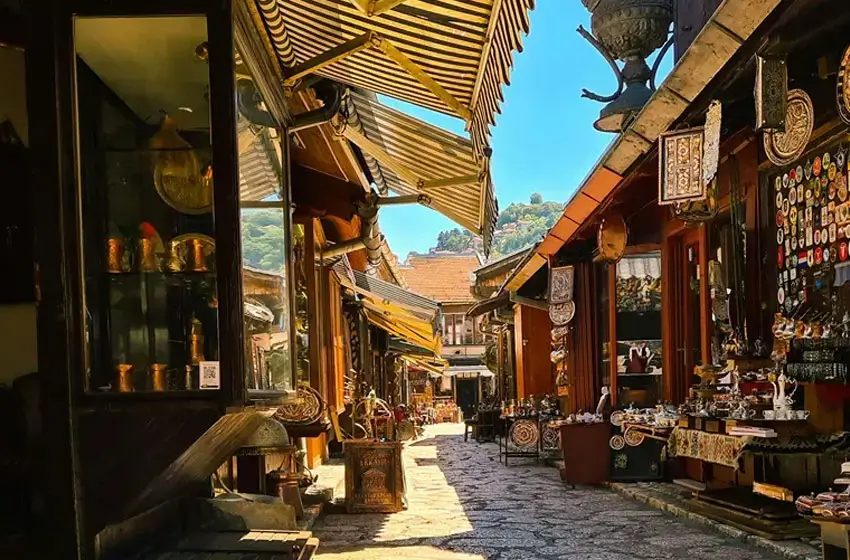
Karaikudi's antique market, in the lanes around Muneeswaran Kovil Street, is an unusual place to browse. As old mansions are sold, divided, or demolished, their contents end up here: brass and copper pots, wooden chests, carved doors and pillars, Burmese lacquer boxes, enamel signs, porcelain, glass lamps, old photographs, and colonial-era clocks. Some pieces are genuinely old and some are clever reproductions. Bargaining is normal. Large furniture can be shipped, but check export rules carefully, since items more than 100 years old cannot legally leave India without official clearance.
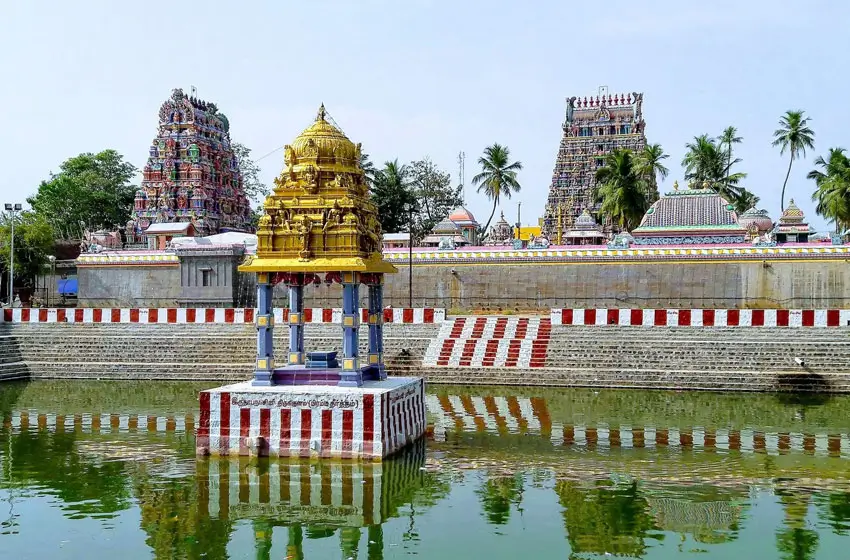
About 7 miles (12 km) from Karaikudi, the Pillaiyarpatti Temple is one of the most important Ganesha temples in Tamil Nadu. Its main image, said to be carved into the rock in a cave shrine, is very old, and the temple has long been managed by the Chettiar community. It's an active pilgrimage site with a calm, well-kept atmosphere, and a good place to see Tamil Hindu worship at a smaller scale than in Madurai or Srirangam. Non-Hindus can usually visit the outer areas.
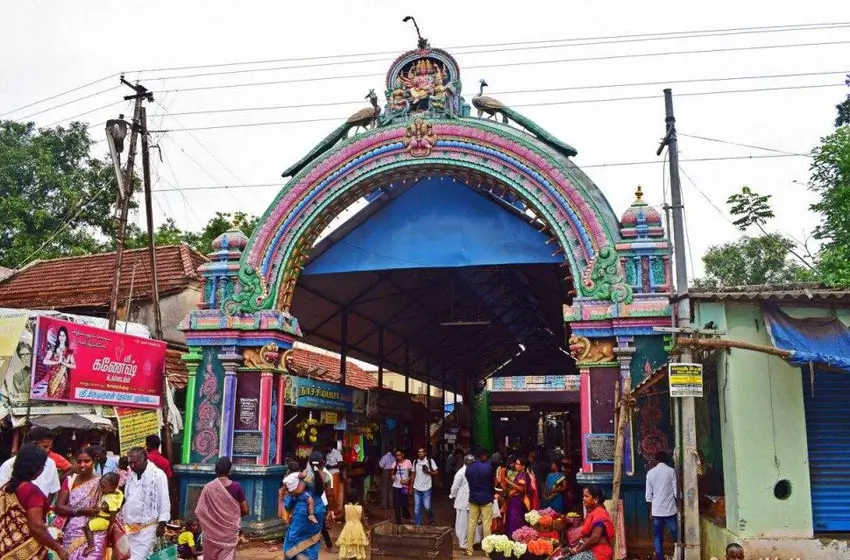
The Kundrakudi Temple, dedicated to Lord Murugan, sits on top of a small rocky hill near Karaikudi. A short climb of steps leads to the shrine and gives wide views over the flat countryside, palm trees, and village tanks. At the base of the hill are rock-cut cave shrines from the Pandya period with old carvings. Late afternoon is a pleasant time to visit, when the light softens and local families come to pray.
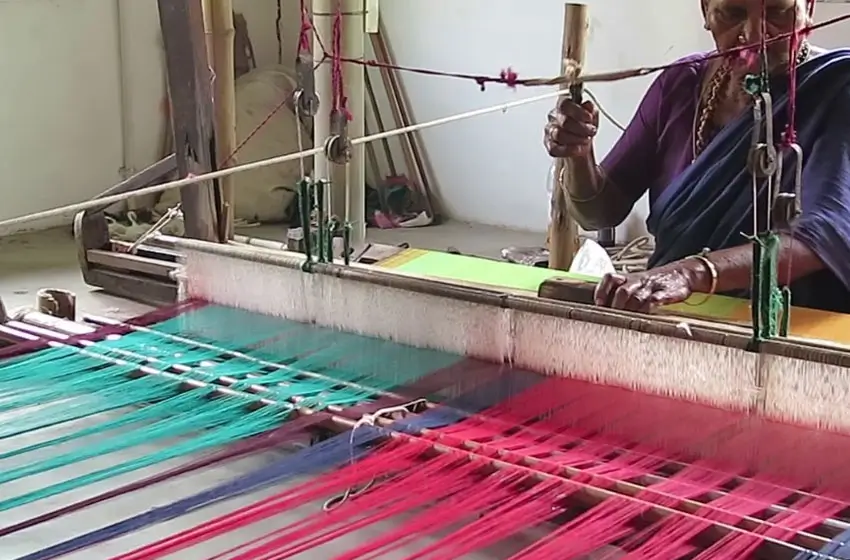
Chettinad is known for its Kandangi sarees, thick cotton sarees with bold checks, stripes, and contrasting borders in deep colors such as mustard, red, and black. In villages such as Kanadukathan and Kothamangalam, a few weavers still work on traditional pit looms. Visiting a weaving family lets you see the whole process and buy directly from the people who make the cloth. The fabric is also used for table linen and stoles, which make easy souvenirs.
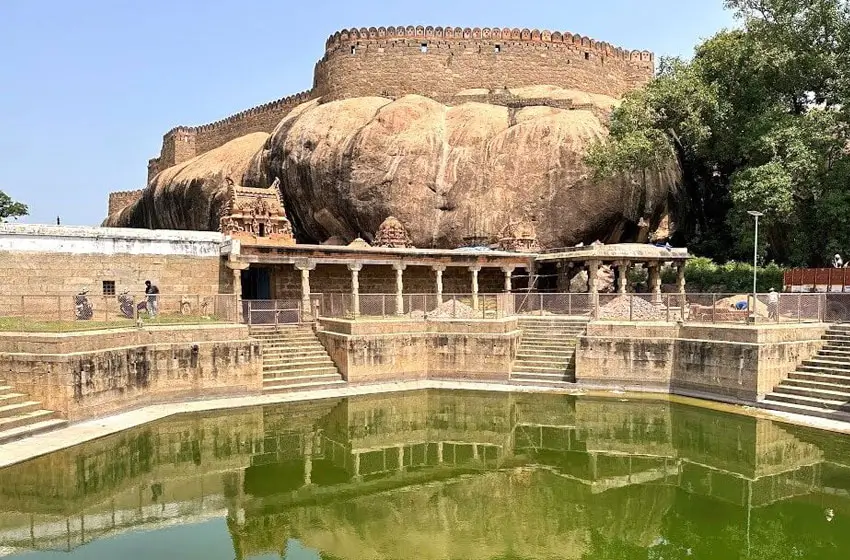
On the main road between Pudukkottai and Karaikudi, Thirumayam Fort was built in the late 17th century by the Sethupathi ruler of Ramanathapuram. Its circular stone walls climb a rocky hill, and a short walk leads to a cannon at the top with views over the plains. At the foot of the hill are two rock-cut temples, one to Shiva and one to Vishnu, with a large reclining Vishnu carved from the rock. It's a convenient stop on the drive from Trichy.
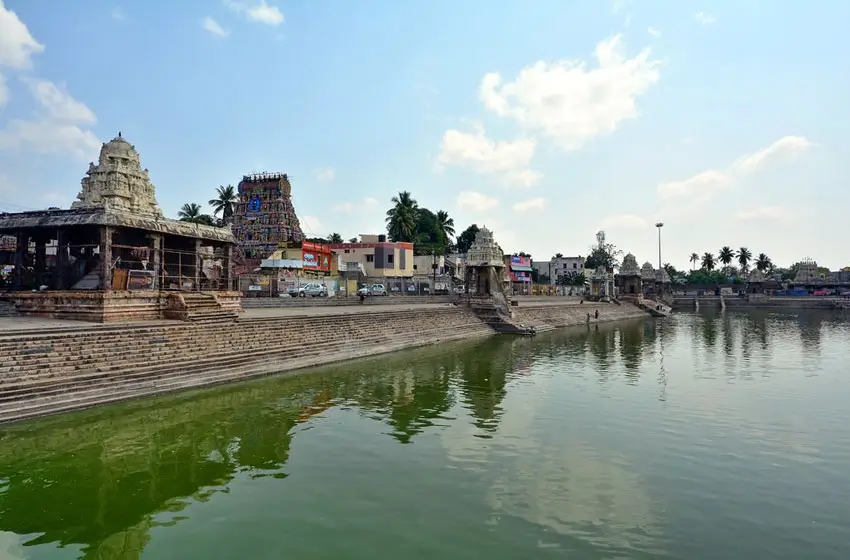
Some of the best moments in Chettinad come from simply walking. Villages such as Kanadukathan, Kothamangalam, Kadiapatti, Pallathur, and Devakottai have street after street of mansions, some restored and some crumbling, with rows of pillared verandas called thinnai. Most villages also have a large stepped temple tank, built to store monsoon rain, which is the social center of daily life. Go out in the early morning or at golden hour with a guide or a heritage hotel's walking map.
Like what you see? Let's plan it for you.
Private car, driver and hotels arranged around your dates. Reply within 24 hours.
Getting there
Chettinad lies between Trichy and Madurai, with Karaikudi as the main transport hub.
Madurai Airport (about 2 hours) or Tiruchirappalli International Airport (about 2 hours), with flights to Chennai, Bangalore, and abroad
Karaikudi Junction, with trains to Chennai, Trichy, Madurai, and Rameswaram
About 2 hours from Trichy or Madurai and 3 hours from Rameswaram on good state highways
Tours that include Chettinad
Explore more
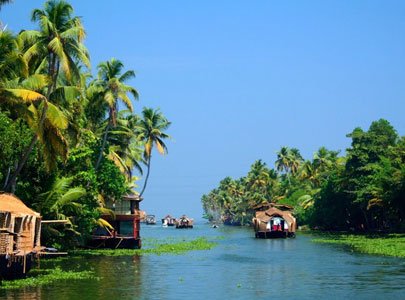
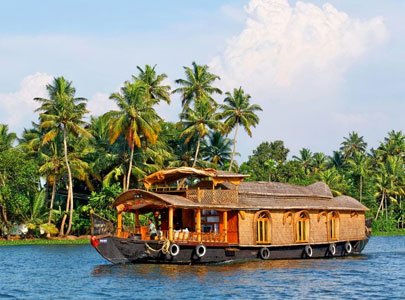
Kerala Backwaters Escape Kerala Backwaters Escape
 Kerala Backwaters Escape
 Kerala Backwaters Escape
N.S. Rathore & Mrs. Omlata Rathore · Managing Director
We still read every enquiry ourselves. Tell us the places you liked and our planners will send a day-by-day route with drive times and a clear price.
No ready-made packages and no pressure to book. A planner from our Kochi office replies within 24 hours with a route written for your group.
Fill this in and your planner will send a first draft itinerary.