Destination
If you only see one example of carved stone temples in South India, make it Belur and Halebid. In the 12th and 13th centuries, the Hoysala kings ruled southern Karnataka, and they built temples covered in such fine, deep carving that the stone looks almost like wood or ivory. The two towns, about 16 km (10 miles) apart in the Hassan district, were their most important centers: Belur an early capital and Halebid (also spelled Halebeedu) the later royal city of Dwarasamudra. In 2023, their temples, together with the Keshava Temple at Somanathapura, were added to the UNESCO World Heritage list as the Sacred Ensembles of the Hoysalas.
The Hoysala temples are not large. What they lack in size they make up for in detail. Walls are layered with bands of elephants, lions, horsemen, scrolls, and scenes from the epics, and above them stand graceful bracket figures of dancers and musicians known as madanikas. Hoysala sculptors worked in a soft, fine-grained soapstone (chloritic schist) that hardens as it ages, which let them carve jewelry, fingernails, and lacework patterns that have lasted 800 years.
Both towns are quiet farming settlements surrounded by coconut groves and paddy fields, and a visit is calm and unhurried. Most Belur Halebid tours combine the two in a single day, often adding the Jain pilgrimage hill of Shravanabelagola, with its 57-foot statue of Bahubali. The area sits between Mysore, Bangalore, Coorg, and the coffee hills of Chikmagalur, so it slips easily into a wider Karnataka itinerary.
Chennakeshava Temple, Hoysaleswara Temple, Kedareshwara Temple, Jain Basadis, Shravanabelagola
October – March.
Dry weather and comfortable temperatures
1–2 Days
Add a night to include Shravanabelagola calmly
Kannada, some English
Hire an English-speaking guide at the temples
Food in Belur and Halebid is simple, homestyle Karnataka vegetarian fare. Look for akki rotti, a flatbread of rice flour mixed with onion, coconut, and herbs, and the local style of masala dosa and idli-vada in the mornings. A traditional lunch is served on a banana leaf with rice, saaru (a thin, peppery lentil soup), huli (a sambar-like curry), vegetables, and buttermilk. In the coffee-growing country around Chikmagalur and Hassan, the filter coffee is fresh and strong. Restaurants are basic in both towns; most visitors eat lunch at a simple local place near the temples or at a resort.
There is not much shopping here, and that's part of the charm. Stalls outside the temples sell small soapstone carvings of Hoysala figures, postcards, and guidebooks. If you're heading to Chikmagalur, buy freshly roasted Karnataka coffee directly from estates or local stores. For silk, sandalwood, and handicrafts, save your shopping for Mysore or Bangalore.
Read More +Like what you see? Let's plan it for you.
Private car, driver and hotels arranged around your dates. Reply within 24 hours.
Belur and Halebid
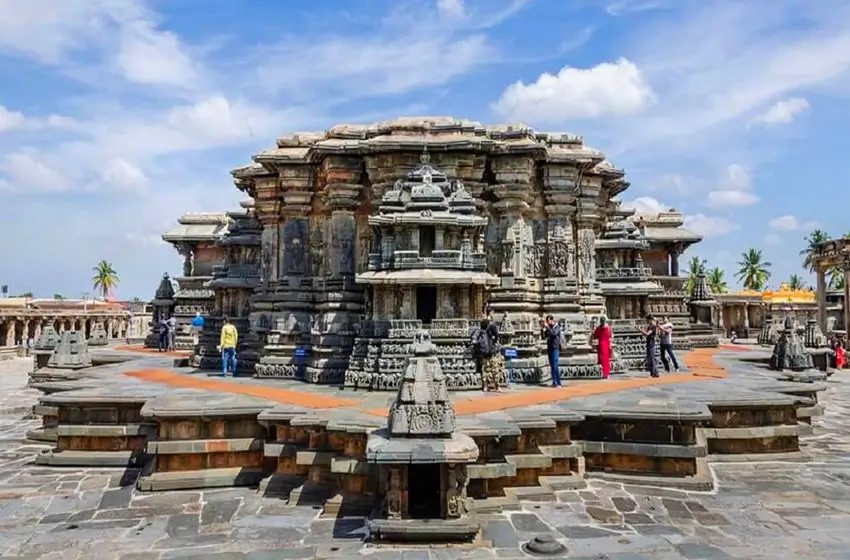
The Chennakeshava Temple in Belur was commissioned by King Vishnuvardhana in 1117, reportedly to mark a victory over the Cholas, and it took more than a century to complete. It is still an active temple dedicated to Vishnu, and worship has continued here for nine centuries. You enter through a tall gopuram, added in the Vijayanagara period, into a large courtyard with the main temple standing on a raised star-shaped platform. The exterior is famous for its madanika bracket figures, slender women carved in dancing, hunting, dressing, and playing music, each different from the next. One of the best known shows a woman looking into a mirror; another shows a huntress with a bow. Inside, the dim pillared hall holds lathe-turned pillars with ring-like patterns, and the famous Narasimha pillar, once said to rotate on its base, is covered with tiny figures. Ask your guide to point out the ceiling dome, carved like an upside-down lotus. Allow at least 90 minutes to look properly.
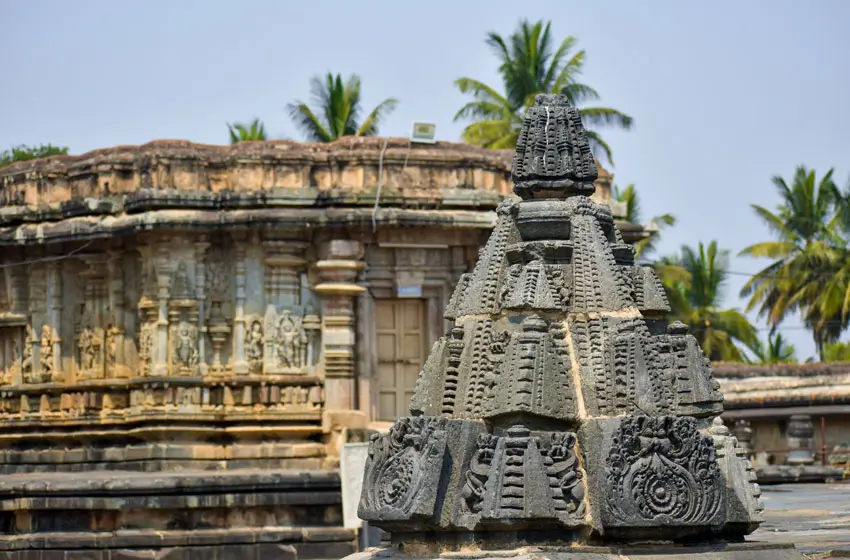
Several smaller temples share the courtyard with Chennakeshava. The Kappe Chennigaraya Temple, built by Vishnuvardhana's queen Shantala Devi, has its own fine carvings and a story about a frog (kappe) found in the stone of the main image. The Viranarayana Temple has well-preserved panels of gods on its outer walls, and there's a large stepped well, the Vasudeva Tirtha, in one corner. Near the entrance stands a tall stone lamp pillar, said to be balanced on its base without foundations. Walk the entire courtyard slowly, because the side shrines are often skipped by groups in a hurry.
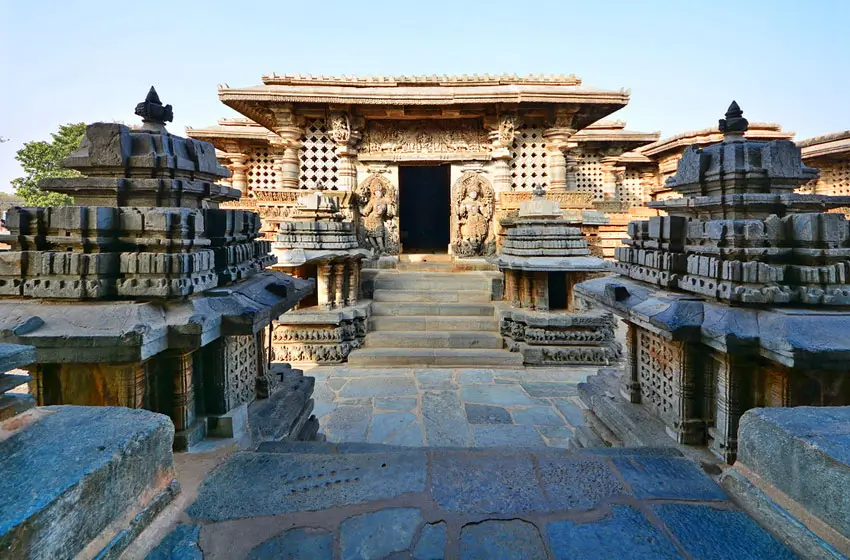
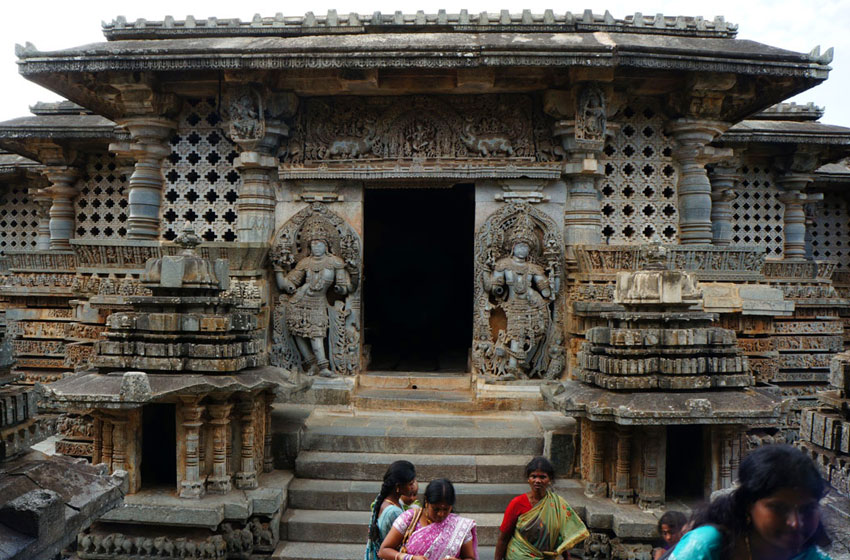
The Hoysaleswara Temple at Halebid is the largest Hoysala temple and, for many visitors, the more impressive of the two. Built around 1121 by an official of King Vishnuvardhana, it is a double temple, with two Shiva shrines side by side, each with a large Nandi pavilion in front. The outer walls are wrapped in continuous friezes running around the entire building: at the bottom, a row of elephants (said to number in the thousands, no two exactly alike), then lions, scrolls, horsemen, and a long band telling stories from the Ramayana, Mahabharata, and Bhagavata Purana. Above those are large figures of gods and goddesses carved in high relief, including a dancing Ganesha and Shiva slaying the elephant demon. The temple was attacked and looted by the armies of the Delhi Sultanate in the early 14th century, and Halebid, whose name means "old city," never recovered as a capital. Unlike Belur, the main temple is no longer in active worship, so you can take your time photographing the exterior.
Next to the Hoysaleswara Temple, on the edge of a large lake, is a small ASI Archaeological Museum with an open-air gallery of sculptures collected from the area. It has some fine pieces of Hoysala art, inscriptions, and hero stones that mark warriors who died in battle. It takes only half an hour and helps place the temples in context. Like other ASI museums, it's generally closed on Fridays.
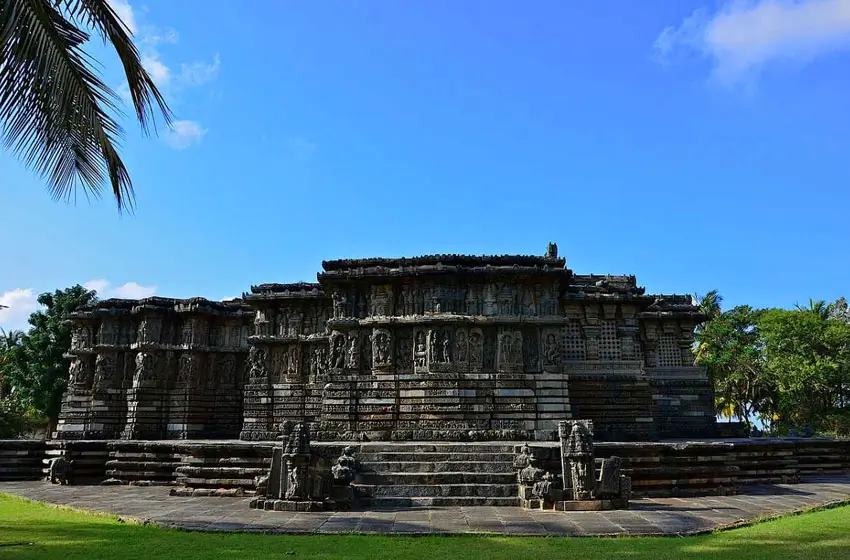
A short walk south of the main temple, the Kedareshwara Temple was built in 1219 by King Veera Ballala II and his queen. It's smaller and less visited than Hoysaleswara, but it stands on a star-shaped platform with sharp, deep carving that many consider among the most refined Hoysala work. It's usually quiet, and the setting among trees makes it a pleasant break from the crowds at the main temple.
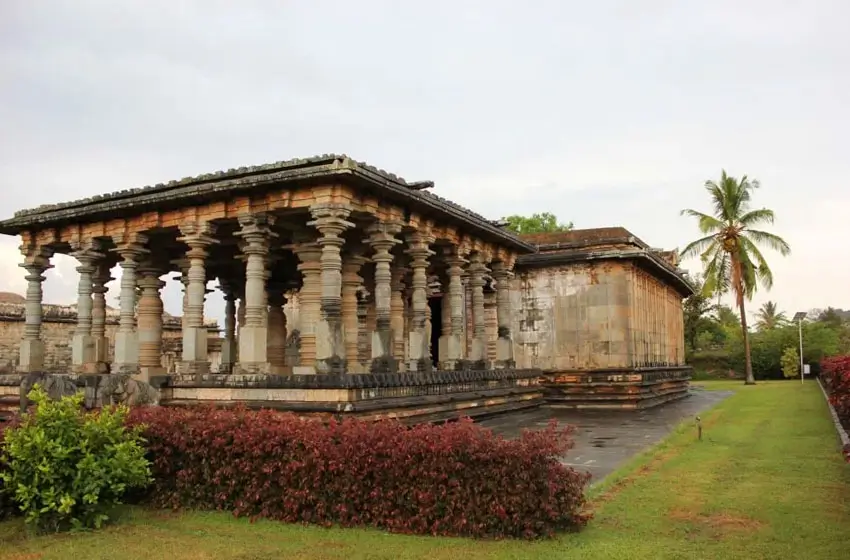
Halebid also has a group of three Jain basadis (temples), a sign of how important Jainism was to the Hoysala court. The Parshvanatha Basadi, dedicated to the 23rd Tirthankara, is the highlight, with polished black stone pillars inside that reflect light like mirrors and a beautifully carved ceiling. The figure of Parshvanatha is shown standing under a seven-hooded serpent. These temples are calmer and plainer on the outside than the Hindu temples, and they're often missed, so ask your driver to stop.
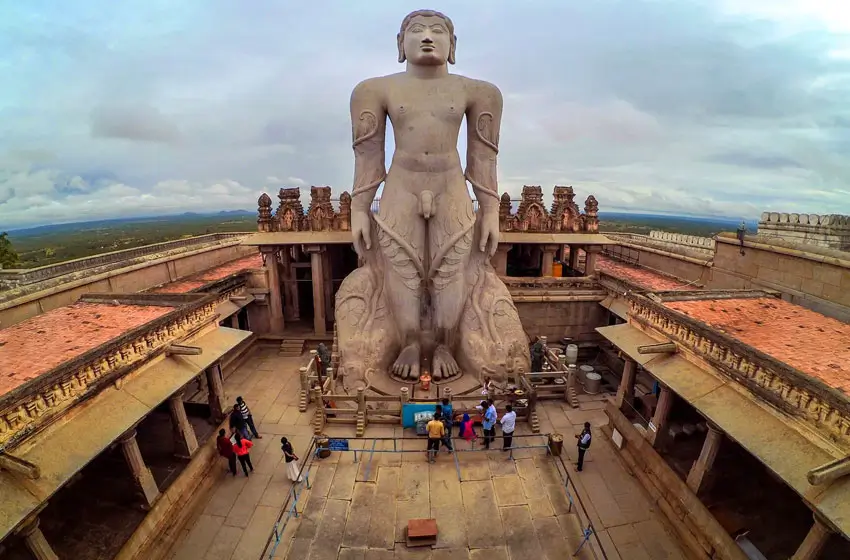
About 1.5 hours from Halebid, the town of Shravanabelagola is one of the most important Jain pilgrimage centers in India. On top of the granite hill called Vindhyagiri stands the statue of Gommateshwara (Bahubali), carved around 983 from a single block of granite and about 57 feet (17 meters) tall, one of the largest free-standing monolithic statues in the world. To reach it you climb about 600 steps cut into the bare rock, barefoot (socks are allowed and help on hot days). The climb takes 30 to 45 minutes. Every 12 years or so, the statue is anointed with milk, saffron, and flowers in a huge ceremony called the Mahamastakabhisheka, last held in 2018. On the smaller hill opposite, Chandragiri, there are early Jain temples and the place where the Mauryan emperor Chandragupta is said to have spent his final years. It's a separate trip from Belur and Halebid, but it fits well on the drive to or from Bangalore or Mysore.
Like what you see? Let's plan it for you.
Private car, driver and hotels arranged around your dates. Reply within 24 hours.
Getting there
Belur and Halebid are in Hassan district, about 4 hours by road from Bangalore and easy to combine with Mysore or Chikmagalur.
Mangaluru International Airport (about 3.5–4 hours) and Bengaluru's Kempegowda International Airport (about 4–4.5 hours)
Hassan Junction (about 45 minutes from both temples), with trains to Bangalore, Mysore, and Mangalore
Good roads from Bangalore via Hassan, from Mysore (about 3 to 3.5 hours), and from Chikmagalur (about 45 minutes)
Tours that include Belur and Halebid
Explore more
N.S. Rathore & Mrs. Omlata Rathore · Managing Director
We still read every enquiry ourselves. Tell us the places you liked and our planners will send a day-by-day route with drive times and a clear price.
No ready-made packages and no pressure to book. A planner from our Kochi office replies within 24 hours with a route written for your group.
Fill this in and your planner will send a first draft itinerary.