
 Kerala Backwaters Escape
South India Tour with Rajasthan
Delhi - Sikandra - Agra - Fatehpur Sikri - Ranthambore - Jaipur - Delhi - Chennai - Kanchipuram - Mahabalipuram - Pondicherry - Chidambaram - Tanjore - Trichy - Madurai - Rameshwaram - Kovalam - Kanyakumari - Trivandrum
At a glance
Two very different architectural and cultural landscapes come together on this 20 Nights 21 Days South India Tour with Rajasthan. The journey opens in Delhi before moving through the Mughal heritage of Sikandra and Agra, the forest landscapes of Ranthambore and the Rajput monuments of Jaipur. It then turns south for an extensive journey through Tamil Nadu's historic temple towns before reaching Kerala's coast.
The northern section is compact but varied. Delhi introduces several centuries of urban history, Akbar's Tomb at Sikandra leads into Agra's Mughal monuments, and Fatehpur Sikri preserves the remains of an imperial city. Ranthambore changes the pace completely with protected forest and wildlife safaris, while Jaipur adds the hill forts, palaces and astronomical heritage of Rajasthan.
After returning to Delhi, the route continues to Chennai and follows an important heritage corridor through Kanchipuram, Mahabalipuram, Pondicherry, Chidambaram, Tanjore, Trichy, Madurai and Rameshwaram. Monumental Dravidian temples, Chola architecture, coastal settlements and living pilgrimage traditions shape this section. Kovalam and Kanyakumari then bring the journey to the sea before its conclusion in Trivandrum.
Arrive at Delhi International Airport, where you will be met after completing the required arrival formalities. Transfer to the hotel by private vehicle and check in. Delhi begins this extensive journey through North and South India, bringing together historic neighbourhoods, monumental architecture and the administrative centre of modern India.
The rest of the day is deliberately flexible because arrival schedules can vary. Travellers reaching Delhi earlier may take a short orientation drive through suitable parts of New Delhi, while those arriving after a longer journey can use the afternoon and evening to rest at the hotel.
No essential sightseeing is dependent on the first day's arrival time. This allows the following day to be devoted properly to Delhi's major monuments before the route moves south towards Sikandra and Agra. Spend the evening at leisure. Overnight stay in Delhi.
After breakfast, begin with Jama Masjid in Old Delhi, one of the city's important Mughal-era religious landmarks. Continue through the historic surroundings of Chandni Chowk, where dense market streets provide a strong contrast with New Delhi's later planned avenues. Proceed to Raj Ghat, the memorial dedicated to Mahatma Gandhi.
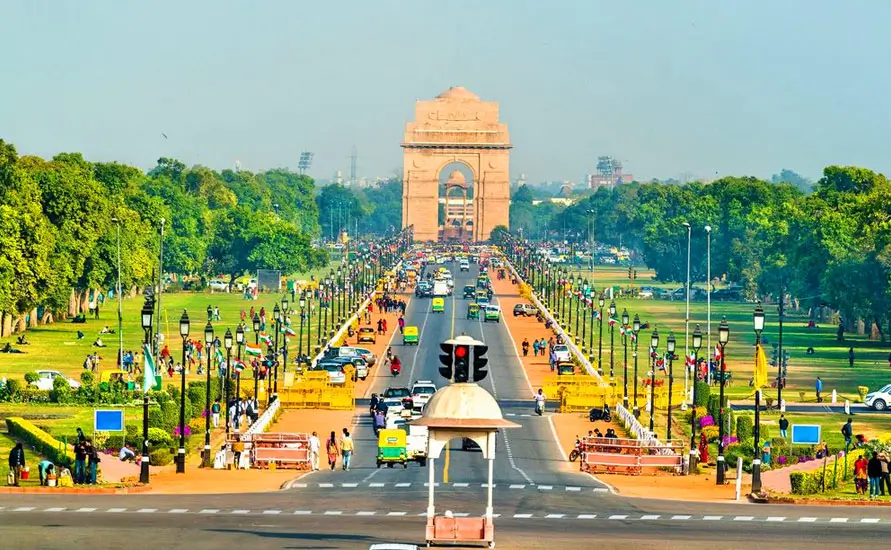
Continue into New Delhi to see India Gate and the ceremonial avenue of Kartavya Path. Drive through the government district for exterior views of Rashtrapati Bhavan and Parliament House from permitted public areas, subject to security and traffic restrictions.
Later, visit Humayun's Tomb, an important Mughal garden-tomb complex, before proceeding to Qutub Minar and the surrounding historic structures of the Qutub complex. Together, these monuments introduce different periods of Delhi's history and provide useful context for the Mughal heritage awaiting in Agra. Return to the hotel. Overnight stay in Delhi.
After breakfast, check out and travel towards Sikandra, located on the outskirts of Agra. Visit Akbar's Tomb at Sikandra, the mausoleum of the Mughal emperor Akbar. The complex is entered through an imposing decorated gateway and is surrounded by a formal garden enclosure.
Continue into Agra and check into the hotel. Later, visit Agra Fort, the extensive fortified palace complex beside the Yamuna River. Explore its monumental gateways, courtyards and accessible royal sections, where red sandstone structures are combined with later marble additions from subsequent Mughal periods.
If daylight and opening schedules permit, continue to Mehtab Bagh on the opposite bank of the Yamuna for views towards the Taj Mahal. This riverside perspective provides an introduction to the monument before entering the main complex the following morning. Return to the hotel after sightseeing. Overnight stay in Agra.
Begin early with a visit to the Taj Mahal, subject to its official opening schedule. Built by Emperor Shah Jahan in memory of Mumtaz Mahal, the mausoleum is celebrated for its white marble construction, carefully balanced proportions, decorative stone inlay and formal garden layout. Allow adequate time for security procedures and exploration of the complex.
After breakfast and check-out, travel towards Fatehpur Sikri, the former imperial capital established by Emperor Akbar. Explore major monuments including Buland Darwaza, Jama Masjid, Diwan-i-Khas and Panch Mahal, along with accessible palace courtyards. The preserved complex gives travellers a wider understanding of Mughal architecture beyond Agra.
Continue towards Ranthambore after completing the visit. This road sector is comparatively long, so suitable comfort stops can be made en route. Arrive at the confirmed hotel or wildlife resort and settle in for the evening. The next day is devoted to the protected forest landscape of Ranthambore. Overnight stay in Ranthambore.
Rise early for an authorised safari in Ranthambore National Park, subject to advance permit confirmation, assigned safari zone, vehicle availability and forest department regulations. The reserve contains dry deciduous forest, rocky ridges, open grassland and water bodies, creating varied habitats within the protected landscape.
Ranthambore is widely associated with Bengal tigers, but a safari should be approached as an opportunity to experience the complete ecosystem rather than as a guaranteed tiger sighting. Depending on natural conditions, visitors may encounter sambar deer, spotted deer, nilgai, wild boar, langurs, crocodiles and a range of birdlife. No particular wildlife sighting can be promised.
Return to the hotel after the safari for breakfast and rest. If a second safari has been pre-booked, proceed again in the afternoon according to the confirmed permit and assigned zone. Otherwise, enjoy a relaxed afternoon at the resort. All wildlife activities remain governed by official park schedules and seasonal closures. Overnight stay in Ranthambore.
After breakfast, check out and begin the drive towards Jaipur. The journey leaves Ranthambore's forest surroundings and travels through the towns, villages and agricultural landscapes of eastern Rajasthan before approaching the state's busy capital.
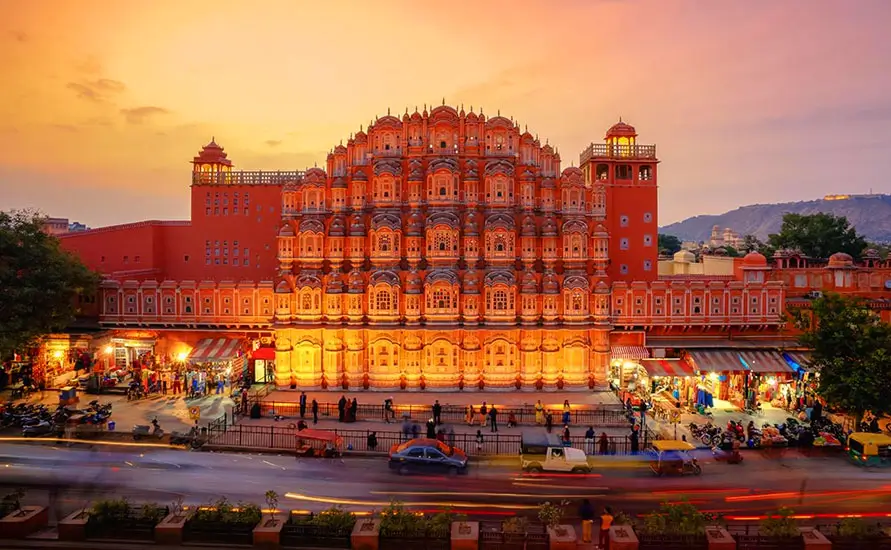
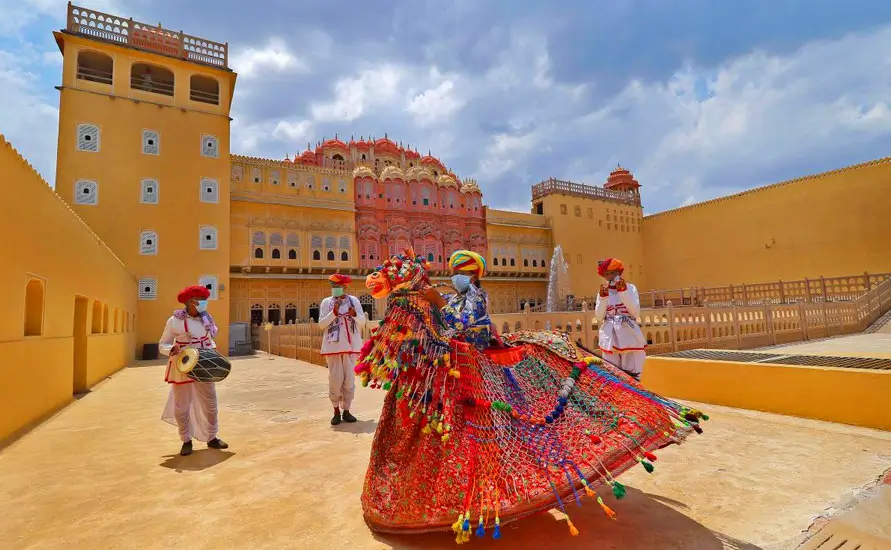
On arrival, check into the hotel and take some time to rest. Later, depending on arrival time, proceed towards the old city for an exterior view of Hawa Mahal, whose distinctive façade of projecting windows remains one of Jaipur's best-known landmarks.
Spend some time around the traditional bazaars if desired, where textiles, jewellery, handicrafts and block-printed fabrics are prominent. Shopping is entirely optional, and the principal historical sightseeing is reserved for the following day. Return to the hotel after the introductory outing. Overnight stay in Jaipur.
After breakfast, drive to Amber Fort, positioned among the hills outside central Jaipur. Explore its fortified gateways, courtyards and royal sections, including the richly decorated Sheesh Mahal. From elevated areas of the complex, enjoy views across Maota Lake and the surrounding Aravalli landscape.
Return towards Jaipur and stop for an exterior view of Jal Mahal, standing within Man Sagar Lake. Continue to City Palace, where accessible courtyards, gateways and museum collections introduce the history of Jaipur's royal family. Nearby, visit Jantar Mantar, the remarkable collection of large astronomical instruments created for precise observations.
Complete the sightseeing around Hawa Mahal and the historic Pink City. The combination of Amber's hilltop fortifications, City Palace's ceremonial spaces and Jantar Mantar's scientific architecture provides a detailed introduction to Jaipur's heritage. Return to the hotel after sightseeing. Overnight stay in Jaipur.
After breakfast, check out and begin the road journey back to Delhi. The drive marks the end of the Rajasthan section of the tour, which has moved from Mughal monuments in Agra to Ranthambore's protected forest and Jaipur's Rajput architecture.
Suitable comfort stops can be made during the journey. On reaching Delhi, check into the hotel and keep the remainder of the day relatively relaxed. If any important Delhi attraction from the earlier stay could not be covered because of opening schedules, available time can be used accordingly without unnecessarily repeating completed sightseeing.
Spend the evening at leisure and prepare for the major transition to South India. The next stage begins with the scheduled journey to Chennai and then follows Tamil Nadu's historic temple and coastal corridor through Kanchipuram, Mahabalipuram, Pondicherry, Chidambaram, Tanjore, Trichy, Madurai and Rameshwaram. Overnight stay in Delhi.
After breakfast, check out from the hotel and transfer to Delhi Airport for the scheduled journey to Chennai according to confirmed flight arrangements. This flight marks a major geographical and cultural transition, leaving the Mughal and Rajput heritage of North India for the temple architecture and coastal landscapes of Tamil Nadu.
On arrival in Chennai, meet the driver and transfer to the hotel. Depending on the flight schedule, begin with Kapaleeshwarar Temple in Mylapore, an important Dravidian-style temple dedicated to Lord Shiva. Its colourful gopuram and active religious setting provide an immediate introduction to the living temple traditions that will feature prominently throughout the southern section.
Continue to San Thome Basilica, associated with the tradition of St. Thomas the Apostle, and spend some time along Marina Beach if daylight permits. These sites illustrate Chennai's combination of Hindu religious heritage, Christian history and Bay of Bengal coastline. Return to the hotel after sightseeing. Overnight stay in Chennai.
After breakfast, leave Chennai and travel towards Kanchipuram, one of Tamil Nadu's historic temple cities. Begin with Kailasanathar Temple, an important example of early structural temple architecture associated with the Pallava period. Its sandstone construction and sculptural details provide valuable context for the monuments later seen at Mahabalipuram.
Continue to Ekambareswarar Temple, one of Kanchipuram's major Shiva temples, subject to prevailing religious entry regulations. Also visit Varadharaja Perumal Temple, an important Vaishnavite shrine, where access to individual sections depends on temple rules. Kanchipuram is also traditionally associated with silk weaving, and a suitable weaving centre may be visited if time permits.
Proceed towards Mahabalipuram (Mamallapuram) near the Bay of Bengal. On arrival, check into the hotel and enjoy the coastal surroundings. The destination's principal Pallava monuments are reserved for the following morning, allowing sufficient time to appreciate their architecture rather than compressing them into the end of a transfer day. Overnight stay in Mahabalipuram.
After breakfast, explore Mahabalipuram's celebrated Pallava monuments. Begin with the seaside Shore Temple, whose stone towers stand close to the Bay of Bengal. Continue to the Pancha Rathas (Five Rathas), a remarkable group of monolithic structures carved from individual rock formations and traditionally named after figures from the Mahabharata.
Visit the immense open-air relief known as Arjuna's Penance, also associated with the theme of the Descent of the Ganges. Nearby, see Krishna's Butter Ball, the enormous naturally balanced boulder that has become one of Mahabalipuram's most distinctive sights. Together, these monuments demonstrate the experimentation with rock-cut and structural architecture during the Pallava period.
After sightseeing, travel south along the coast towards Pondicherry (Puducherry). On arrival, check into the hotel and later walk through the historic French Quarter, where tree-lined streets and colonial-era buildings give the area a distinctive character. Visit the waterfront Promenade Beach area before returning to the hotel. Overnight stay in Pondicherry.
After breakfast, spend some additional time in Pondicherry before departure. Visit Sri Aurobindo Ashram, subject to its visitor rules and opening schedule, and see the exterior surroundings of the distinctive Basilica of the Sacred Heart of Jesus if time permits. The morning offers a final contrast between Pondicherry's spiritual institutions and its French-influenced urban heritage.
Leave Pondicherry and travel towards Chidambaram. Visit the magnificent Nataraja Temple, one of Tamil Nadu's most important Shiva temples and particularly associated with Shiva in the form of Nataraja, the cosmic dancer. Explore the permitted temple areas while observing religious dress, photography and entry regulations.
Continue towards Tanjore (Thanjavur) through the fertile landscapes of the Cauvery delta. This region was central to the development of Chola power and temple architecture. Arrive in Tanjore, check into the hotel and spend the evening at leisure before the following day's detailed exploration. Overnight stay in Tanjore.
After breakfast, visit the monumental Brihadeeswarar Temple, one of the greatest surviving achievements of Chola architecture. Commissioned during the reign of Rajaraja Chola I, the complex is distinguished by its towering vimana, monumental scale, sculptural details and large temple courtyard.
Continue to the Thanjavur Maratha Palace complex, subject to opening schedules, and visit accessible sections such as the Saraswathi Mahal Library and associated museum areas where permitted. The palace complex adds later layers of history to a city most commonly associated with the Chola period.
After completing the sightseeing, travel towards Trichy (Tiruchirappalli). On arrival, check into the hotel. If time and daylight permit, take an introductory drive through the city while the principal temple visits are kept for the following day. Spend the evening at leisure. Overnight stay in Trichy.
After breakfast, proceed to Sri Ranganathaswamy Temple at Srirangam, one of South India's largest and most important active temple complexes. Located on an island formed by branches of the Cauvery River, the complex contains monumental gateways, successive enclosures and numerous religious structures. Access to individual areas is governed by temple regulations.
Continue to Rockfort Temple, dramatically positioned on a massive rocky outcrop in the centre of Trichy. The climb towards the accessible temple areas provides elevated views across the city and surrounding plains. Visitors should be prepared for steps and observe applicable religious entry requirements.
After sightseeing, leave Trichy and travel towards Madurai, one of Tamil Nadu's oldest continuously inhabited urban centres and an important pilgrimage city. On arrival, check into the hotel. The evening is kept relaxed so that the city's principal temple and palace can be explored properly the next day. Overnight stay in Madurai.
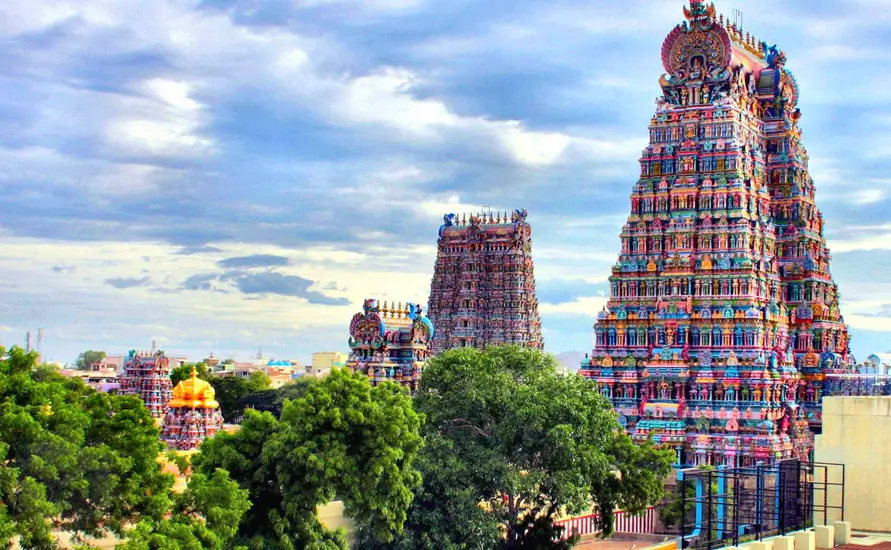
After breakfast, visit the magnificent Meenakshi Amman Temple, the religious and architectural centre of Madurai. Its towering gopurams are densely covered with colourful sculptural figures, while the large temple complex contains courtyards, shrines and ceremonial spaces used by worshippers throughout the day.
Continue to Thirumalai Nayakkar Palace, built during the seventeenth century and known for its immense columns, arches and surviving ceremonial spaces. The palace represents a very different architectural tradition from the temple complex and provides context for the Nayak period of Madurai's history.
Later, explore suitable sections of Madurai's old city and market surroundings. If available and appropriate under current temple arrangements, an evening visit around Meenakshi Amman Temple can provide another perspective on the active religious character of the city. Return to the hotel after sightseeing. Overnight stay in Madurai.
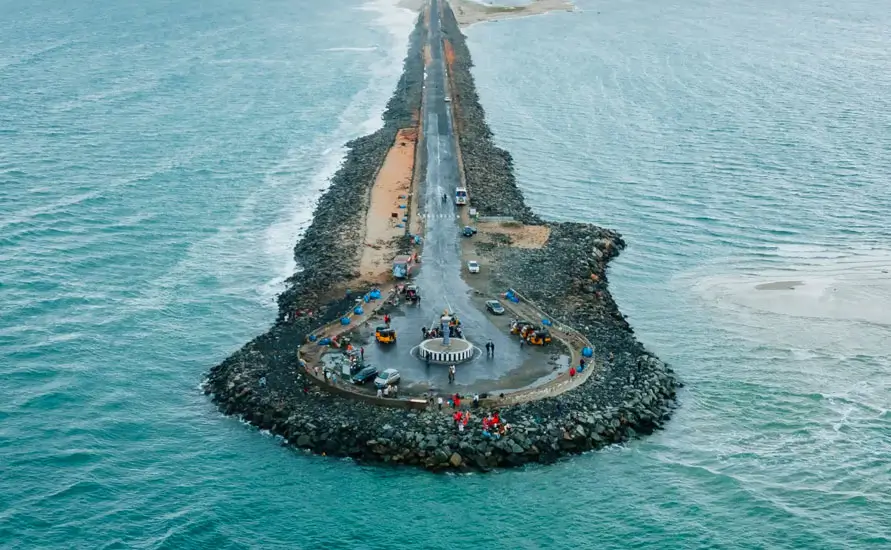
After breakfast, leave Madurai and travel towards Rameshwaram, one of India's major Hindu pilgrimage destinations. The road crosses the coastal plains of southern Tamil Nadu before approaching Pamban Island, where the landscape opens towards the sea.
Cross towards the island with views of the historic Pamban Bridge and surrounding waters from permitted points along the route. On arrival in Rameshwaram, check into the hotel before proceeding to Ramanathaswamy Temple, famous for its long pillared corridors and its central importance within Hindu pilgrimage traditions.
Explore the permitted sections of the temple while observing strict religious entry, dress and photography regulations. Later, visit Agni Theertham, the sacred seafront located close to the temple, where pilgrims traditionally perform ritual bathing. Return to the hotel after the visit. Overnight stay in Rameshwaram.
After breakfast, leave Rameshwaram for the long road journey towards Kovalam in Kerala. The route travels west across southern Tamil Nadu, gradually leaving the dry coastal environment around Rameshwaram and moving through changing agricultural and tropical landscapes.
Suitable meal and comfort stops can be made during this substantial transfer. As the journey approaches Kerala, coconut palms and denser vegetation become increasingly prominent. The day's drive connects two very different coastal settings: Rameshwaram's pilgrimage landscape and Kovalam's Arabian Sea beaches.
Arrive in Kovalam and check into the hotel or resort. Because of the distance travelled, no extensive sightseeing is scheduled after arrival. If daylight remains, take a short walk near Kovalam Beach and enjoy the coastal surroundings before returning to the hotel. Overnight stay in Kovalam.
After breakfast, enjoy a full day around Kovalam's coastline. Begin at Lighthouse Beach, the destination's best-known beach, overlooked by the prominent Vizhinjam Lighthouse. Access to the lighthouse is subject to official opening schedules and prevailing visitor regulations.
Continue to Hawa Beach (Eve's Beach) and Samudra Beach, experiencing different sections of Kovalam's curved shoreline. The day is intentionally less intensive than the temple-focused programme of Tamil Nadu, providing time to relax after the long road journey from Rameshwaram.
Spend the afternoon at leisure beside the Arabian Sea or at the resort. Swimming should only be considered when sea conditions are suitable and local safety guidance permits it. Enjoy the evening along the coast without additional long-distance travel. Overnight stay in Kovalam.
After breakfast, leave Kovalam and travel towards Kanyakumari, crossing from Kerala back into Tamil Nadu. The route approaches the far southern end of the Indian mainland, where the destination's religious significance is combined with a dramatic coastal setting.
On arrival, proceed to the waterfront and, subject to sea conditions and ferry operations, visit the Vivekananda Rock Memorial. Nearby stands the monumental Thiruvalluvar Statue, dedicated to the celebrated Tamil poet and philosopher. Ferry services can be altered or suspended when weather or sea conditions make operations unsuitable.
Visit the surroundings of Kumari Amman Temple, subject to prevailing religious access regulations, and spend time along the Kanyakumari seafront. Weather permitting, enjoy the changing evening light across the horizon before checking into the hotel. Overnight stay in Kanyakumari.
Begin the morning with additional time around Kanyakumari's coastline if the schedule permits. Weather conditions determine the quality of sunrise views, so these should be treated as a natural possibility rather than a guaranteed experience. After breakfast, check out and travel north towards Trivandrum (Thiruvananthapuram).
On arrival, visit the surroundings of Sree Padmanabhaswamy Temple, one of Kerala's most significant religious landmarks. Strict dress, security and religious entry rules apply, and access to inner temple areas is governed by prevailing regulations. The exterior surroundings and temple district remain important parts of Trivandrum's historic centre.
Continue to the Napier Museum and nearby Sri Chitra Art Gallery, subject to their official opening schedules. These institutions provide an introduction to regional art, history and material culture after the extensive temple journey through Tamil Nadu. Check into the hotel after sightseeing. Overnight stay in Trivandrum.
After breakfast, enjoy a relaxed final morning according to the confirmed flight or train schedule. If any principal Trivandrum attraction could not be visited the previous day because of weekly closure or opening hours, available time can be used accordingly, provided the departure schedule allows.
Travellers with additional time may take a short drive through suitable central areas of Trivandrum or remain at the hotel until check-out. The final day is kept flexible to ensure sufficient reporting time for the airport or railway station rather than adding an unnecessary excursion before departure.
At the appropriate time, transfer to Trivandrum International Airport or railway station. The twenty-one-day journey concludes after linking Delhi's historic monuments, Taj Mahal, Ranthambore National Park, Amber Fort, Shore Temple, Nataraja Temple, Brihadeeswarar Temple, Meenakshi Amman Temple, Ramanathaswamy Temple, Kovalam Beach and Vivekananda Rock Memorial.
Your Journey
N.S. Rathore & Mrs. Omlata Rathore · Managing Director
We still read every enquiry ourselves. Tell us the places you liked and our planners will send a day-by-day route with drive times and a clear price.
No ready-made packages and no pressure to book. A planner from our Kochi office replies within 24 hours with a route written for your group.
Fill this in and your planner will send a first draft itinerary.
Explore more
Kerala Backwaters Escape Kerala Backwaters Escape
 Kerala Backwaters Escape
 Kerala Backwaters Escape
 Kerala Backwaters Escape