 Kerala Backwaters Escape
South India Tour with Rajasthan
Delhi-Sikandra-Agra-Fatehpur Sikri-Jaipur-Ajmer-Pushkar-Chittorgarh-Udaipur-Ranakpur-Jodhpur-Manwar-Jaisalmer-Pokhran-Bikaner-Mandawa- Delhi-Cochin-Munnar-Periyar-Alleppey-Kovalam-Kanyakumari-Trivandrum
At a glance
Historic capitals, pilgrimage towns, desert settlements and Kerala's tropical landscapes form the backbone of this 25 Nights 26 Days Rajasthan Cultural Tour with South India. Beginning in Delhi, the itinerary first follows the Mughal corridor through Sikandra, Agra and Fatehpur Sikri before spending an extended period across Rajasthan's royal cities, sacred centres and desert regions.
Rajasthan is explored through considerably more than its famous forts. Jaipur's planned royal city leads to the pilgrimage centres of Ajmer and Pushkar, while Chittorgarh Fort introduces the history of Mewar on a monumental scale. Udaipur's lakes and palaces are followed by Ranakpur's marble Jain architecture, Jodhpur's imposing fort, the desert surroundings of Manwar and the golden sandstone heritage of Jaisalmer. Pokhran, Bikaner and Mandawa then complete the northern circuit.
After returning to Delhi, the journey changes completely with the move to Kerala. Cochin's maritime neighbourhoods lead into Munnar's tea-covered Western Ghats and the spice-growing forests around Periyar. Alleppey's waterways and Kovalam's Arabian Sea coast provide a gentler final section, followed by Kanyakumari and Trivandrum. The route is designed for travellers who want to see how architecture, religion, landscape and daily life change across two very different parts of India.
Arrive at Delhi International Airport, where you will be met after completing the applicable arrival formalities. Transfer by private vehicle to the hotel and check in. Delhi is the starting point for a long overland journey that will first explore the historic cities of North India and Rajasthan before moving south to Kerala.
The remainder of the day is kept deliberately flexible because international and domestic arrival schedules can differ considerably. Travellers reaching Delhi earlier may take a short orientation drive through suitable areas of the capital, while those arriving after a long journey can use the afternoon and evening to rest.
No essential monument visit is scheduled for the arrival day, ensuring that delayed flights do not affect the core itinerary. The following morning begins the historical programme with Old Delhi, Mughal monuments and New Delhi's ceremonial avenues. Overnight stay in Delhi.
After breakfast, begin with Jama Masjid, one of the major surviving monuments of Mughal Old Delhi. Continue through the historic surroundings of Chandni Chowk, where narrow commercial lanes, traditional markets and densely built neighbourhoods contrast sharply with the broad avenues encountered later in New Delhi. Proceed to Raj Ghat, the memorial dedicated to Mahatma Gandhi.
Continue to the ceremonial heart of New Delhi to see India Gate and Kartavya Path. Drive through the government district for exterior views of Rashtrapati Bhavan and Parliament House from permitted public areas. Stopping points and access remain subject to prevailing security and traffic arrangements.
Later, visit Humayun's Tomb, an important Mughal garden-tomb complex whose architecture predates the Taj Mahal, followed by Qutub Minar and the surrounding monuments of the Qutub complex. Return to the hotel after a day covering several distinct periods of Delhi's history. Overnight stay in Delhi.
After breakfast, check out and begin the journey towards Sikandra, situated on the outskirts of Agra. Visit Akbar's Tomb at Sikandra, the mausoleum of Emperor Akbar. Its monumental gateway, formal gardens and distinctive architectural composition provide an appropriate introduction to the Mughal history of the region.
Continue into Agra and check into the hotel. Later, visit Agra Fort, the enormous fortified palace complex beside the Yamuna River. Enter through its massive defensive architecture and explore accessible courtyards and royal sections, where red sandstone construction is combined with later white-marble additions.
If daylight and opening schedules permit, visit Mehtab Bagh on the opposite bank of the Yamuna. The garden provides a distant riverside perspective towards the Taj Mahal, allowing travellers to see the monument within its broader landscape before entering the complex the following morning. Return to the hotel. Overnight stay in Agra.
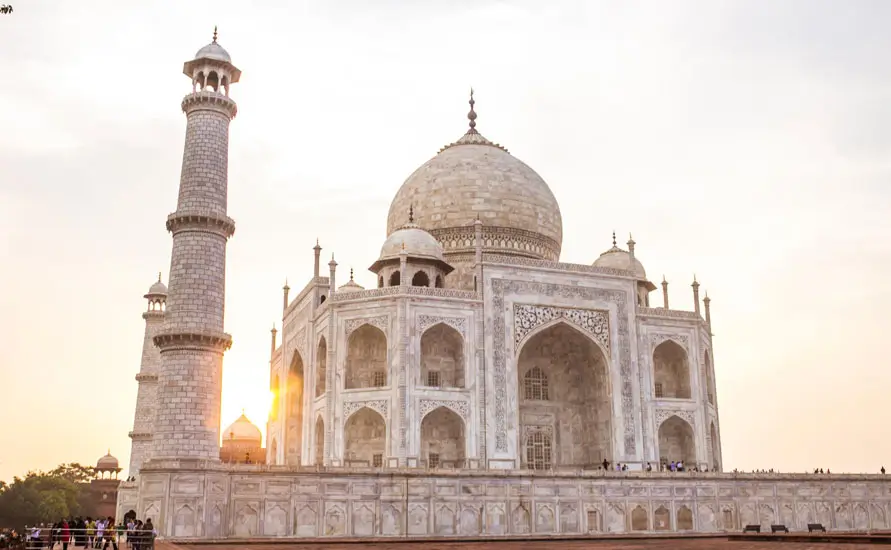
Begin early with a visit to the Taj Mahal, subject to its official opening schedule. Commissioned by Emperor Shah Jahan in memory of Mumtaz Mahal, the monument is celebrated for its white marble construction, carefully balanced proportions, decorative stone inlay and formal garden setting. Allow adequate time for security procedures and exploration.
After breakfast and check-out, travel to Fatehpur Sikri, the former Mughal imperial capital established by Emperor Akbar. Explore major landmarks including Buland Darwaza, Jama Masjid, Diwan-i-Khas and Panch Mahal, together with accessible courtyards and palace sections.
Continue towards Jaipur, leaving the Mughal centres of Uttar Pradesh and entering Rajasthan. On arrival, check into the hotel and spend the remainder of the evening at leisure. Jaipur's forts, palaces and astronomical monuments are reserved for the following day so that they can be explored without rushing. Overnight stay in Jaipur.
After breakfast, drive towards Amber Fort, dramatically positioned among the Aravalli hills outside central Jaipur. Explore the fort's monumental gateways, courtyards and royal apartments, including the richly decorated Sheesh Mahal. Elevated sections provide views across Maota Lake and the surrounding hills.
Return towards Jaipur and stop for an exterior view of Jal Mahal, situated within Man Sagar Lake. Continue to City Palace, where courtyards, gateways and museum collections reflect the history of Jaipur's royal family. Nearby, visit Jantar Mantar, whose monumental astronomical instruments were designed for detailed observations.
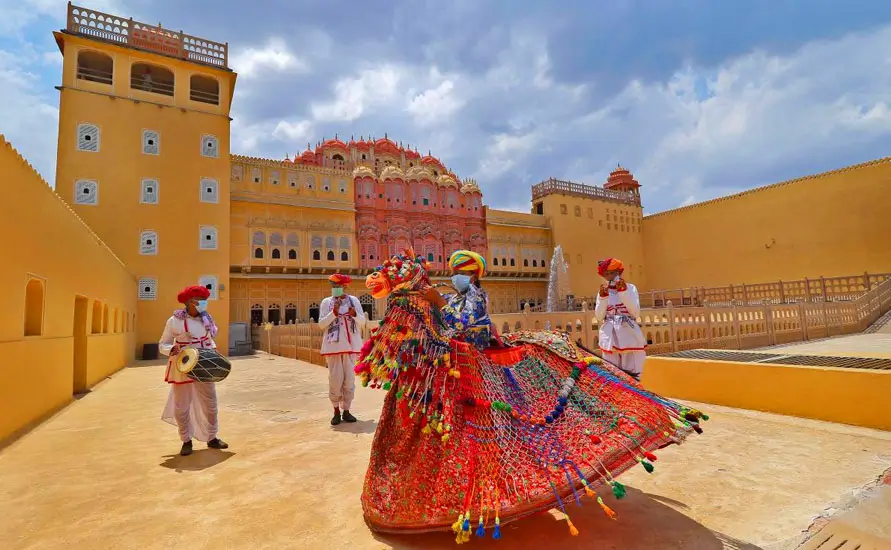
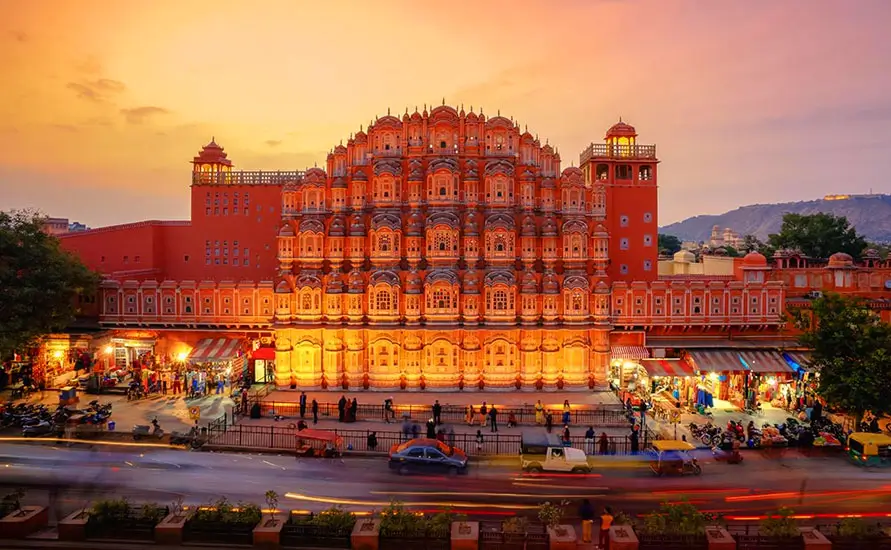
Complete the day's sightseeing at Hawa Mahal, distinguished by its elaborate multi-windowed façade overlooking the historic city. Spend some time around Jaipur's traditional bazaars if desired, where textiles, jewellery and handicrafts are prominent, though shopping remains entirely optional. Return to the hotel. Overnight stay in Jaipur.
After breakfast, leave Jaipur and travel towards Ajmer, set among the Aravalli hills. Visit Ajmer Sharif Dargah, the revered shrine of the Sufi saint Khwaja Moinuddin Chishti. The approach passes through busy lanes filled with pilgrims and local shops, and visitors should observe the shrine's dress, security and religious requirements.
Continue the short journey to Pushkar, where the atmosphere changes from Ajmer's major Sufi pilgrimage centre to a town organised around a sacred lake and Hindu temples. Walk around permitted sections of Pushkar Lake and its ghats, observing the religious ceremonies that form part of everyday life around the waterfront.
Visit the historic Brahma Temple, one of Pushkar's principal pilgrimage landmarks, subject to temple access regulations. Later, spend some time walking through the town's lanes and market area before checking into the confirmed accommodation. The day provides a close comparison of two important religious traditions within a relatively compact geographical area. Overnight stay in Pushkar.
After breakfast, leave Pushkar and travel towards Chittorgarh. The journey crosses Rajasthan's interior before reaching the enormous fortified plateau associated with centuries of Mewar history. The scale of the fort becomes apparent well before reaching its principal monuments.
Explore Chittorgarh Fort, travelling between its important historical structures. Visit Vijay Stambh (Tower of Victory), the elaborately carved monument commissioned by Rana Kumbha, and see Kirti Stambh, another distinctive tower connected with the site's Jain heritage.
Continue to Rana Kumbha Palace, among the most important palace ruins inside the fort, and see Padmini Palace in its historic setting. Visit Meera Temple as time permits before leaving the principal monument zone. Check into the confirmed hotel after completing the sightseeing. Overnight stay in Chittorgarh.
After breakfast, check out and begin the drive towards Udaipur. The route continues through the Aravalli region, replacing Chittorgarh's massive fortified plateau with a landscape of hills and lakes surrounding one of Rajasthan's most distinctive royal cities.
On arrival, check into the hotel and later begin with Saheliyon-ki-Bari, the historic garden known for its fountains, pavilions and landscaped spaces. Continue to Jagdish Temple, located close to Udaipur's historic palace district, subject to religious access conditions.
Towards the later part of the day, spend time around Lake Pichola and the old-city waterfront. Views across the lake towards the City Palace and surrounding historic buildings provide an introduction to Udaipur before the main palace visit. A boat ride can be considered when included, operational and compatible with the day's timing. Overnight stay in Udaipur.
After breakfast, begin with the magnificent City Palace, the dominant architectural landmark overlooking Lake Pichola. Explore its accessible courtyards, balconies, gateways and museum sections, where successive rulers of Mewar expanded the palace over several generations. Elevated areas provide impressive views across the old city and surrounding lakes.
Continue through Udaipur's historic centre, taking time to appreciate the narrow streets and traditional buildings surrounding the palace district. If Jagdish Temple could not be visited comfortably the previous day, include it this morning, subject to religious access conditions. Its sculptural details and prominent position make it an important part of the old city's architectural landscape.
Later, return to Lake Pichola for a closer experience of Udaipur's waterfront. A boat ride may be taken when included and operational, providing views towards City Palace, Jag Mandir and other historic structures around the lake. Spend the evening at leisure after completing the sightseeing. Overnight stay in Udaipur.
After breakfast, leave Udaipur and travel through the Aravalli countryside towards Ranakpur. The route passes through a quieter rural landscape of hills and small settlements before reaching one of Rajasthan's most celebrated Jain religious complexes.
Visit Ranakpur Jain Temple, subject to official opening hours and religious visitor regulations. The extensive marble interior is particularly known for its intricately carved pillars, domed ceilings and detailed sculptural work. Allow sufficient time to appreciate the craftsmanship rather than treating the temple as only a brief stop between cities.
Continue towards Jodhpur, where the landscape becomes progressively drier. On arrival, check into the hotel and spend the evening at leisure. If daylight permits, take an introductory drive through the old-city surroundings while keeping the principal fort and memorial sightseeing for the following day. Overnight stay in Jodhpur.
After breakfast, visit the imposing Mehrangarh Fort, rising dramatically above Jodhpur. Enter through its monumental gateways and explore the accessible courtyards, museum galleries and former royal apartments. The fort's defensive walls and elevated position provide a clear sense of its historical importance.
Within the complex, see richly decorated palace areas such as Moti Mahal and Phool Mahal, subject to the current visitor route. Collections of weapons, textiles, paintings and royal objects provide further context for the Rathore rulers. From the fort's terraces, look across the densely built old city and its characteristic blue-painted houses.
Continue to Jaswant Thada, the elegant marble memorial situated near the fort. Later, explore the market district around Ghanta Ghar (Clock Tower) and Sardar Market, where spices, textiles and local goods fill the narrow commercial streets. Return to the hotel after sightseeing. Overnight stay in Jodhpur.
After breakfast, leave Jodhpur and travel towards Manwar, moving deeper into western Rajasthan's arid landscapes. The urban surroundings gradually disappear, replaced by open terrain, sparse vegetation and small settlements scattered across the desert countryside.
Arrive at the confirmed accommodation and spend time experiencing the surrounding desert environment. Depending on the arrangements included in the package, a locally operated desert excursion may be available, but activities remain subject to weather, operational conditions and the confirmed programme.
As the day cools, observe the changing character of the landscape in softer evening light. Manwar provides a deliberate pause between Jodhpur's monumental architecture and Jaisalmer's fortified desert city, allowing the geography of western Rajasthan to become part of the journey rather than simply a transfer between destinations. Overnight stay in Manwar.
After breakfast, continue west through Rajasthan's desert landscape towards Jaisalmer. Broad horizons, scattered settlements and increasingly arid surroundings accompany the journey as the route approaches one of India's most distinctive sandstone cities.
On arrival, check into the hotel and rest after the road journey. Later, visit Gadisar Lake, the historic reservoir surrounded by temples, shrines and sandstone structures. Its waterfront provides a quieter introduction to Jaisalmer before the detailed fort and haveli exploration planned for the following day.
Towards the late afternoon, spend time at an appropriate viewpoint towards Jaisalmer Fort. The fort's golden sandstone walls change character with the light and dominate the city's skyline. Return to the hotel after the introductory sightseeing. Overnight stay in Jaisalmer.
After breakfast, explore Jaisalmer Fort, the massive sandstone citadel rising above the surrounding city. Parts of the fort remain actively inhabited, with homes, shops, temples and narrow lanes continuing within its walls. Walk through accessible sections while respecting residential and religious areas.
Visit the accessible Jain Temples inside Jaisalmer Fort, subject to religious entry regulations. Continue into the old city to see Patwon Ki Haveli, renowned for its elaborately carved sandstone façade, projecting balconies and detailed interiors associated with Jaisalmer's prosperous merchant families.
Also see Nathmal Ki Haveli and Salim Singh Ki Haveli from appropriate accessible areas. Together, these buildings show how the city's wealth and craftsmanship were expressed through domestic architecture as well as royal fortifications. Return to the hotel after completing the sightseeing. Overnight stay in Jaisalmer.
After breakfast, check out and travel towards Bikaner, stopping en route at Pokhran. The drive continues through western Rajasthan's semi-arid terrain, where long stretches of open country and scattered settlements form the dominant landscape.
At Pokhran, see Pokhran Fort (Balagarh Fort), subject to opening and visitor access. The fort reflects the historic strategic importance of the settlement on routes crossing this part of Rajasthan. After the visit, continue towards Bikaner with suitable comfort and meal stops during the drive.
Arrive in Bikaner and check into the hotel. The remainder of the evening is kept relaxed after the substantial road journey, while the city's principal fort and palace heritage is reserved for the following day. Overnight stay in Bikaner.
After breakfast, visit Junagarh Fort, Bikaner's principal historic monument. Unlike many of Rajasthan's hilltop forts, Junagarh stands on relatively level ground and contains a succession of elaborate courtyards, ceremonial halls and royal apartments behind its defensive walls.
Explore accessible sections including Anup Mahal, Karan Mahal and other palace rooms according to the current visitor route. Decorative painting, carved stone, ornamental woodwork and richly treated interiors demonstrate the artistic traditions developed under Bikaner's rulers.
Later, visit the accessible areas or exterior surroundings of Lalgarh Palace, subject to current visitor arrangements. Spend additional time in suitable sections of Bikaner's old city before returning to the hotel. The day provides a detailed architectural contrast with Jaisalmer's sandstone fort and merchant havelis. Overnight stay in Bikaner.
After breakfast, leave Bikaner and travel towards Mandawa in Rajasthan's Shekhawati region. The destination is particularly associated with historic merchant residences whose painted walls document changing artistic tastes, religious stories and aspects of everyday life.
On arrival, walk through Mandawa's historic streets and visit accessible painted residences such as Murmuria Haveli and Jhunjhunwala Haveli, according to local opening arrangements. Their façades, courtyards and frescoes distinguish Shekhawati from the fort-and-palace architecture experienced elsewhere in Rajasthan.
Continue to the surroundings of Mandawa Fort, an important landmark within the historic town. Spend time observing additional painted façades and traditional streets before checking into the hotel. The smaller scale of Mandawa allows the heritage to be experienced through walking as well as formal monument visits. Overnight stay in Mandawa.
After breakfast, check out and begin the road journey back towards Delhi. Leaving Shekhawati behind, the route gradually returns towards the national capital region after an extended circuit through Rajasthan's pilgrimage centres, forts, lake cities and desert landscapes.
Suitable stops can be made for meals and refreshments during the journey. The transfer provides a natural break between the Rajasthan and South India sections of the itinerary, which differ substantially in climate, architecture and geography.
Arrive in Delhi and check into the hotel. Keep the evening free to rest after the road journey and prepare for the following day's scheduled travel to Kerala. No unnecessary repeat sightseeing is planned unless an important Delhi attraction from the initial stay was missed and sufficient time remains. Overnight stay in Delhi.
After breakfast, transfer to Delhi Airport for the scheduled flight to Cochin (Kochi) according to confirmed arrangements. This journey creates the tour's major geographical transition, replacing Rajasthan's semi-arid landscapes with the tropical environment of Kerala.
On arrival, meet the driver and transfer to the hotel. Depending on flight timing, proceed to Fort Kochi and visit St. Francis Church before continuing to the waterfront Chinese Fishing Nets. These landmarks introduce Kochi's long history as an important maritime trading centre.
If opening hours permit, continue to Mattancherry Palace (Dutch Palace) and walk through Jew Town. Visit the historic Paradesi Synagogue when open and accessible. Sightseeing can be adjusted around the confirmed flight schedule to avoid rushed monument visits. Overnight stay in Cochin.
After breakfast, leave Cochin and begin the road journey towards Munnar. The route initially travels through Kerala's populated lowlands before climbing gradually into the Western Ghats, where forested slopes and plantation landscapes replace the coastal environment.
As Munnar approaches, extensive tea plantations begin covering the hillsides in carefully maintained patterns. Scenic stops can be made where road, traffic and weather conditions permit, allowing time to appreciate the transition into Kerala's highland tea country.
Arrive in Munnar and check into the hotel or resort. Keep the later afternoon relatively relaxed after the mountain drive. A short walk or scenic outing through nearby plantation surroundings can be considered if daylight remains, while the main sightseeing is reserved for the following day. Overnight stay in Munnar.
After breakfast, visit Eravikulam National Park, subject to seasonal opening, conservation regulations and visitor limits. The park protects high-altitude grasslands and shola vegetation and is particularly associated with the Nilgiri tahr. Wildlife sightings remain dependent on natural conditions and cannot be guaranteed.
Continue to Mattupetty Dam, surrounded by rolling mountain scenery, and then proceed towards Echo Point. The roads connecting these attractions pass through some of Munnar's characteristic tea-covered landscapes and provide changing views across the valleys.
Later, visit a suitable tea museum or tea-related visitor centre, subject to its opening schedule, to learn about the development and processing of tea in the region. Return to the hotel after sightseeing and enjoy a relaxed evening in the cooler highland climate. Overnight stay in Munnar.
After breakfast, check out and travel towards Periyar (Thekkady). The road continues through the Western Ghats, passing tea-growing areas, forested slopes and agricultural settlements before entering a region strongly associated with spice cultivation.
After arrival and hotel check-in, visit a spice plantation. Depending on the plantation and season, see crops such as cardamom, pepper, cinnamon and cloves while learning about their cultivation. The experience gives practical context to Kerala's long historical connection with the international spice trade.
Later, spend time around Periyar Tiger Reserve and Periyar Lake. An authorised boat ride may be taken when separately included and available. The forest landscape can support a variety of wildlife, but sightings of elephants or any other species cannot be guaranteed. All reserve activities remain subject to official regulations. Overnight stay in Periyar.
After breakfast, leave Periyar and begin descending towards Alleppey (Alappuzha). Forested hills and spice-growing areas gradually give way to Kerala's lower countryside, with coconut palms, villages, paddy fields and waterways becoming increasingly prominent.
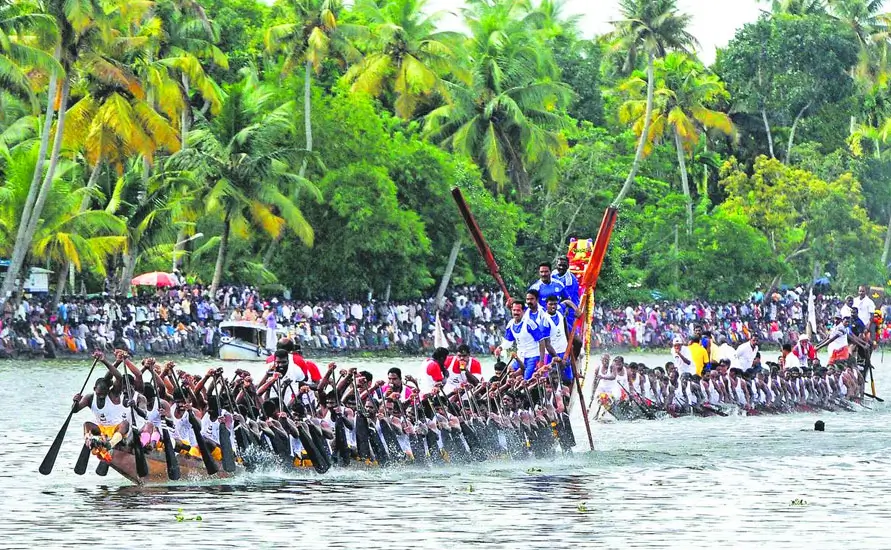
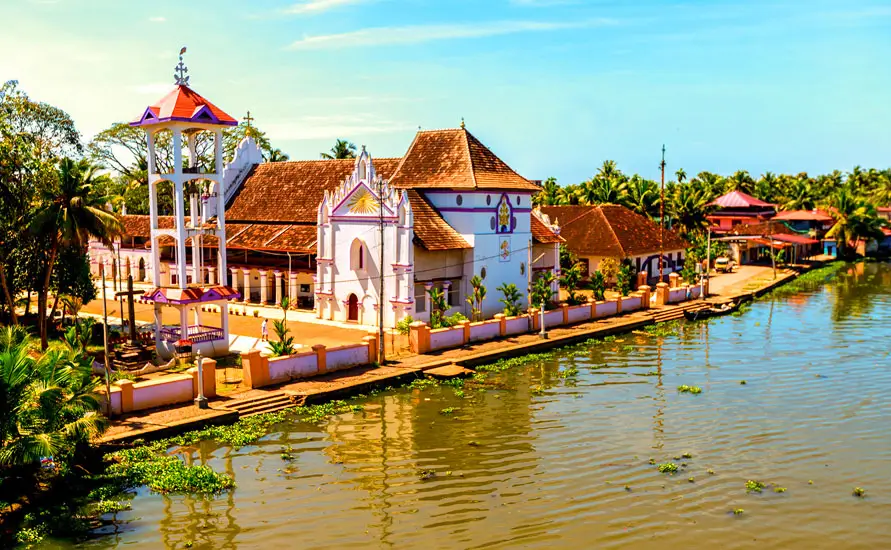
On arrival, board the confirmed houseboat or check into the selected backwater accommodation. When included, cruise through the Alleppey Backwaters, travelling along canals and broader waterways bordered by coconut groves, waterside houses and agricultural land.
Observe local ferries, fishing activity and everyday village life along the banks as the journey progresses. The exact cruising route depends on navigation and operational conditions. Settle into the confirmed accommodation as evening approaches and enjoy the quieter rhythm of Kerala's backwater country. Overnight stay in Alleppey.
After breakfast, complete the Alleppey stay and disembark at the scheduled point if travelling by houseboat. Meet the driver and continue south towards Kovalam, moving from Kerala's inland waterways towards its Arabian Sea coastline.
On arrival, check into the hotel or resort and later proceed towards Lighthouse Beach. The prominent Vizhinjam Lighthouse rises above the headland and may be visited subject to official opening schedules and access conditions.
Spend the late afternoon around Kovalam Beach or relax at the resort after the road journey. Swimming should only be considered when sea conditions are appropriate and local safety guidance permits it. Enjoy the evening at leisure beside the coast. Overnight stay in Kovalam.
After breakfast, leave Kovalam and travel towards Kanyakumari, crossing from Kerala into Tamil Nadu. The journey approaches the southern end of the Indian mainland, where a broad coastal setting is combined with important religious and cultural landmarks.
On arrival, proceed to the waterfront and, subject to safe sea conditions and ferry operations, visit Vivekananda Rock Memorial. Nearby stands the monumental Thiruvalluvar Statue, dedicated to the renowned Tamil poet and philosopher. Ferry services can be modified or suspended according to weather and sea conditions.
Visit the surroundings of Kumari Amman Temple, subject to religious entry regulations, and spend time along the Kanyakumari seafront. Depending on weather, enjoy the changing evening light over the coast before settling into the confirmed accommodation. Overnight stay in Kanyakumari.
After breakfast, leave Kanyakumari and travel north towards Trivandrum (Thiruvananthapuram). The journey returns to Kerala for the concluding stage of a route that has crossed Mughal cities, Rajasthan's desert region, the Western Ghats, Kerala's backwaters and India's southern coastline.
If the confirmed departure time permits, visit the surroundings of Sree Padmanabhaswamy Temple, where strict religious, dress and security regulations apply. Depending on available time and official opening schedules, continue to the Napier Museum and Sri Chitra Art Gallery for a final introduction to Kerala's artistic and cultural heritage.
At the appropriate time, transfer to Trivandrum International Airport or railway station. The twenty-six-day journey concludes after linking the Taj Mahal, Amber Fort, Chittorgarh Fort, Udaipur's City Palace, Ranakpur Jain Temple, Mehrangarh Fort, Jaisalmer Fort, Junagarh Fort, Fort Kochi, Munnar's tea plantations, Periyar Lake, the Alleppey Backwaters, Kovalam Beach and Vivekananda Rock Memorial.
Your Journey
N.S. Rathore & Mrs. Omlata Rathore · Managing Director
We still read every enquiry ourselves. Tell us the places you liked and our planners will send a day-by-day route with drive times and a clear price.
No ready-made packages and no pressure to book. A planner from our Kochi office replies within 24 hours with a route written for your group.
Fill this in and your planner will send a first draft itinerary.
Explore more
Kerala Backwaters Escape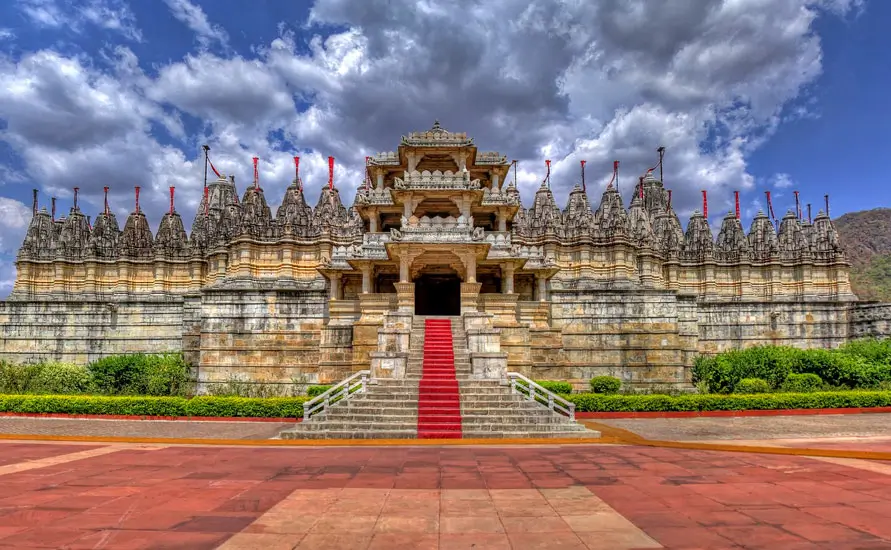 Kerala Backwaters Escape
 Kerala Backwaters Escape
 Kerala Backwaters Escape
 Kerala Backwaters Escape