 Kerala Backwaters Escape
South India Tour with Rajasthan
Delhi - Udaipur - Chittorgarh - Ranakpur - Jodhpur - Bishnoi Village - Manvar - Jaisalmer - Pokhran - Bikaner - Mandawa - Jaipur - Fatehpur Sikri - Agra - Sikandra - Delhi - Bangalore - Mysore - ooty - Coonoor - Ooty - Munnar - Alleppey - Cochin
At a glance
Royal capitals, desert settlements, fortified towns and the green highlands of South India shape this 24 Nights 25 Days Heritage Rajasthan Tour with South India. The journey begins in Delhi before entering Rajasthan through Udaipur, then follows a broad heritage trail across Chittorgarh, Ranakpur, Jodhpur, the Bishnoi countryside, Manvar, Jaisalmer, Bikaner, Mandawa and Jaipur.
Rajasthan occupies the first major section of the itinerary and is explored through several distinct settings rather than only its famous cities. The lake palaces of Udaipur are followed by the massive Chittorgarh Fort, Ranakpur's intricately carved Jain temple, Jodhpur's Mehrangarh Fort, rural communities around Bishnoi villages and the desert architecture of Jaisalmer. Bikaner's fortified heritage and Mandawa's painted havelis add further depth before the route reaches Jaipur.
After Fatehpur Sikri, the Taj Mahal and Delhi, the journey makes a major geographical transition to South India. Bengaluru leads into Mysore's royal heritage and the Nilgiri Hills around Ooty and Coonoor. Munnar's tea country and Alleppey's backwaters then provide an entirely different landscape before the tour concludes amid Cochin's historic trading quarters.
Arrive at Delhi International Airport, where you will be met after completing immigration, baggage collection and other arrival formalities as applicable. Transfer to the hotel by private vehicle and complete check-in. Delhi provides the starting point for a journey that will cross Rajasthan before continuing through several very different regions of South India.
The remainder of the day is kept flexible to accommodate varying arrival schedules. Travellers reaching Delhi earlier can take a short orientation drive through suitable areas of the capital, while those arriving after a long international journey can simply rest at the hotel. No essential monument visit is dependent on the first day's arrival time.
Spend the evening at leisure and prepare for the following day's exploration of Old and New Delhi. The route ahead will move from Mughal and Rajput architecture to desert settlements, painted havelis, South Indian royal cities, mountain landscapes and Kerala's waterways. Overnight stay in Delhi.
After breakfast, begin in Old Delhi with a visit to Jama Masjid, one of the capital's major Mughal-era religious landmarks. Continue through the historic surroundings of Chandni Chowk, where narrow market streets and long-established commercial neighbourhoods create a striking contrast with the planned avenues of New Delhi. Proceed to Raj Ghat, the memorial dedicated to Mahatma Gandhi.
Continue through New Delhi to see India Gate and the ceremonial surroundings of Kartavya Path. Drive through the government district for views of Rashtrapati Bhavan and Parliament House from permitted public areas, subject to prevailing traffic and security restrictions.
Later, visit Humayun's Tomb, an important Mughal garden-tomb complex, followed by the historic Qutub Minar and its surrounding monuments. These sites introduce several layers of Delhi's architectural history before the journey enters Rajasthan. Return to the hotel after sightseeing and spend the evening at leisure. Overnight stay in Delhi.
After breakfast, check out and transfer to the airport for the scheduled journey to Udaipur according to confirmed flight arrangements. The flight avoids a lengthy road transfer and brings the itinerary directly into southern Rajasthan, where lakes, hills and palace architecture create a very different setting from Delhi.
On arrival in Udaipur, meet the representative or driver and transfer to the hotel. After check-in, take some time to rest before an introductory outing around the city. If daylight permits, visit the surroundings of Lake Pichola, where historic palaces, ghats and the Aravalli hills frame the waterfront.
Spend the evening at leisure or walk through accessible sections of Udaipur's old city. The principal palace and temple sightseeing is reserved for the following day so that the monuments can be explored without being dependent on the flight arrival time. Overnight stay in Udaipur.
After breakfast, visit the magnificent City Palace, an extensive royal complex overlooking Lake Pichola. Explore its accessible courtyards, balconies, gateways and museum sections, where architecture developed over successive periods of Mewar rule. Elevated sections provide impressive views across the lake and surrounding city.
Continue to Jagdish Temple, an important Hindu temple located near the palace complex, subject to religious access conditions. Later, visit Saheliyon-ki-Bari, the historic garden known for its fountains, pavilions and landscaped spaces. Together, these landmarks show different aspects of Udaipur's royal and religious heritage.
Later in the day, spend time around Lake Pichola. A boat ride may be taken when included and operational, offering water-level views of the City Palace, Jag Mandir and other lakeside structures. Boat operations depend on local and weather conditions. Return to the hotel after sightseeing. Overnight stay in Udaipur.
After breakfast, leave Udaipur and travel towards Chittorgarh, a destination closely associated with the history of Mewar. The drive crosses Rajasthan's southeastern countryside before reaching the dramatic fortified plateau that dominates the surrounding landscape.
Explore Chittorgarh Fort, one of India's largest historic fort complexes. Visit Vijay Stambh (Tower of Victory), the richly carved monument commemorating a military victory of Rana Kumbha, and see Kirti Stambh, another distinctive tower associated with the fort's Jain heritage. The scale of the complex requires travel between several important monuments.
Continue to Rana Kumbha Palace, among the significant palace ruins within the fort, and see Padmini Palace in its historic setting. Visit the revered Meera Temple as time permits. After exploring the principal sections of the fort, proceed to the confirmed hotel and spend the evening at leisure. Overnight stay in Chittorgarh.
After breakfast, check out and begin the journey towards Ranakpur. Leaving the fortified landscapes of Chittorgarh, the route enters the Aravalli region, where hills and rural scenery create a quieter setting. The day's focus shifts from military and royal architecture to one of Rajasthan's important Jain religious complexes.
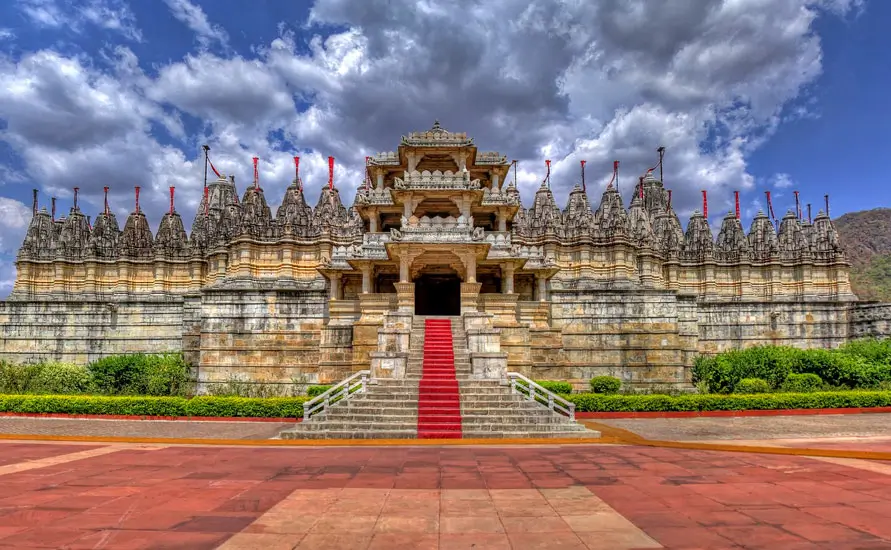
Visit the celebrated Ranakpur Jain Temple, subject to its religious entry and visitor regulations. The temple is particularly noted for its intricately carved marble interiors and numerous pillars, whose sculptural details create a remarkably complex architectural space. Visitors should observe applicable dress, photography and access requirements.
Spend sufficient time exploring the permitted sections of the temple complex rather than treating Ranakpur as only a brief roadside stop. The surrounding hills add to the tranquil character of the site and provide a marked contrast to the monumental fort visited the previous day. Check into the confirmed accommodation and spend the evening at leisure. Overnight stay in Ranakpur.
After breakfast, leave Ranakpur and travel towards Jodhpur. The route gradually moves away from the greener Aravalli surroundings and towards the drier landscapes of western Rajasthan. As Jodhpur approaches, the massive fort rising above the old city becomes the dominant feature of the skyline.
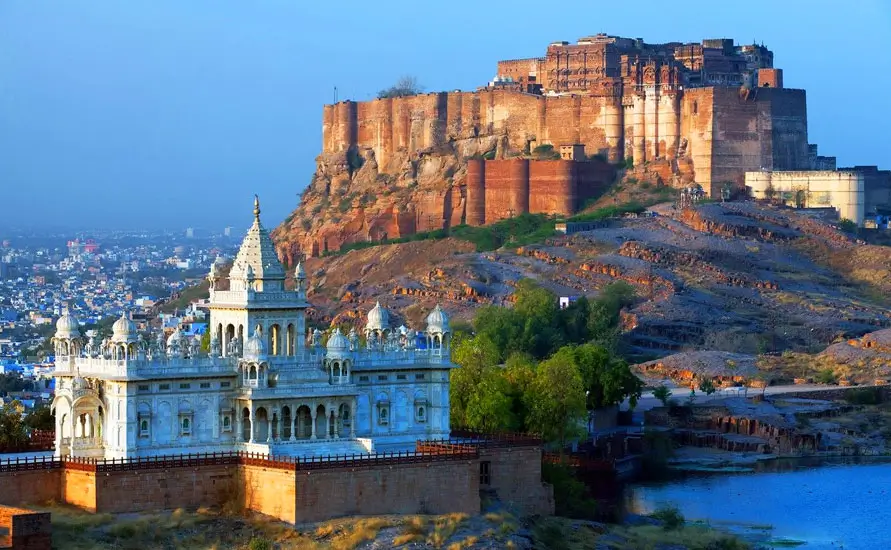
After arrival and hotel check-in, proceed to Mehrangarh Fort, one of Rajasthan's most imposing fortified complexes. Explore its monumental gateways, courtyards, museum galleries and accessible palace rooms. From the fort's elevated ramparts and terraces, there are broad views over the densely built old city and its characteristic blue-painted houses.
Continue to Jaswant Thada, the elegant marble memorial located near the fort. If daylight permits, spend some time around the historic market district near Ghanta Ghar (Clock Tower) and Sardar Market, where spices, textiles and local goods are prominent. Return to the hotel after sightseeing. Overnight stay in Jodhpur.
After breakfast, leave Jodhpur and travel into the countryside associated with the Bishnoi communities. The day moves away from Rajasthan's monumental architecture and introduces a rural landscape shaped by villages, traditional livelihoods, agriculture and a long-standing cultural emphasis on the protection of trees and wildlife.
During the Bishnoi Village experience, visit appropriate local settlements according to the confirmed arrangement. Observe aspects of rural life and traditional crafts where genuinely available, while ensuring that visits remain respectful of residents rather than treating communities as staged attractions. Wildlife such as blackbuck or other species may sometimes be seen in the wider countryside, but sightings cannot be guaranteed.
Continue towards Manvar, entering increasingly arid terrain on the way towards Rajasthan's deeper desert region. The changing vegetation, open horizons and scattered settlements prepare the landscape for the journey towards Jaisalmer. Arrive at the confirmed accommodation and spend the evening enjoying the desert surroundings. Overnight stay in Manvar.
After breakfast, leave Manvar and continue west towards Jaisalmer. The journey travels through increasingly arid terrain, where sparse vegetation, open horizons and scattered desert settlements define the surroundings. This road sector gives travellers a clear sense of Rajasthan's changing geography before reaching its celebrated golden sandstone city.
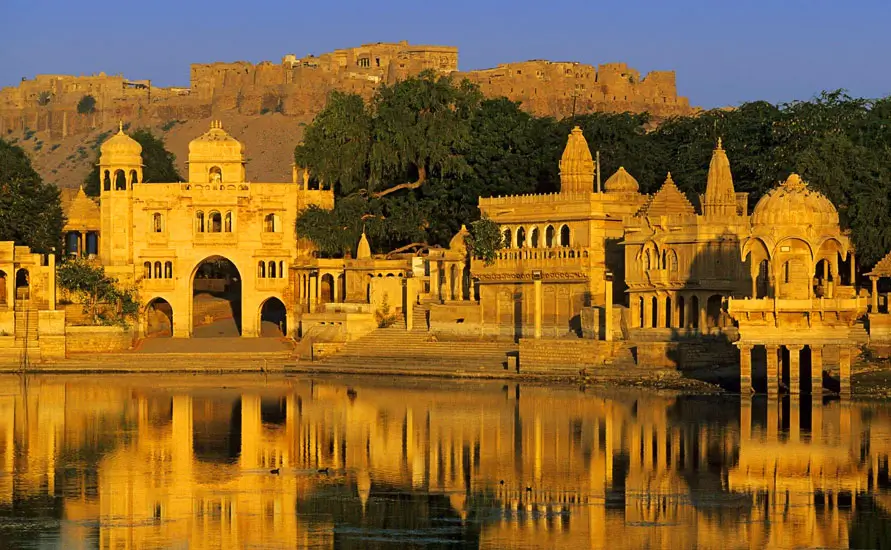
On arrival in Jaisalmer, check into the hotel and take some time to rest. Later, visit Gadisar Lake, the historic reservoir surrounded by temples, shrines and sandstone structures. The peaceful waterfront provides a gentle introduction to the architectural character of Jaisalmer before the more extensive fort and haveli sightseeing scheduled for the following day.
As the afternoon light changes, spend time around suitable viewpoints towards Jaisalmer Fort, whose sandstone walls rise prominently above the city. The fort takes on particularly warm tones in softer light, explaining Jaisalmer's association with the description “Golden City.” Return to the hotel after the visit. Overnight stay in Jaisalmer.
After breakfast, begin with Jaisalmer Fort, the massive sandstone citadel dominating the old city. Unlike many historic forts that function mainly as monuments, sections of Jaisalmer Fort remain inhabited, with houses, shops, temples and narrow lanes continuing within its walls. Explore accessible areas while respecting residential and religious spaces.
Continue to important Jain heritage within the fort, including the accessible Jain Temples of Jaisalmer, subject to religious entry regulations. Later, explore the city's merchant architecture at Patwon Ki Haveli, whose richly carved sandstone façades demonstrate the prosperity and craftsmanship associated with Jaisalmer's historic trading families.
Also see Nathmal Ki Haveli and Salim Singh Ki Haveli from appropriate accessible areas before spending additional time in the old city. The intricate balconies, projecting windows and stone carving make Jaisalmer's domestic architecture as important as its fortifications. Return to the hotel after sightseeing. Overnight stay in Jaisalmer.
After breakfast, check out and leave Jaisalmer for the journey towards Bikaner, travelling through the desert landscapes of western Rajasthan. En route, stop at Pokhran, a historic settlement positioned along the traditional route between Jaisalmer and other parts of Rajasthan.
See the historic Pokhran Fort (Balagarh Fort), subject to opening and access conditions. The fort reflects the strategic importance of this desert settlement and provides an additional architectural stop without diverting from the established route. Continue through the arid countryside after completing the visit.
Proceed towards Bikaner, passing small settlements and broad stretches of semi-desert terrain. On arrival, check into the hotel and spend the remainder of the evening at leisure after the road journey. The city's major fortified and palace heritage is reserved for the following day. Overnight stay in Bikaner.
After breakfast, visit Junagarh Fort, the principal historic landmark of Bikaner. Unlike many Rajasthan forts positioned on high hills, Junagarh stands on relatively level ground and is protected by substantial walls and defensive structures. Its interior contains a succession of courtyards, halls and richly decorated palace sections.
Explore important accessible areas within the fort, including Anup Mahal, Karan Mahal and other royal chambers according to the visitor route. Decorative painting, carved stone, woodwork and ornamental interiors illustrate the artistic traditions developed under Bikaner's rulers.
Later, visit Lalgarh Palace from the accessible visitor areas and spend some time experiencing the character of Bikaner's old city. Depending on available time and opening conditions, local market areas can also be explored. Return to the hotel after sightseeing and enjoy the evening at leisure. Overnight stay in Bikaner.
After breakfast, leave Bikaner and travel towards Mandawa in Rajasthan's Shekhawati region. The journey shifts away from the western desert cities and enters an area particularly known for historic merchant houses decorated with elaborate frescoes.
On arrival, explore the historic streets of Mandawa and see prominent painted havelis such as Murmuria Haveli, Jhunjhunwala Haveli and other accessible heritage residences according to local opening arrangements. The façades and interior courtyards display frescoes covering religious stories, social scenes, decorative motifs and later influences.
Continue to the surroundings of Mandawa Fort, which occupies an important position within the town's historic core. The combination of fort architecture and merchant havelis reveals a different side of Rajasthan's heritage from the royal palaces and military citadels visited earlier. Check into the hotel and spend the evening at leisure. Overnight stay in Mandawa.
After breakfast, check out and begin the road journey towards Jaipur, Rajasthan's state capital. Leaving Shekhawati's smaller towns and painted havelis behind, the route gradually approaches a much larger urban centre with a distinctive combination of planned streets, royal architecture and hilltop fortifications.
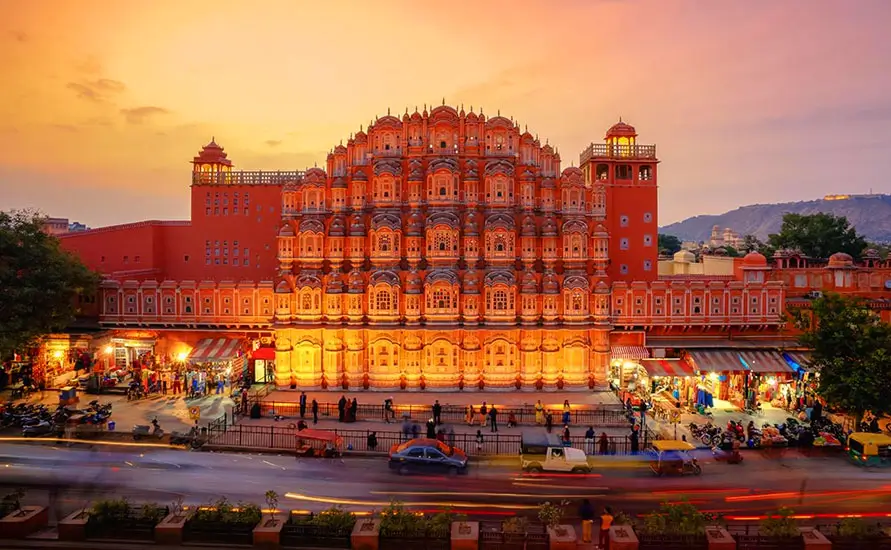
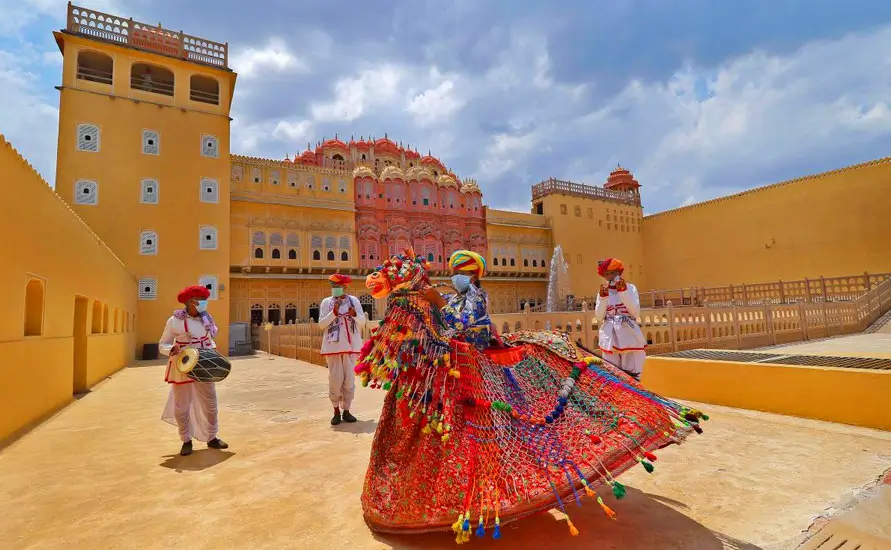
On arrival, check into the hotel and take some time to rest. Later, visit the old-city area and see the distinctive façade of Hawa Mahal, whose numerous small windows and projecting balconies form one of Jaipur's most recognisable architectural compositions.
Spend some time around the traditional bazaars if desired, where textiles, jewellery, block-printed fabrics and handicrafts are widely available. Shopping remains entirely optional. The principal fort, palace and astronomical monuments are reserved for the following day's sightseeing. Return to the hotel. Overnight stay in Jaipur.
After breakfast, drive towards Amber Fort, dramatically positioned among the hills outside central Jaipur. Enter the fortified palace complex and explore its courtyards, gateways and royal spaces, including the richly decorated Sheesh Mahal. Elevated areas provide broad views over the surrounding hills and Maota Lake.
Return towards Jaipur and stop for an exterior view of Jal Mahal, situated within Man Sagar Lake. Continue to City Palace, where royal courtyards, gateways and museum sections provide insight into Jaipur's ruling family and artistic traditions. Nearby, visit Jantar Mantar, the remarkable collection of monumental astronomical instruments.
Complete the day's programme around Hawa Mahal and the historic city centre. The combination of Amber's fortified setting, City Palace's ceremonial spaces and Jantar Mantar's scientific purpose makes Jaipur one of Rajasthan's most varied heritage destinations. Return to the hotel after sightseeing. Overnight stay in Jaipur.
After breakfast, leave Jaipur and travel towards Fatehpur Sikri, the former Mughal imperial capital established by Emperor Akbar. Explore major structures including Buland Darwaza, Jama Masjid, Diwan-i-Khas, Panch Mahal and accessible sections of the palace complex.
The surviving architecture provides an unusually coherent view of a Mughal imperial city, with administrative, residential and religious buildings concentrated within one historic complex. Take time to observe the courtyards, carved stonework and architectural details before continuing towards Agra.
Arrive in Agra and check into the hotel. If sufficient daylight remains, visit Mehtab Bagh for views across the Yamuna towards the Taj Mahal, subject to visibility and opening conditions. The main Taj Mahal visit is scheduled for the following morning. Return to the hotel. Overnight stay in Agra.
Begin early with a visit to the magnificent Taj Mahal, subject to its official opening schedule. Built by Emperor Shah Jahan in memory of Mumtaz Mahal, the monument is renowned for its white marble architecture, formal symmetry, garden setting and intricate decorative stonework. Adequate time should be allowed for security procedures and exploring the complex.
After breakfast, visit Agra Fort, the enormous fortified palace complex beside the Yamuna River. Explore its monumental gateways, courtyards and accessible royal sections, where red sandstone architecture is combined with later marble additions. The fort provides a broader understanding of Agra's importance as a Mughal imperial centre.
Leave Agra and stop at Akbar's Tomb at Sikandra, set within a formal garden enclosure and entered through an elaborately decorated gateway. After the visit, continue by road to Delhi. Arrive in the capital and check into the hotel after the journey. Overnight stay in Delhi.
After breakfast, check out and transfer to Delhi Airport for the scheduled flight to Bangalore (Bengaluru) according to confirmed arrangements. This flight creates the itinerary's major geographical transition, leaving North India's Mughal and Rajput heritage circuit for Karnataka and the landscapes of South India.
On arrival in Bengaluru, meet the driver and transfer to the hotel. Depending on flight timing, visit Bangalore Palace, subject to its opening schedule. Its interiors and architectural character provide an interesting contrast with the forts and palaces encountered throughout Rajasthan.
Continue for an exterior view of Vidhana Soudha from permitted public areas and, if time allows, take a short walk through Cubbon Park. If the flight arrives later, sightseeing can be adjusted according to the available daylight. Return to the hotel and spend the evening at leisure. Overnight stay in Bangalore.
After breakfast, leave Bangalore and travel towards Mysore (Mysuru). The road journey moves away from Karnataka's modern state capital towards a city closely associated with the Wodeyar dynasty and one of South India's most important surviving royal palace complexes.
On arrival, visit Mysore Palace, where elaborate ceremonial halls, stained glass, carved doors, painted ceilings and ornamental interiors reflect the grandeur of the former royal court. The palace differs markedly in style and historical context from the Rajput and Mughal monuments experienced during the northern section of the tour.
Later, proceed towards Chamundi Hill and visit the surroundings of Sri Chamundeshwari Temple, subject to religious access regulations. See the large monolithic Nandi Statue along the hill route and enjoy views over Mysore when visibility is clear. Check into the hotel after sightseeing. Overnight stay in Mysore.
After breakfast, check out and begin the drive towards Ooty (Udhagamandalam). The route moves from the Mysore region towards the Nilgiri Hills, passing through changing countryside and, depending on the permitted road, sections of protected forest landscape.
As the road climbs into the Nilgiris, the temperature and vegetation change noticeably. Mountain bends, forested slopes and viewpoints replace the plains around Mysore. Any wildlife encountered along protected road sections should be observed responsibly from the vehicle, without feeding animals or making unsafe stops.
Arrive in Ooty and check into the hotel. Later, visit Ooty Lake, where optional boating may be available subject to operating and weather conditions. Spend the remainder of the evening enjoying the cooler hill-station environment. Overnight stay in Ooty.
After breakfast, begin with the Government Botanical Garden in Ooty, known for its landscaped sections and varied plant collections. Continue towards Doddabetta Peak, the highest point in the Nilgiri Hills, subject to weather, visibility and local access conditions.
Travel onwards to Coonoor and visit Sim's Park, a well-established botanical garden set within the hilly landscape. Continue to Dolphin's Nose, subject to road and weather conditions, for views across the surrounding valleys. The drive between Ooty and Coonoor itself provides an excellent introduction to the Nilgiris' tea-growing slopes and mountain scenery.
Return to Ooty after sightseeing. A journey on a suitable section of the historic Nilgiri Mountain Railway can be considered when separately arranged, subject to confirmed tickets and railway operations. Return to the hotel and spend the evening at leisure. Overnight stay in Ooty.
After breakfast, check out and begin the substantial road journey from Ooty towards Munnar. The transfer links two of South India's best-known highland regions, travelling from the Nilgiri Hills towards Kerala's section of the Western Ghats. Suitable meal and comfort stops can be made during the drive.
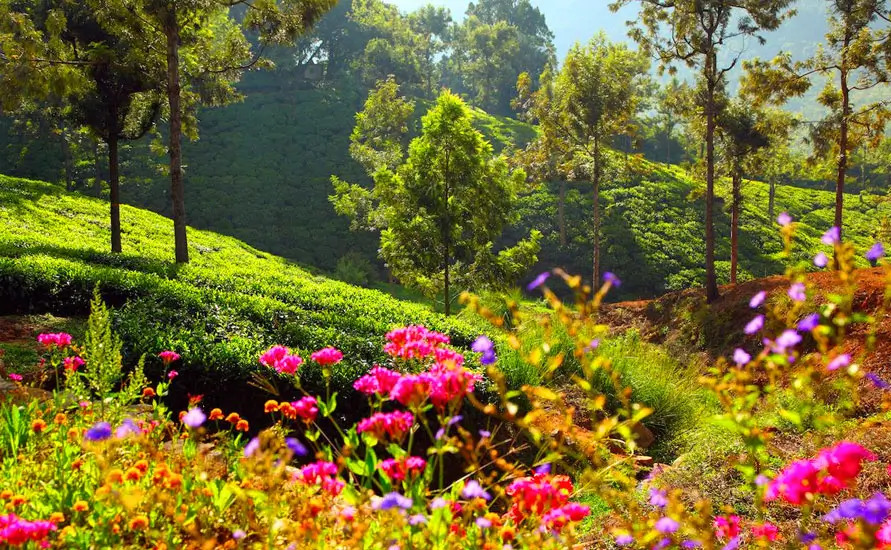
The landscapes change repeatedly along the way as mountain roads descend and rise through different agricultural and plantation regions. Approaching Munnar, extensive tea plantations begin to dominate the slopes, forming the carefully patterned green hills associated with the destination.
Arrive in Munnar and check into the hotel or resort. Because this is a longer transfer day, keep the evening free rather than adding rushed sightseeing. Enjoy the cooler mountain environment and rest before exploring Munnar's principal attractions the following morning. Overnight stay in Munnar.
After breakfast, visit Eravikulam National Park, subject to seasonal opening, visitor limits and conservation regulations. The park protects a distinctive high-altitude grassland environment and is particularly associated with the Nilgiri tahr. Wildlife sightings depend entirely on natural conditions and cannot be guaranteed.
Continue towards Mattupetty Dam, where the reservoir is surrounded by rolling hills and plantation scenery. Proceed to Echo Point, another popular stop within Munnar's highland landscape. The journeys between these attractions provide extensive views of the area's tea-covered slopes.
Later, visit a suitable tea museum or tea-related visitor centre, subject to opening schedules, to learn about tea cultivation and processing in the region. After completing the day's sightseeing, return to the hotel and spend the evening at leisure among Munnar's mountain surroundings. Overnight stay in Munnar.
After breakfast, leave Munnar and begin descending from the Western Ghats towards Alleppey (Alappuzha). The day's journey presents a pronounced change in scenery, with mountain tea estates gradually replaced by lower countryside, rubber-growing areas, coconut palms, paddy fields and waterways.
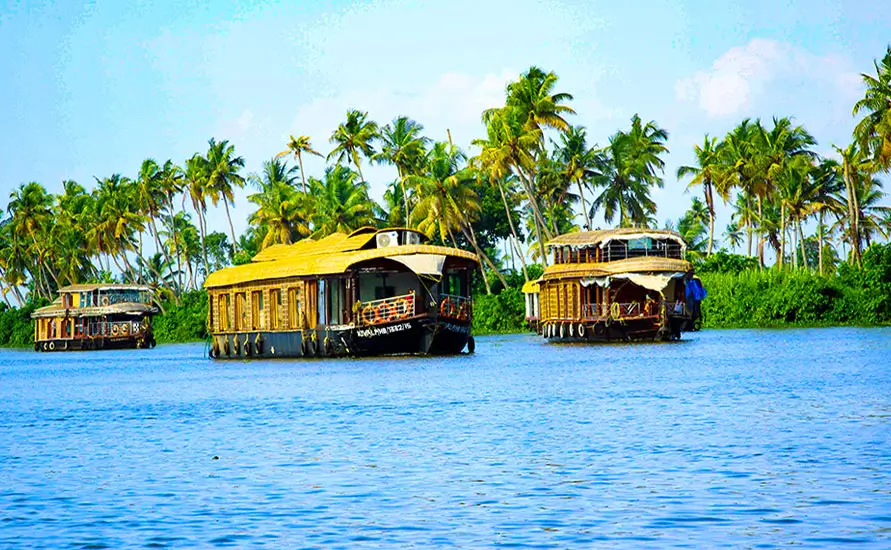
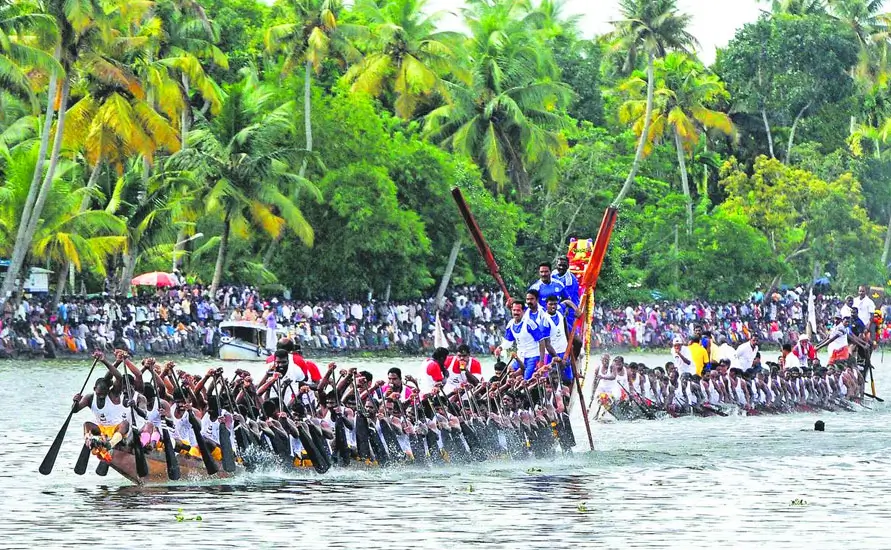
On arrival, board the confirmed houseboat or check into the selected backwater accommodation. When a cruise is included, travel through the Alleppey Backwaters, following canals and wider waterways past waterside homes, local boats and agricultural landscapes.
Spend the later afternoon observing everyday backwater life from the water. Coconut-lined banks and low-lying paddy fields create a landscape entirely different from the desert regions of Rajasthan and the mountain scenery of the previous days. Settle into the confirmed accommodation as evening approaches. Overnight stay in Alleppey.
After breakfast, complete the backwater stay and disembark at the scheduled point if travelling by houseboat. Meet the driver and proceed towards Cochin (Kochi). The final destination brings the journey back to the coast and introduces Kerala's centuries-old maritime trading heritage.
If the departure schedule allows, visit Fort Kochi and see St. Francis Church and the waterfront Chinese Fishing Nets. Continue towards Mattancherry to visit Mattancherry Palace (Dutch Palace) and walk through Jew Town. The historic Paradesi Synagogue may also be visited when open and accessible.
At the appropriate time, transfer to Cochin International Airport or railway station for the onward journey. The twenty-five-day tour concludes after connecting Rajasthan's City Palace Udaipur, Chittorgarh Fort, Mehrangarh Fort, Jaisalmer Fort, Junagarh Fort and Amber Fort with the Taj Mahal, Mysore Palace, the Nilgiri Hills, Munnar's tea plantations, the Alleppey Backwaters and Fort Kochi.
Your Journey
N.S. Rathore & Mrs. Omlata Rathore · Managing Director
We still read every enquiry ourselves. Tell us the places you liked and our planners will send a day-by-day route with drive times and a clear price.
No ready-made packages and no pressure to book. A planner from our Kochi office replies within 24 hours with a route written for your group.
Fill this in and your planner will send a first draft itinerary.
Explore more
Kerala Backwaters Escape Kerala Backwaters Escape
 Kerala Backwaters Escape
 Kerala Backwaters Escape
 Kerala Backwaters Escape